
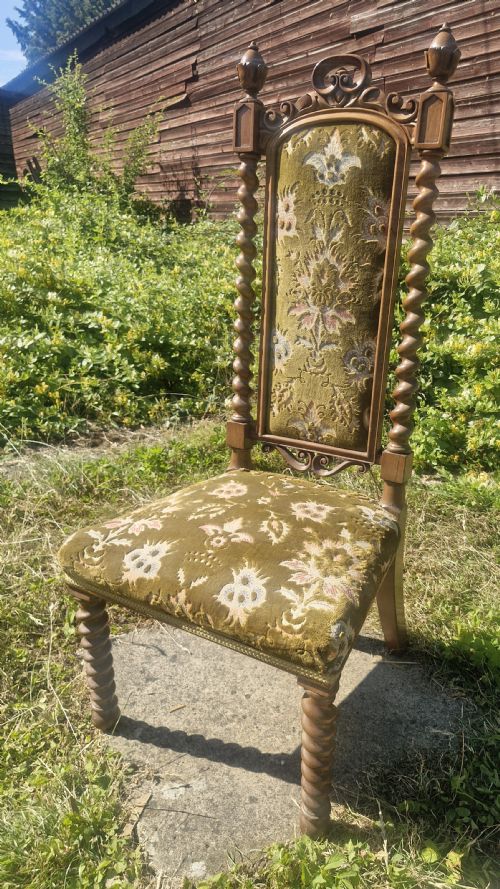
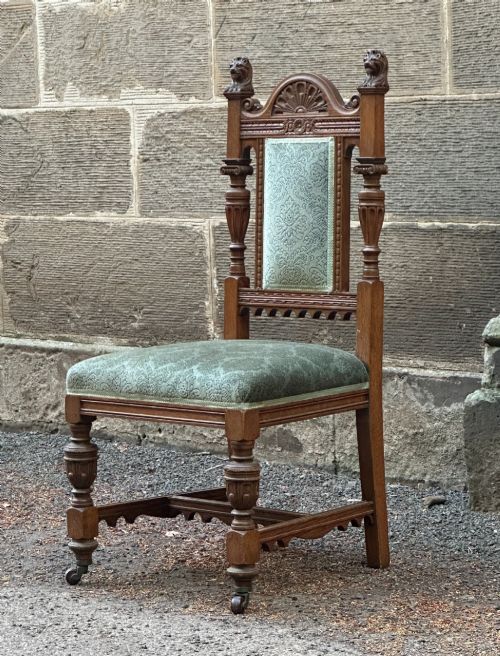


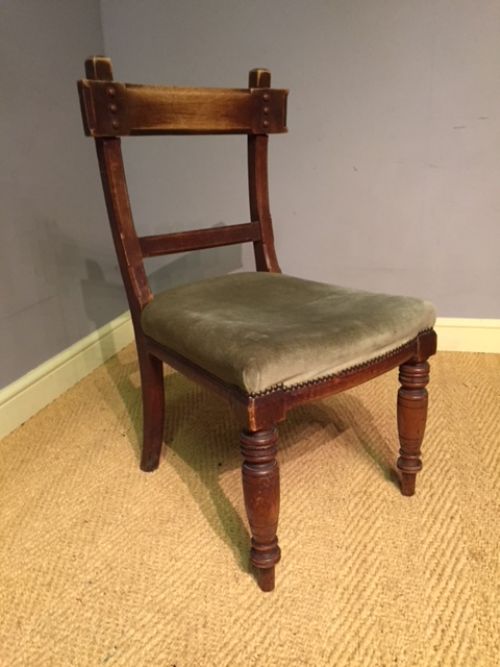

Green Upholstered Gothic Chair
A green upholstered gothic chair brings distinct nineteenth-century ecclesiastical character into a room through pointed architectural lines and rich textile work.
Green Upholstered Gothic Chair
A green upholstered gothic chair stands as a notable example of nineteenth-century seating, drawing heavily on medieval design principles. These items appear across various formats on this page, including side chairs, hall chairs, armchairs, and throne chairs.
The prevailing period represented in these listings spans the Victorian era, specifically the middle and late nineteenth century around eighteen fifty to eighteen eighty. Makers of the time favoured substantial timber frames paired with rich upholstery to create imposing seating.
Buyers encountering this search phrase will regularly find examples shaped by Victorian Gothic Revival aesthetics. Oak and rosewood predominate among the woods, often complemented by velvet or leather textiles in green shades.
How they were made
Cabinet makers of the nineteenth century built these frames using robust hardwoods such as oak, walnut, rosewood, and mahogany. Carpenters employed deep hand-carving techniques to shape architectural motifs, linenfold panels, and figurative elements like the green man directly into the timber.
Upholstery work involved securing textiles, leather, and velvet across sprung or padded seats and high backs. Metal components such as brass studs or hardware frequently secured the edges of the fabric to the wooden framework.
The listings on this page span the Victorian period from eighteen fifty to eighteen eighty, utilising oak, rosewood, walnut, and pitch pine.
What varies in quality
The distinction between standard seating and exceptional examples often lies in the depth and ambition of the woodwork. Heavily carved thrones and high-back chairs with figural motifs demand greater sculptural skill from the maker than simpler side chairs.
Material selection also dictates the standing of a piece within the period. Dense timbers like rosewood and walnut, paired with substantial velvet or leather upholstery, separate ordinary utilitarian seating from grand parlour or hall furniture.
Bruce Talbert·Gillows
The Green Upholstered Gothic Chair Glossary
- Gothic Revival
- An architectural and decorative style popular during the nineteenth century that revived medieval forms such as pointed arches and traceried panels. This aesthetic defines the structural lines of the chairs listed here.
- Throne chair
- A large, imposing armchair featuring an elevated back and heavy carving, designed to dominate a room. Such pieces often incorporate architectural canopies or figural carvings.
- Green man
- A sculptural motif depicting a human face entwined with or disgorging foliage, commonly found carved into nineteenth-century woodwork. It symbolises rebirth and spring.
- Hall chair
- A rigid wooden seat traditionally placed in a grand entrance hallway rather than used for prolonged sitting. These items usually display prominent carved backs and solid timber seats.
- Rosewood
- A dense, heavily figured tropical timber prized by Victorian cabinet makers for fine furniture. Its dark grain provides a striking contrast to bright textile upholstery.
Green Upholstered Gothic Chair: Frequently Asked Questions
Where did these chairs originally sit?
These seats were primarily commissioned for the principal rooms, libraries, and grand entrance halls of Victorian homes. Their imposing frames and architectural details suited spaces designed to impress visitors.
Smaller side chairs and dining variants also appeared in domestic dining rooms and parlours, bringing medieval revival styles into everyday nineteenth-century domestic life.
How do I identify a Victorian Gothic chair?
Look for characteristic architectural details such as pointed arches, trefoils, quatrefoils, and heavy turned or chamfered legs. The woodwork frequently incorporates deep relief carving depicting foliage or figural elements.
Materials also offer strong clues, as nineteenth-century pieces commonly utilise solid oak, rosewood, or walnut paired with dark velvet or leather upholstery.
Are these chairs comfortable for daily use?
Many examples, particularly the armchairs and throne chairs with upholstered backs, provide substantial physical support. However, their upright postures and rigid wooden frames reflect nineteenth-century standards of sitting rather than modern lounging.
Side chairs and hall chairs were built with firmness in mind, intended for short periods of sitting in formal reception spaces rather than relaxed daily seating.
What woods were used in these chairs?
Cabinet makers predominantly selected durable hardwoods native to Britain or imported through global trade networks. Oak appears frequently across the listings, alongside walnut, mahogany, and rosewood.
Pitch pine also served as a primary timber for larger throne chairs, offering a pale ground that accepted heavy carved detailing and dark finishes.