


English Gothic Chair
An english gothic chair brings architectural gravity and rich timber into a room, offering a seat shaped by centuries of revival and craft.
English Gothic Chair
When you search for an english gothic chair, you encounter a lineage stretching from pre-reformation ecclesiastical thrones to nineteenth-century revival seating. The selection relies heavily on nineteenth-century output, including Victorian iterations, alongside earlier remnants and georgian interpretations.
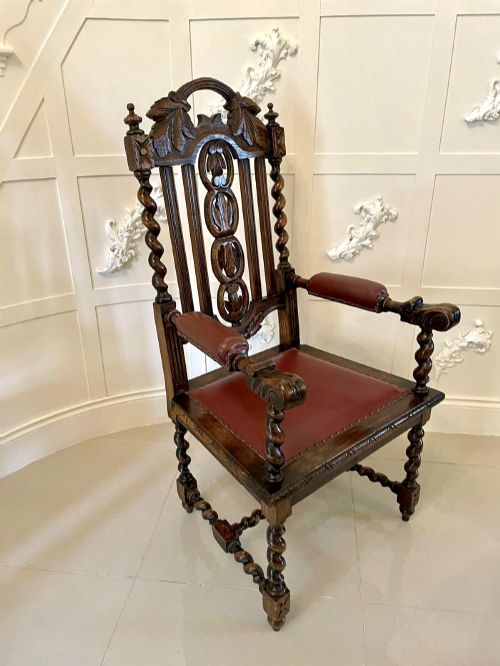
Forms vary widely from monumental carved oak thrones and library armchairs to pairs of hall chairs, sturdy dining sets, and specialised seating such as Glastonbury or Turner's chairs. These pieces span domestic halls, churches, and libraries, reflecting both secular comfort and ecclesiastical dignity.
Materials and construction methods
English oak serves as the primary structural timber across the majority of these pieces, complemented by mahogany, yew, elm, pitch pine, and beech. Cabinetmakers utilised solid construction, turning, and intricate hand-carving to achieve the pointed arches, tracery, and linenfold panels characteristic of the style.
Upholstery appears selectively on specific forms like prie-dieu prayer chairs and occasional seats, often utilising fabric, brass details, and leather. Frame joinery relies on traditional pegged joints, sturdy turned spindles, and solid wood backs designed to endure heavy daily use.
Listings feature oak predominantly, supported by mahogany, yew, and elm across Victorian and nineteenth-century eras.
Distinctions in construction and design
Quality reveals itself in the crispness of the hand-carving and the selection of timber figures, where richly grained English oak or well-chosen mahogany elevates a piece above standard production. The depth of the gothic ornamentation, from simple tracery to fully articulated architectural panels, marks the ambition of the maker.
Structural integrity and the retention of original components, such as turned spindles on a Turner's chair or matched sets of dining chairs, separate finer survivals from heavily altered examples. Proportion and the fidelity of the revival style to medieval precedents dictate the standing of individual pieces.
Ben Gilling·Allsop Worksop·James Shoolbred
The English Gothic Chair Glossary
- Turner's chair
- A sturdy, heavy armchair constructed entirely from turned wooden spindles and members, also known as a round chair or Saxon chair. These pieces rely on sophisticated joinery rather than upholstery for their structural form.
- Prie-dieu
- A devotional prayer chair featuring a low seat and a tall, narrow back designed to support kneeling or leaning during private worship. They frequently appear in Victorian walnut, oak, or mahogany with needlework or fabric upholstery.
- Hall chair
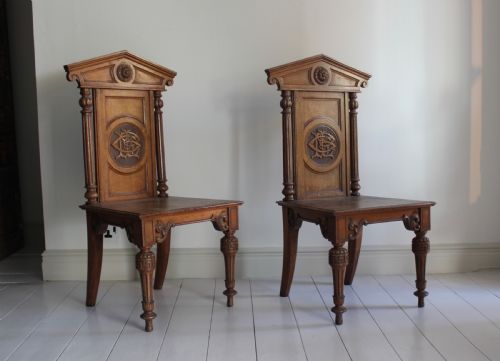
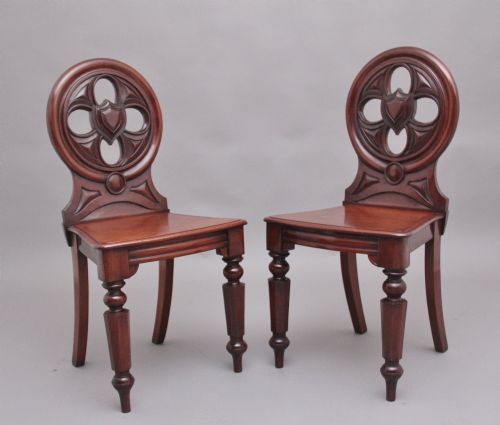
- A rigid, wooden seat designed primarily for transient use in a hallway or entrance passage, frequently emblazoned with a family crest or gothic tracery. They are commonly found in matched pairs or larger dining sets.
- Tracery
- Architectural stonework ornamentation adapted by cabinetmakers for wooden screenwork, chair backs, and panels. This geometric pattern work defines the visual vocabulary of gothic design.
English Gothic Chair: Frequently Asked Questions
What is a glastonbury chair?
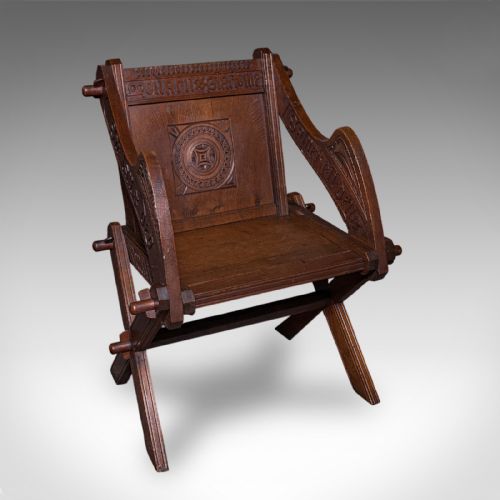
A Glastonbury chair is a distinctive low-armchair with an X-frame base and a sloping panel back, rooted in early ecclesiastical design. Nineteenth-century makers revived this form extensively in solid oak.
These chairs often feature carved inscriptions or religious texts along the top rail. Their compact footprint makes them practical for modern firesides and studies.
Where were hall chairs placed?
Hall chairs stood in the entrance halls of grand country houses and town residences for guests waiting briefly or servants attending the door. Because they were meant for transient use, they lacked upholstery and prioritized rigid posture.
Carved wooden seats and heraldic shields featured prominently on these pieces to impress visitors upon entry. Today, they function well as decorative wall accents or occasional seating.
How do you style an english gothic chair?
An english gothic chair provides a strong architectural focal point in contemporary or traditional interiors. Pairing a single heavy armchair with minimalist surroundings highlights its carved details and dark timber.
Sets of gothic dining chairs integrate seamlessly around large wooden tables to establish a grounded, historic dining atmosphere. Their robust oak frames withstand regular everyday use without losing presence.
What distinguishes a turner's chair?
A turner's chair is constructed entirely from cylindrical wooden turnings assembled into a triangular or square seat frame. This ancient method distributes weight evenly through interlocking spindles rather than solid panels.
Often associated with Saxon or medieval traditions, nineteenth-century revivals captured this intricate geometric assembly. The resulting open framework creates a visually light yet structurally dense seat.