
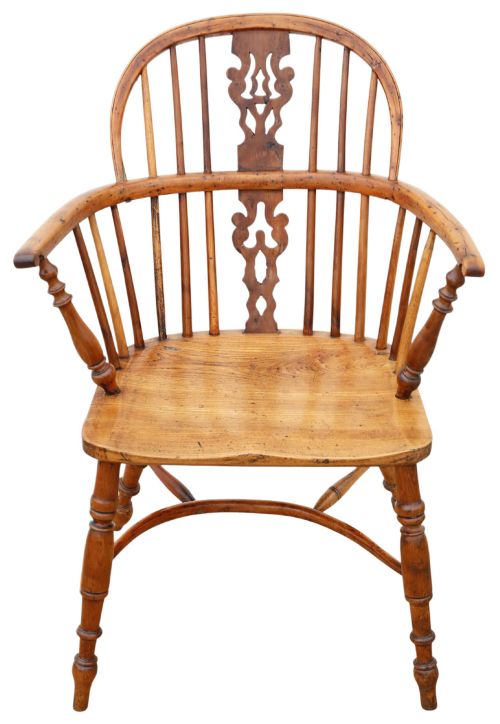
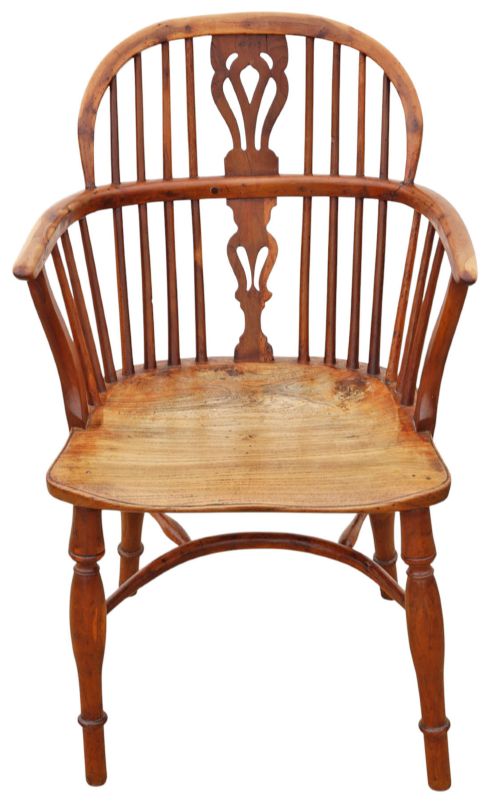
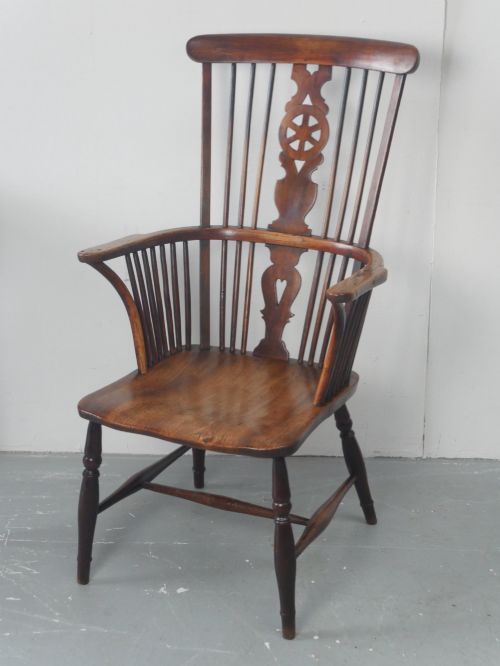
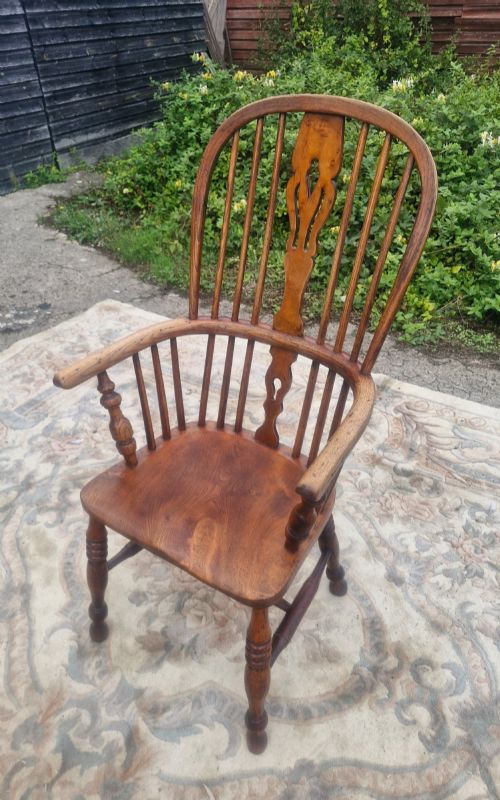

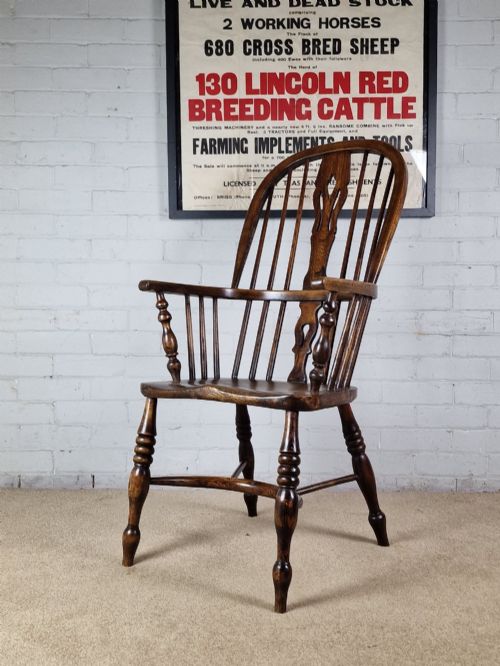
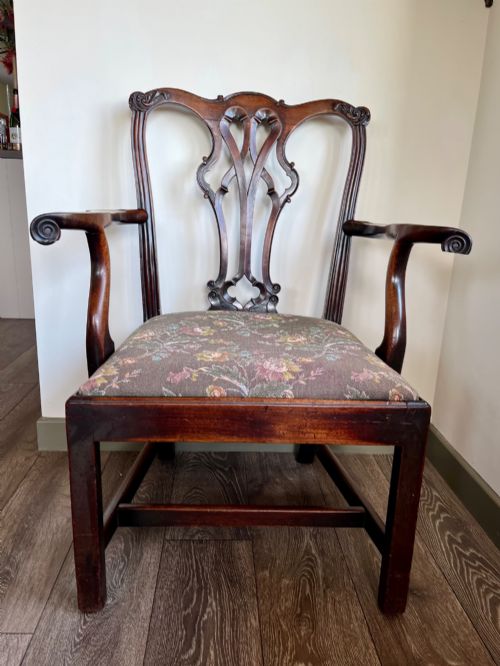
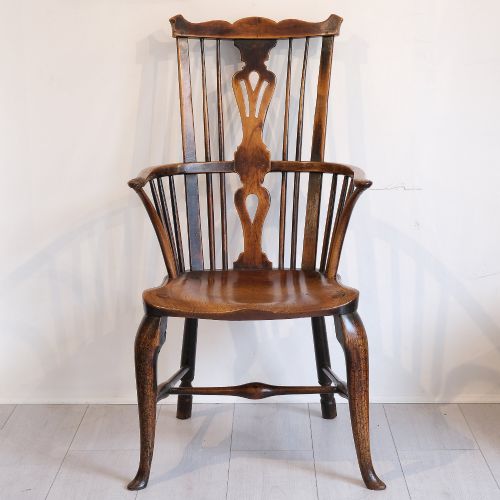
Pierced Back Carver Chair
These pieces known as a pierced back carver chair span eighteenth-century dining seats and nineteenth-century vernacular seating.
Pierced Back Carver Chair
A pierced back carver chair encompasses timber elbow chairs and dining seats found across the eighteenth and nineteenth centuries. Buyers searching this phrase encounter sturdy farmhouse armchairs alongside formal mahogany dining variants.
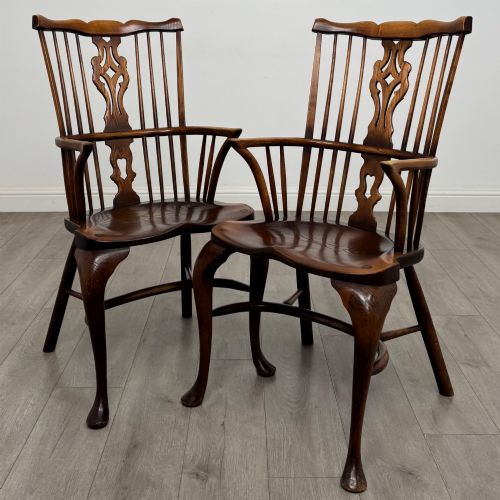
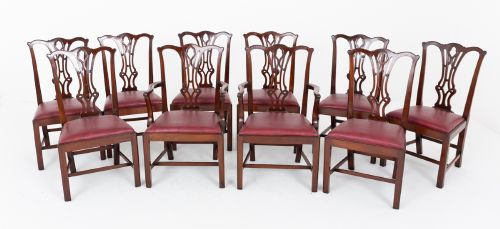
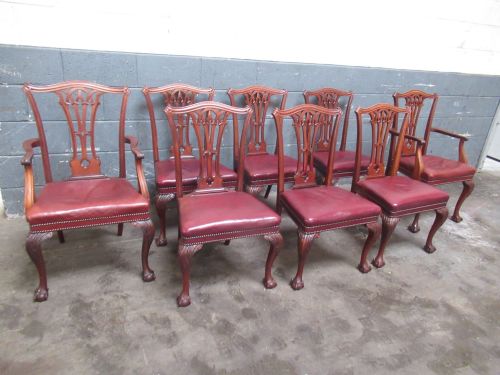
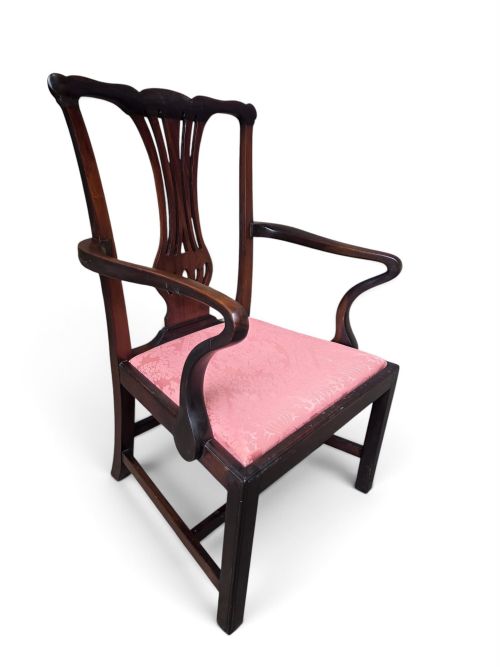
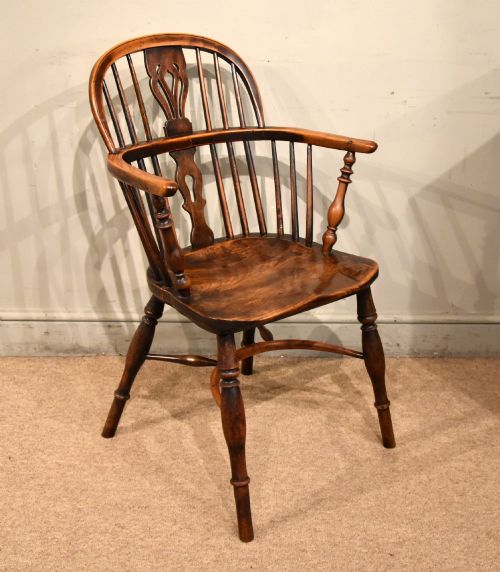
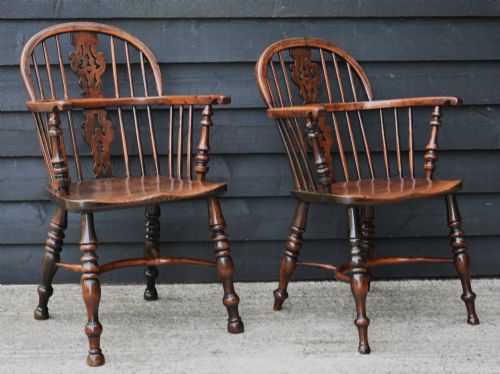
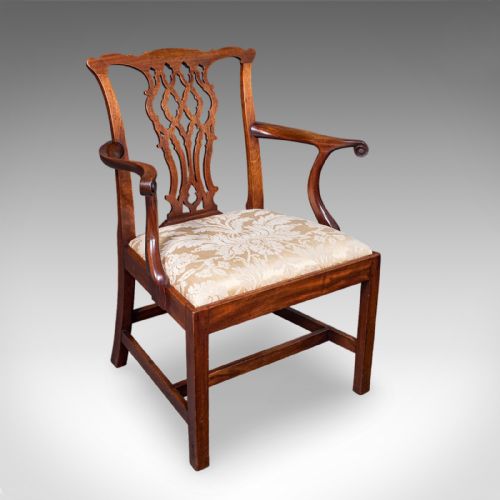
The selection ranges from Windsor armchairs in yew and elm to Chippendale style mahogany dining chairs and open armchairs. Regional variations appear in low back and high back formats.
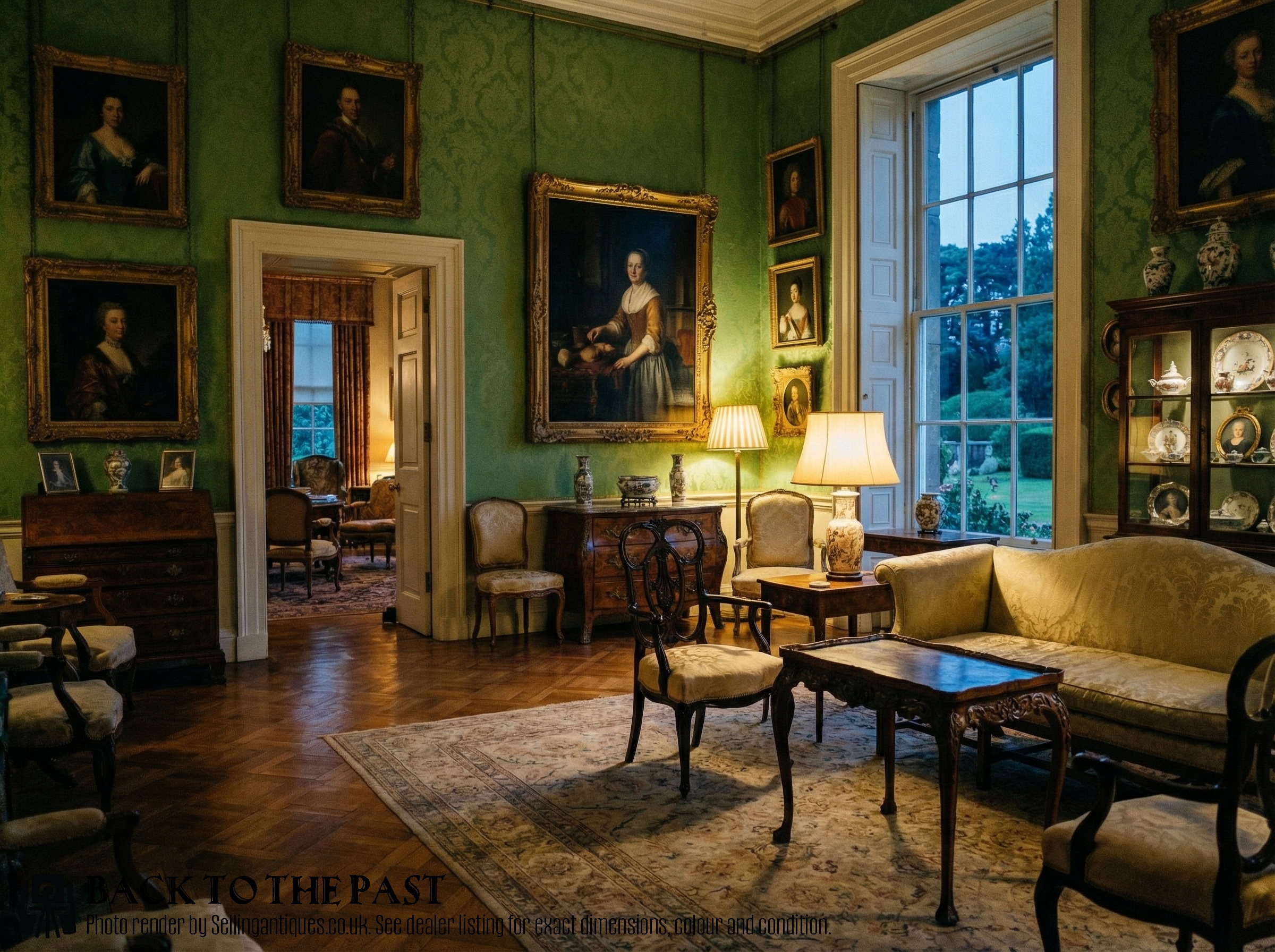
Makers produced these chairs in dining rooms, morning rooms, and English country houses. The grouped listings include single armchairs, pairs, and matched sets.
Materials and construction
Makers utilised native hardwoods such as elm, beech, ash, yew, fruitwood, and oak for regional Windsor chairs. Combinations of yew and elm frequently appear in country armchairs.
Formal dining chairs employ mahogany and walnut with carved details. Joinery involves traditional methods including spindle backs, splat backs, and crinoline stretchers.
Listings span the eighteenth, nineteenth, and early twentieth centuries, encompassing Georgian, Victorian, and Edwardian periods.
Judging the execution
Quality rests in the selection of timbers and the crispness of the carved or pierced back splats. Matched sets display uniform grain and consistent timber selection across multiple chairs.
Proportion and structural integrity dictate the standing of each piece. Regional Windsor armchairs show superior turning in the spindles and substantial arm bows.
Wheelers of Arncroach
The Pierced Back Carver Chair Glossary
- Carver chair
- An armchair designed to sit at the head of a dining table or serve as an occasional seat. These pieces often feature open arms and substantial proportions.
- Windsor chair
- A wooden chair constructed with a solid wooden seat into which the legs and back spindles are direct-inserted. These chairs frequently incorporate bentwood hoops and arm bows.
- Chippendale style
- A decorative manner originating in the eighteenth century employing ribbon backs, carved splats, and cabriole legs. Revival versions appeared frequently during the Victorian and Edwardian periods.
- Crinoline stretcher
- A curved stretcher reinforcing the legs of a Windsor chair. This component adds structural stability while providing a footrest.
- Splat back
- A vertical central strip of wood set into the back of a chair. These elements are frequently pierced or carved into distinct patterns.
Pierced Back Carver Chair: Frequently Asked Questions
What is a pierced back carver chair?
A pierced back carver chair is an armchair featuring a decorative wooden back splat with openings cut through the design. These pieces serve as dining carvers or individual elbow chairs.
The listings show examples ranging from eighteenth-century mahogany dining seats to nineteenth-century country armchairs in yew and elm.
Where were these chairs used?
These chairs functioned primarily in dining rooms, morning rooms, and country houses. Armchair variants provided seating for the head of a table or fireside use.
Simpler country versions populated farmhouses, while mahogany styles suited formal urban interiors.
How do I date a Windsor chair?
Dating relies on timber selection, construction methods, and regional characteristics. Early nineteenth-century examples often combine yew and elm with crinoline stretchers.
Later Victorian and Edwardian pieces utilise beech and elm with altered turning profiles on the spindles.
Are these chairs sold as sets?
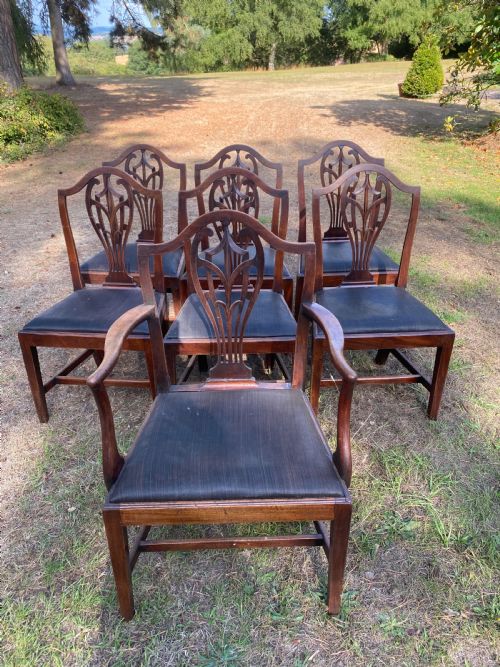
The inventory includes single armchairs, pairs, matched sets of six, and larger dining sets of eight or ten chairs. Matched sets combine pieces sharing identical timber and form.
Single carvers frequently appear alongside larger dining chair configurations.