




Pictorial Tapestry Hanging
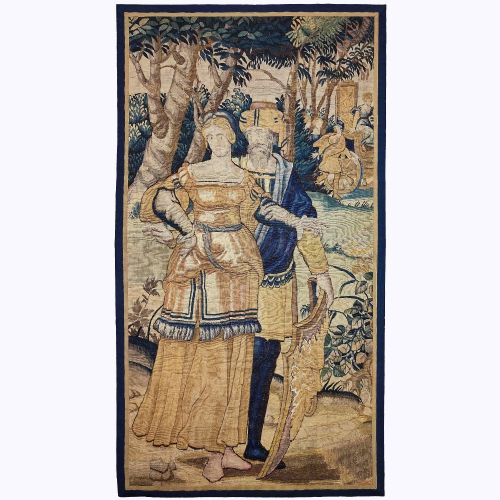
These pictorial tapestry hanging examples bring centuries of textile artistry into a room, offering narrative depth and rich colour through woven wool and silk.
Pictorial Tapestry Hanging
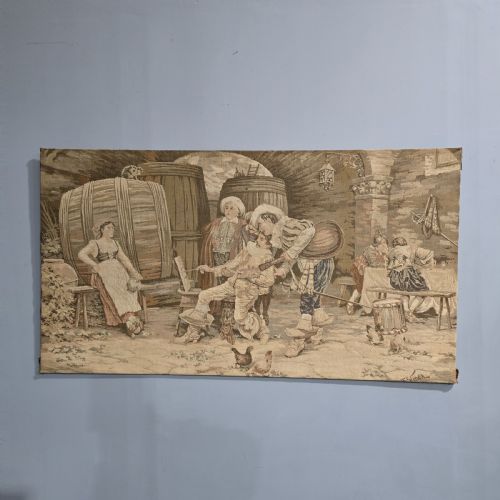
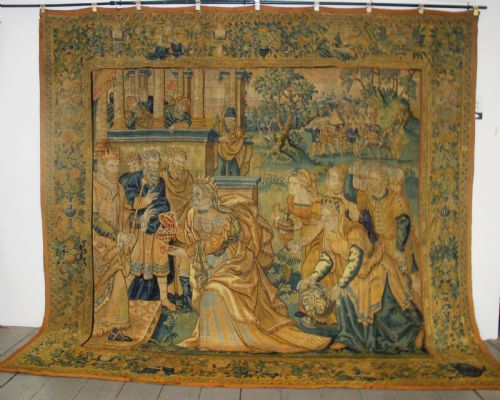
A pictorial tapestry hanging brings together woven wall art, framed needlework, and figurative rugs spanning multiple centuries. Buyers searching for a pictorial tapestry hanging will encounter pieces ranging from sixteenth-century Flemish panels to twentieth-century Persian rugs and needlework depictions.
The selection here encompasses European needlework, French styles, and North German pieces alongside Persian workshop carpets. Formats vary from large wall tapestries and mounted boards to smaller cushion covers and framed artworks.
The most common examples on this page balance historical technique with narrative imagery, depicting human figures, animals, and classical scenes. These textiles function primarily as substantial interior wall decorations or floor coverings with pictorial designs.
Materials and construction
These textiles rely principally on natural fibres such as wool, silk, cotton, and linen. Weavers combined these materials on looms or used needlework techniques like gros point on canvas grounds to build up complex imagery.
Support structures occasionally include wood and glass, particularly in framed pieces or panels mounted on board. The integration of different staple fibres allowed makers to achieve varied textures and degrees of lustre across the surface of each hanging.
History occasionally gets woven directly into the floor, as seen in Persian rugs bearing the likenesses of Kaiser Wilhelm II and Tsar Nicholas II.
Assessing quality and execution
The sophistication of the palette and the complexity of the composition also separate standard examples from superior works. Master weavers and skilled needleworkers achieved subtle tonal gradations and depth that elevate a simple hanging into a compelling visual record.
The Pictorial Tapestry Hanging Glossary
- Tapisserie
- A French term for tapestry, often used in the trade to describe woven wall hangings or related needlework panels. It denotes both the technique and the resulting textile art.
- Gros point
- A type of needlepoint embroidery executed with a relatively coarse yarn on canvas. This stitch creates a durable, textured surface frequently seen in nineteenth-century figurative panels.
- Flemish
- Pertaining to Flanders, a historical region renowned for producing sophisticated narrative wall hangings during the Renaissance. Flemish pieces often feature dense mythological or pastoral scenes.
- Kashan
- A city in central Persia famous for workshop carpet production, including pictorial rugs depicting historical figures and potentates. These pieces utilise fine wool and occasionally silk highlights.
- Needlework
- The general craft of decorating fabric or canvas using a needle and thread. In this context, it includes executed pictorial scenes mounted for display as wall art.
Pictorial Tapestry Hanging: Frequently Asked Questions
How do I hang a heavy tapestry?
Large wall hangings require even weight distribution across a sturdy wooden batten or a dedicated hanging sleeve sewn to the reverse. Fastening the support directly into wall studs ensures the textile remains secure without pulling on individual fibres.
Avoid using direct nails or pins through the fabric itself, as this places undue stress on the weave and weakens the historical material over time.
Where were these tapestries made?
The pieces originate from diverse European and Middle Eastern centres, including Flemish workshops, French ateliers, German towns, and Persian cities like Kashan and Isfahan. Each region developed distinct stylistic conventions and material preferences.
European outputs lean towards historical and pastoral narrative panels, whilst Persian examples frequently incorporate portraiture and traditional carpet iconography.
How do I clean an old textile?
Historic textiles demand gentle treatment, starting with careful surface dust removal using low-suction vacuuming through a protective mesh screen. Professional textile conservators should handle wet cleaning or structural repairs to prevent fibre degradation.
Daily maintenance involves keeping the hanging away from direct sunlight and excessive moisture to protect the wool and silk dyes.
Are pictorial rugs meant for walls?
Whilst woven with dense pile intended for floor use, many pictorial Persian rugs feature portraiture and narrative scenes that lend themselves well to vertical wall display. Mounting them safely distributes their weight just like a traditional wall hanging.
Using them on walls also protects the pile from foot traffic, preserving the clarity of the woven portraits.