

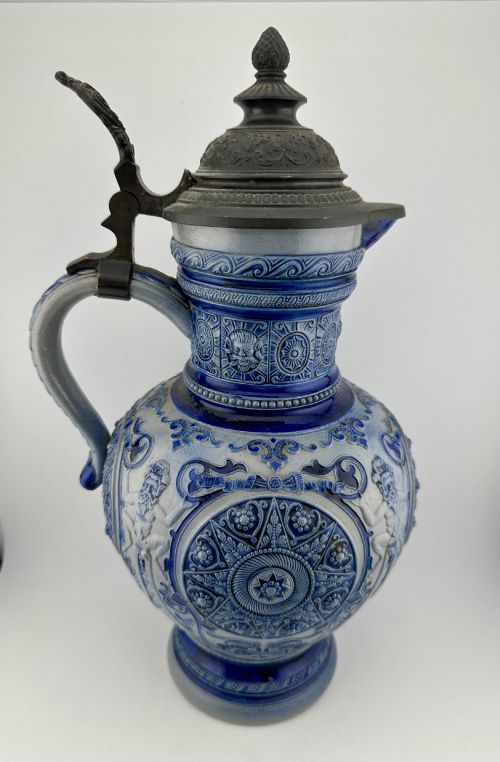
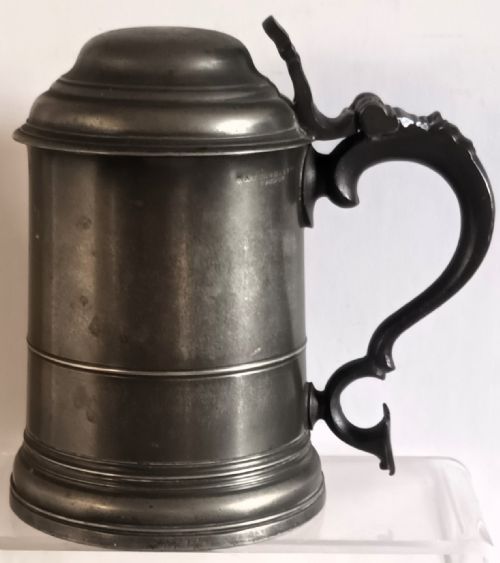


Pewter Lid Beer Stein
Pewter lid beer stein designs bring together robust metal and heavy ceramic or glass bodies for proper tavern service.
Pewter Lid Beer Stein
A pewter lid beer stein represents the traditional vessel for serving ale and beer across centuries of drinking culture. When searching for a pewter lid beer stein, buyers encounter robust tankards, flagons, and jugs spanning the eighteenth and nineteenth centuries.
The selections on this page bridge British and continental European workshops, featuring both plain metal forms and decorated ceramic or glass bodies. English quart and pint measures sit alongside German salt-glazed stonewares and tin-glazed earthenwares.
Makers ranged from Westphalian potters to Liberty and Co designers working in the Arts and Crafts style. These vessels served practical domestic or tavern roles before becoming decorative objects for collectors.
How they were made
Makers shaped pewter through casting and hammering to create durable lids, handles, and thumbpieces for metal tankards. Body construction varied widely, utilising salt-glazed stoneware, tin-glazed earthenware, glass, copper, and Old Sheffield Plate.
Potters decorated ceramic bodies with cobalt blue pigments and moulded reliefs, while metalworkers engraved armorials or chased natural motifs like hops onto flagon walls.
Pewter Lid Beer Stein Retail Price Guide 2026
Typical asking prices for pewter lid beer stein among the pieces listed under this phrase on Sellingantiques today, from the lower quarter to the upper quarter. They describe what is for sale here now, not the wider market.
Materials span Pewter, Stoneware, Cobalt, Old Sheffield Plate, Copper, Silver, Salt-Glazed Stoneware, and Tin-Glazed Earthenware.
What varies in quality
Quality rests upon the crispness of the casting in the metal lid and thumbpiece, alongside the balance and weight of the vessel body. Early examples demonstrate careful proportioning in touchmarks and handle attachment.
Surface preservation distinguishes standard tavern pieces from workshop productions designed by notable artists. Intact hinges, unblemished glazing, and clear maker marks elevate the standing of a tankard.
Watts & Harton·Archibald Knox for Liberty & Co·Burgum & Catcott·Mettlach
The Pewter Lid Beer Stein Glossary
- Thumbpiece
- The small lever attached to the lid that allows the drinker to open the vessel with one hand. It often takes the form of a cast scroll or ball.
- Salt-Glazed Stoneware
- A ceramic fired at high temperatures with common salt thrown into the kiln to produce a pitted, orange-peel texture on the glaze. This material resists liquids effectively.
- Old Sheffield Plate
- A composite material made by fusing a thin sheet of silver to a thicker copper base. It provides the appearance of solid silver at a lower weight and cost.
- Westerwald
- A German region renowned for producing salt-glazed stoneware decorated with cobalt blue incisions. These vessels frequently feature geometric and floral stamp work.
- Tin-Glazed Earthenware
- Pottery coated with a white tin oxide glaze that provides an opaque background for painted polychrome decoration. It includes styles known as Delft or faience.
Pewter Lid Beer Stein: Frequently Asked Questions
What is a pewter lid beer stein?
A pewter lid beer stein is a drinking vessel featuring a hinged metal cover designed to keep drinks covered. These pieces combine metal work with ceramic, glass, or metallic bodies.
They originate from various European traditions, serving households and taverns alike during the eighteenth and nineteenth centuries.
How do I date an old tankard?
Dating relies on examining the shape of the thumbpiece, handle style, and construction methods. Maker marks and touchmarks stamped into the pewter provide specific attribution.
Material choices like salt-glazed stoneware or Old Sheffield Plate also point to distinct periods of manufacturing.
Were these vessels used daily?
Most examples served practical functions in homes, inns, and guild halls for dispensing ale and beer. Sturdy materials like pewter and stoneware endured regular washing and handling.
Some ornamental flagons and masonic presentation pieces were made primarily for display or ceremonial gatherings.
How should I clean my tankard?
Cleaning requires gentle washing with mild soap and warm water to protect historic metal patinas and ceramic glazes. Abrasive polishes can remove aged surface character from pewter.
Dried surfaces should be dried promptly with a soft cloth to prevent spotting.