



Pewter Ale Vessel
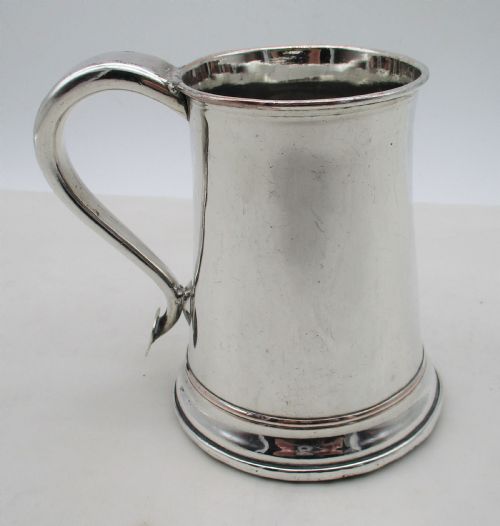
These pewter ale vessel pieces are heavy domestic drinking containers and measures crafted to hold ale across the eighteenth and nineteenth centuries.
Pewter Ale Vessel
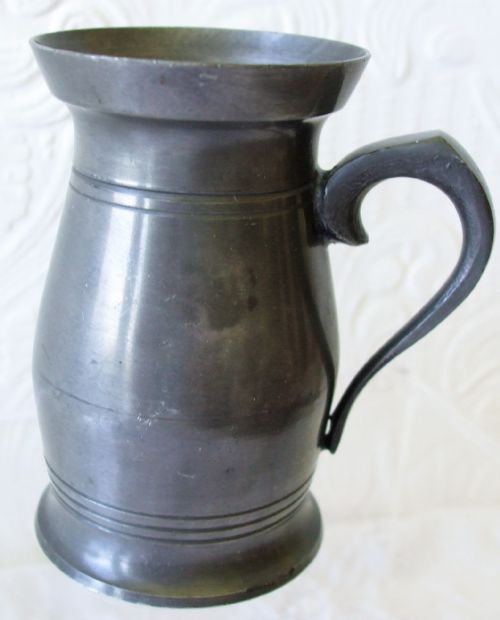
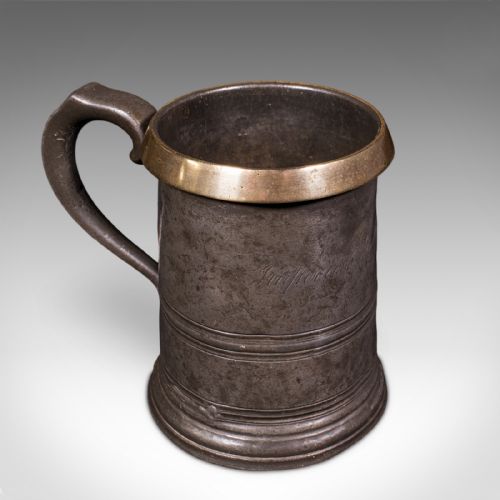
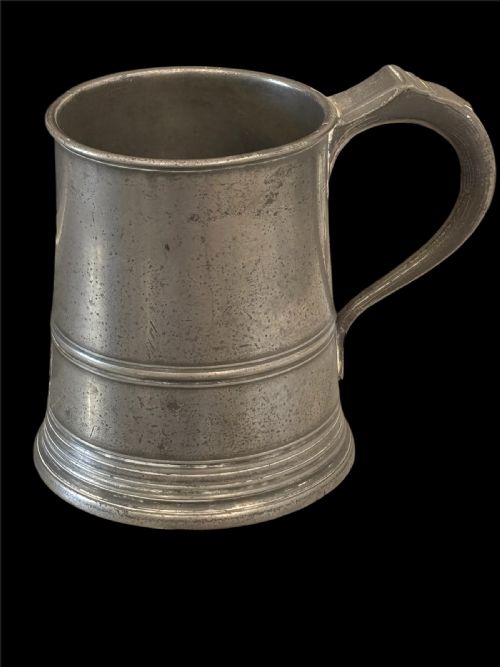
A pewter ale vessel on this page typically takes the form of a tankard, jug, pitcher, flagon or measured mug. These drinking vessels served public houses and domestic tables during the Georgian and Victorian eras.
The items range from small gill measures to large one gallon jugs, alongside Quart tankards and spouted spire flagons. English examples from the eighteenth and nineteenth centuries dominate the selection.
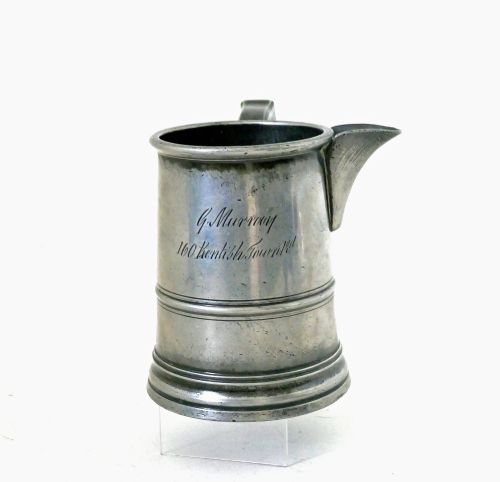
Makers mark several pieces with pub names or individual inscriptions, such as the Yew Tree Inn or engravings for G. Murrouy of Kentish Town Road.
How they were made
The primary material is pewter, an alloy traditionally composed of tin alloyed with copper and lead or other metals, shaped into heavy bodies for daily tavern use. Old Sheffield Plate also appears among the drinking vessels, combining copper and silver fused together.
Surface treatment involves hand engraving for names and addresses, alongside plain polished metal finishes designed for robust handling. Makers apply touchmarks and capacity stamps directly to the metal surfaces.
One nimble flagon comes fitted with a spouted spire, ready to pour ale with architectural precision.
What varies in quality
Quality rests in the weight of the metal and the crispness of touchmarks or capacity stamps left by the maker. Thicker walls and substantial bases distinguish superior vessels intended for heavy public house service.
The clarity of engraved inscriptions and the survival of original plating on Old Sheffield examples separate standard utilitarian pieces from more finished examples.
Richard Morton·Frederic Sanders
The Pewter Ale Vessel Glossary
- Pewter
- A malleable metal alloy consisting principally of tin, historically used for domestic tableware and drinking vessels. It provides a dull grey lustre that polishes up with use.
- Quart
- A traditional unit of liquid capacity equal to two pints, commonly stamped onto large tavern tankards. Quart vessels formed the standard measure for bulk ale service.
- Old Sheffield Plate
- A composite material formed by fusing a sheet of silver to a copper base, producing plate used for fine tankards. This technique preceded modern electroplating.
- Gill
- A liquid unit measure equal to a quarter of a pint, seen on small tavern vessels. Gill measures controlled exact portions for spirits and ale.
- Spouted spire flagon
- A tall drinking vessel featuring a narrow tapered lid and a pouring spout, utilised for serving liquids. These distinct flagons represent eighteenth-century metalwork.
Pewter Ale Vessel: Frequently Asked Questions
What is a pewter ale vessel?
A pewter ale vessel is a container designed for serving and drinking beer, typically cast from a tin alloy.
These pieces include measures, tankards, and jugs used in homes and public houses.
How were quart jugs used?
Quart jugs served to hold and pour large amounts of ale at tavern tables.
Staff used them to transfer drink from barrels to individual drinking cups.
How do I date an antique tankard?
Dating relies on matching touchmarks, capacities, and stylistic shapes to known historical periods.
Makers often stamped their details or capacity marks directly onto the rim or body.
Why are some vessels engraved?
Engravings often recorded the specific public house, owner, or location where the vessel belonged.
Inscriptions link individual pieces to establishments like the Yew Tree Inn.