
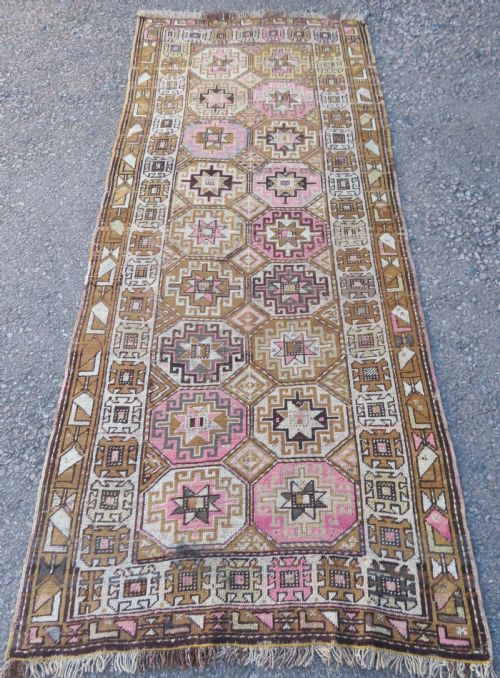


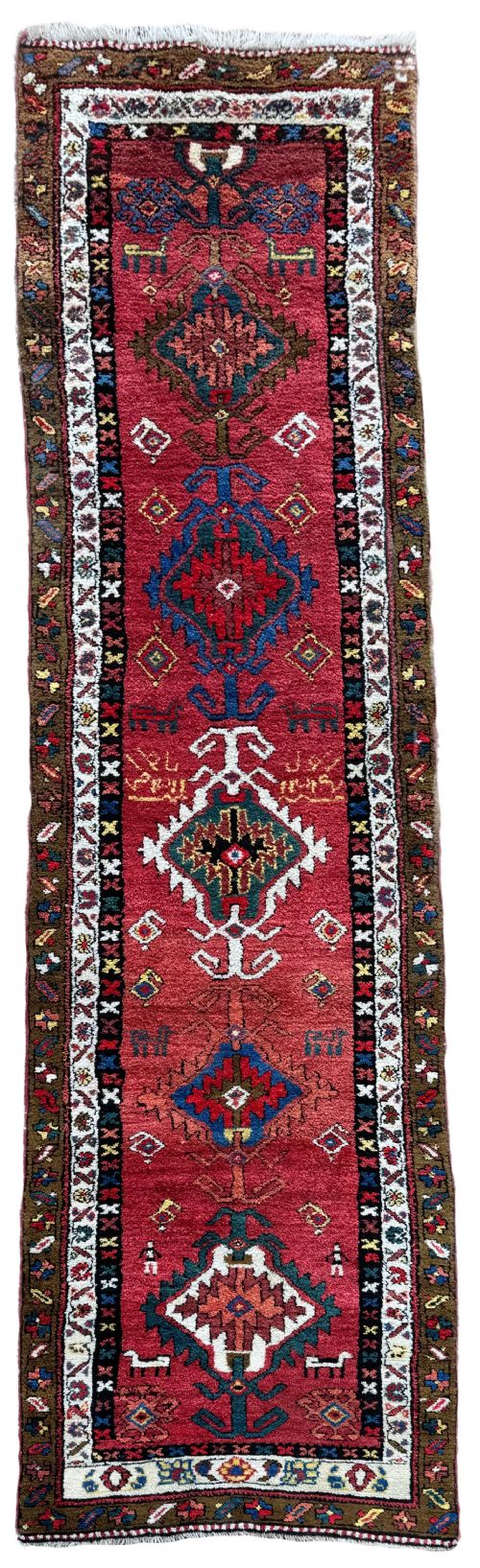
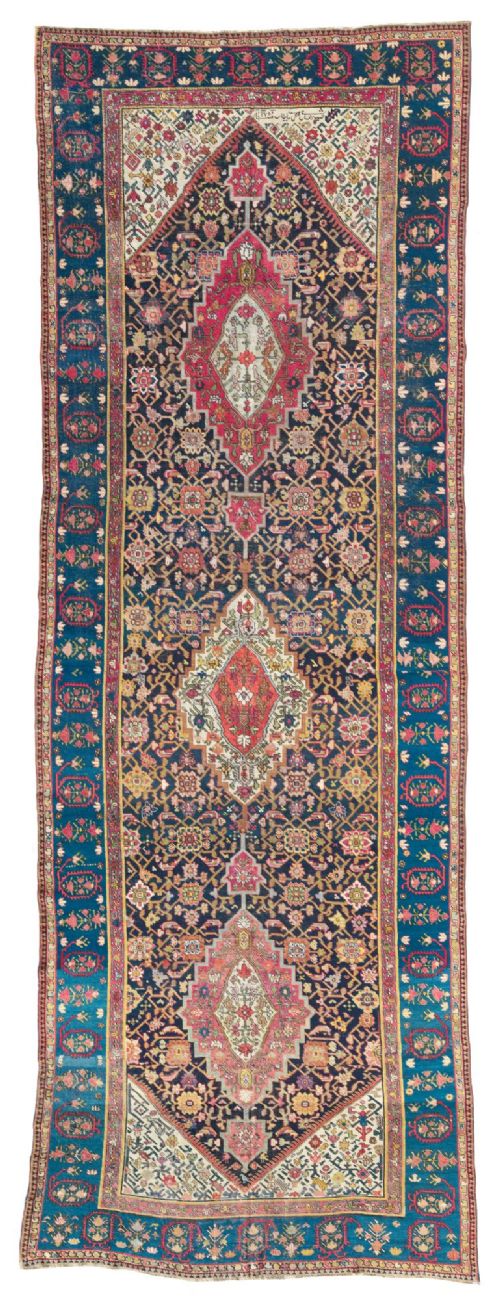
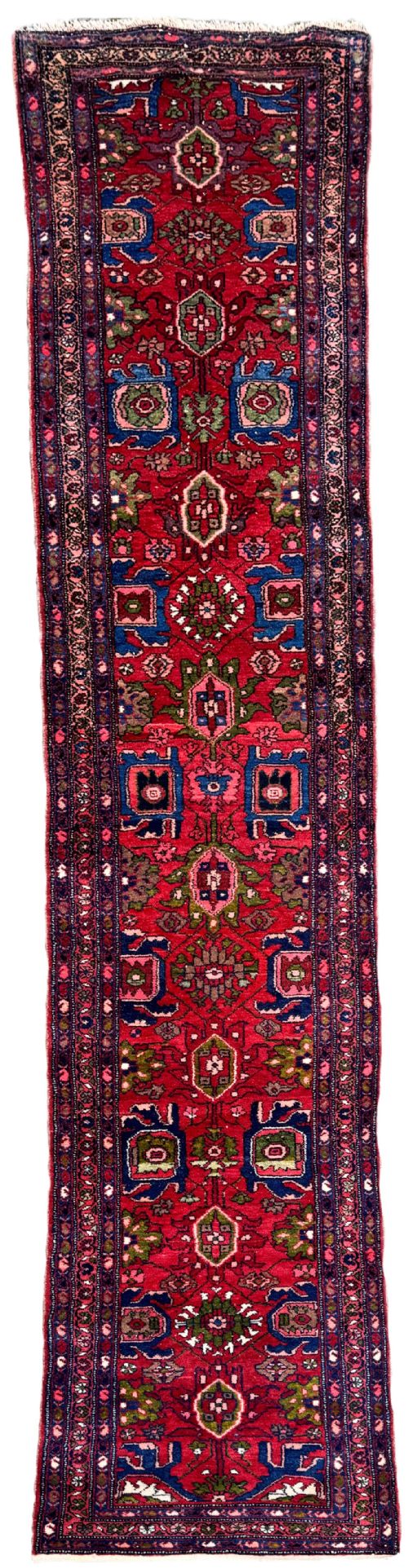
Persian Wool Corridor Runner
A persian wool corridor runner brings distinct character to a long hallway, offering warmth and durable foot traffic coverage.
Persian Wool Corridor Runner
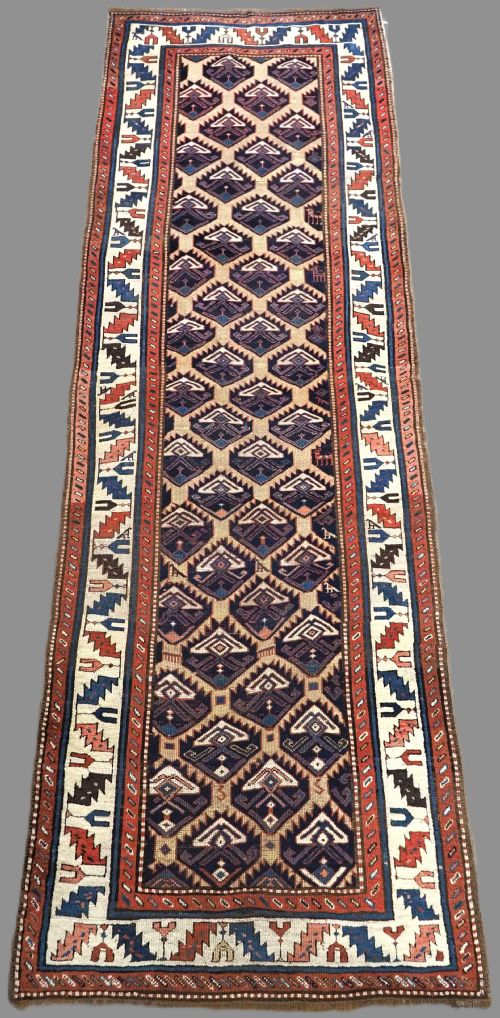
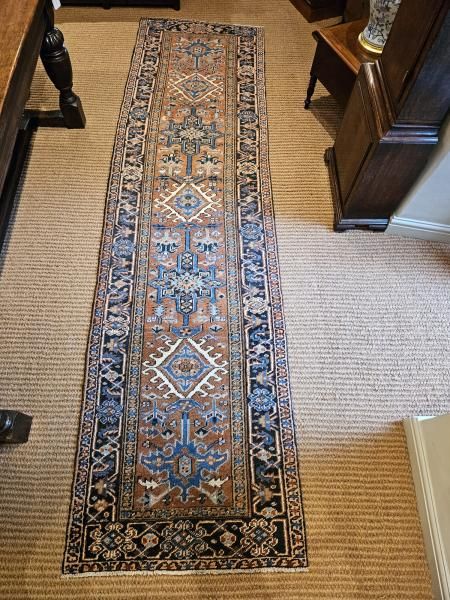
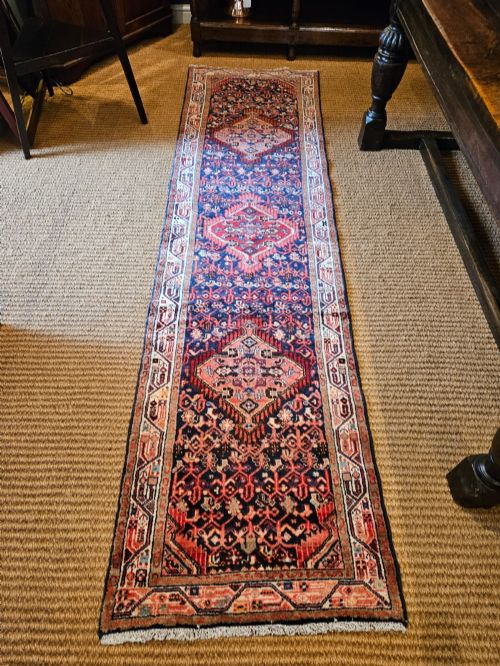
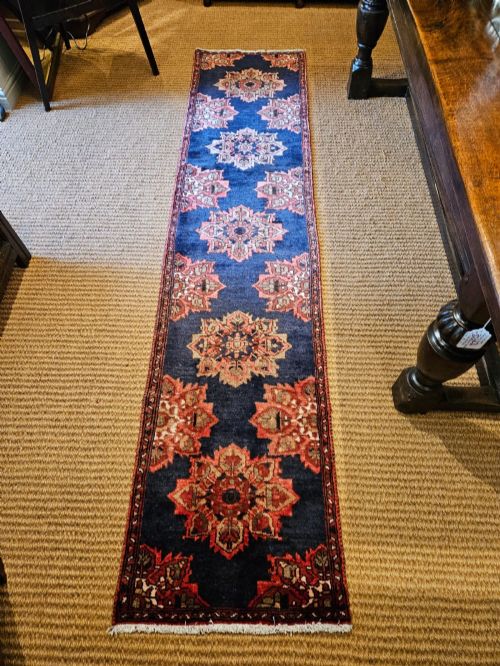
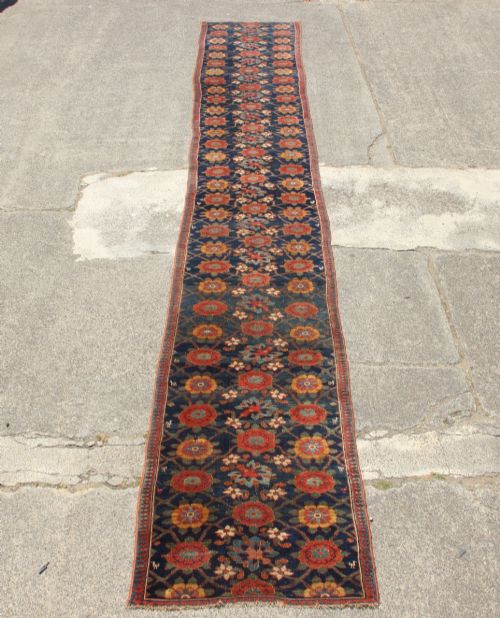
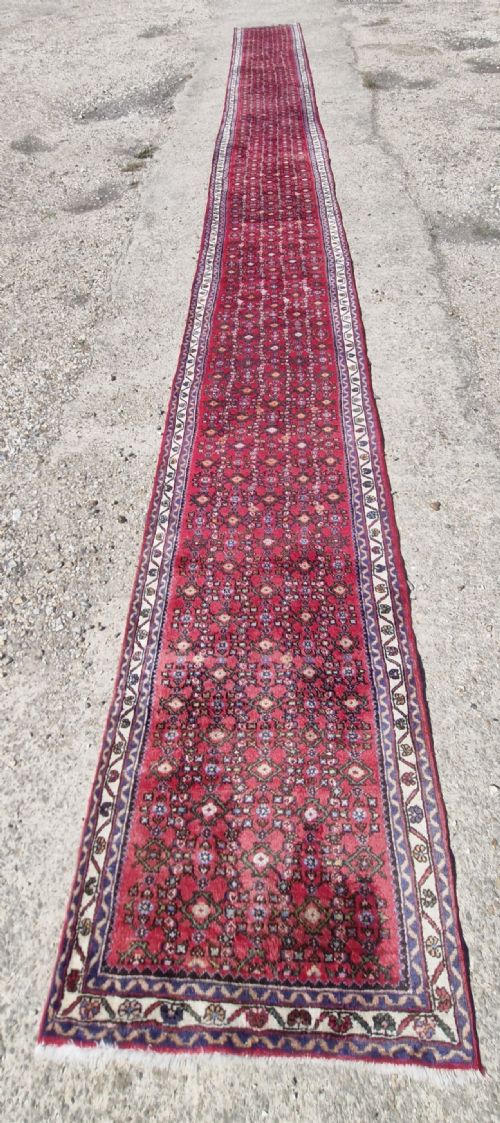
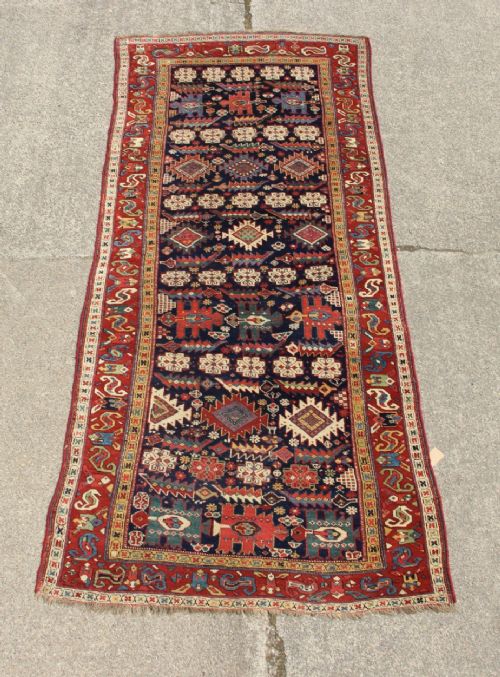
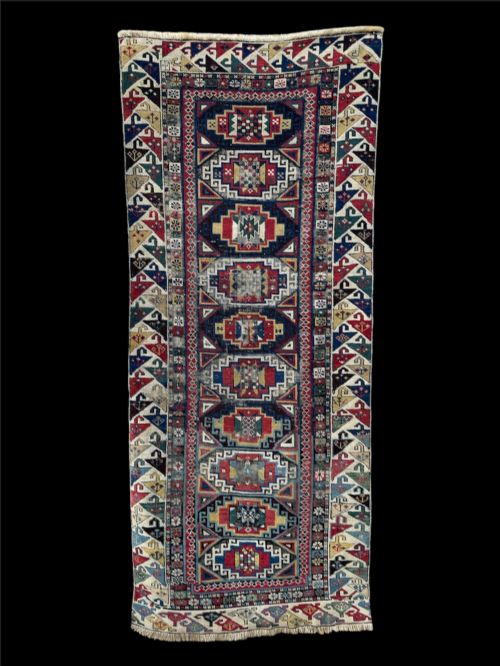
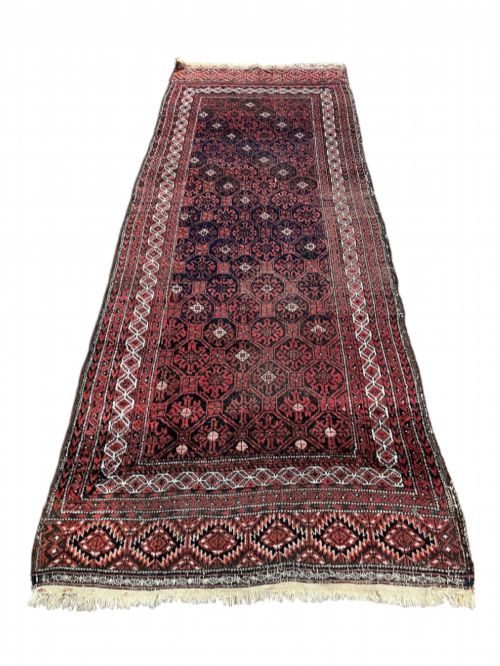
A persian wool corridor runner is a narrow, elongated floor covering designed specifically for hallways, landings and long passages. These pieces originate from village workshops and nomadic tribes across Persia, the Caucasus and Anatolia, spanning the nineteenth and early twentieth centuries.
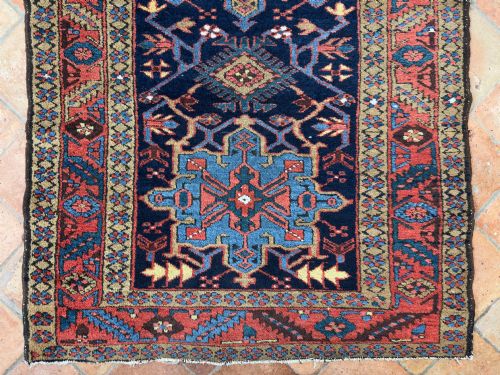
The format typically involves an elongated rectangular field flanked by geometric or floral borders, proportioned to fit narrow spaces. Buyers encounter various regional types on this page, including Kurdish, Heriz, Hamadan and Bakshaish weaves.
The palette ranges from deep navy blues and olive greens to warm madder reds and soft neutrals. Each runner reflects the utilitarian needs of domestic architecture combined with traditional tribal motifs.
What Varies in Quality
Quality rests primarily in the fineness of the knotting and the crispness of the drawing within the field. Tightly packed knots allow intricate geometric and floral patterns to remain sharp and legible.
The integrity of the wool foundation and the balance of natural dyes further distinguish superior examples. Even wear across a heavy pile indicates robust materials and careful initial construction.
Some antique runners arrive with wonderfully crooked geometry, recording the exact moment a weaver adjusted the loom while sitting by the hearth.
The Persian Wool Corridor Runner Glossary
- Knot density
- The number of knots per square unit, which dictates the clarity of the woven pattern and the durability of the rug.
- Warp
- The vertical threads stretched tightly on the loom that form the structural skeleton of the runner.
- Weft
- The horizontal threads passed between warp threads after each row of knots to lock the pile in place.
- Medallion
- A central decorative motif placed in the middle of the rug field, common in Persian weaving traditions.
- Madder
- A natural red dye derived from the root of the Rubia tinctorum plant, widely used in traditional carpet production.
Persian Wool Corridor Runner: Frequently Asked Questions
Where should I place a runner?
These pieces suit narrow corridors, entrance halls and stair landings where length and narrow proportions are required. They soften footfall and protect wooden or tiled floors in high-traffic zones.
Ensure the dimensions leave a consistent margin of exposed flooring around the perimeter of the passage for a balanced look.
How do I clean an antique wool runner?
Routine care involves gentle vacuuming without a rotating brush bar to lift dirt from the pile. Professional specialist cleaning is recommended for deep washing to protect natural dyes and wool fibres.
Avoid chemical spot treatments that can strip lanolin and alter the original coloration of the vintage material.
Are these runners durable enough for daily use?
Hand-spun wool combined with a dense knot structure provides natural resilience against heavy foot traffic. The inherent lanolin in the wool acts as a protective barrier against everyday dirt and friction.
Using an appropriate underlay prevents slippage and absorbs impact, extending the lifespan of the foundation.
How do I date an older runner?
Dating relies on assessing the dye palette, wool characteristics, weave structure and regional design motifs. Natural mineral and vegetable dyes combined with hand-spun wool typically point to production before synthetic aniline dyes became widespread.
Slight irregularities in symmetry often indicate traditional village or tribal craftsmanship rather than mass-produced uniformity.