



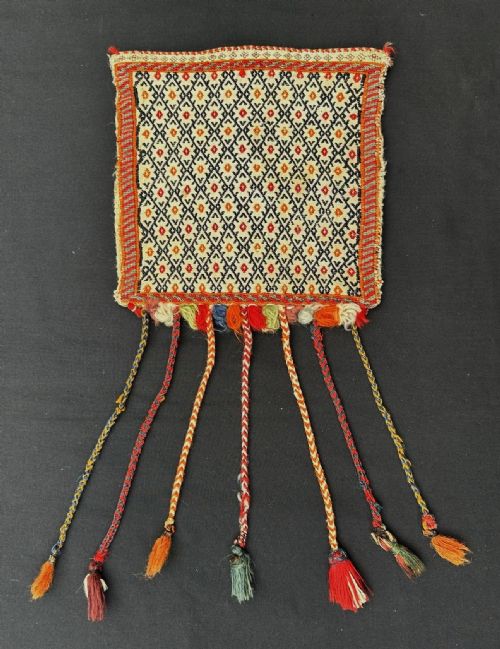


Persian Tribal Flatweave Bag
When you search for a persian tribal flatweave bag, you enter a world of nomadic textiles woven by regional groups across Persia during the nineteenth and early twentieth centuries.
Persian Tribal Flatweave Bag
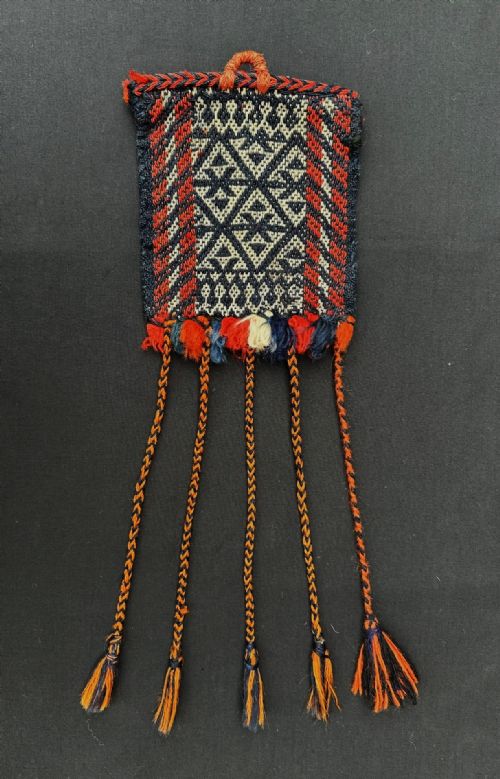
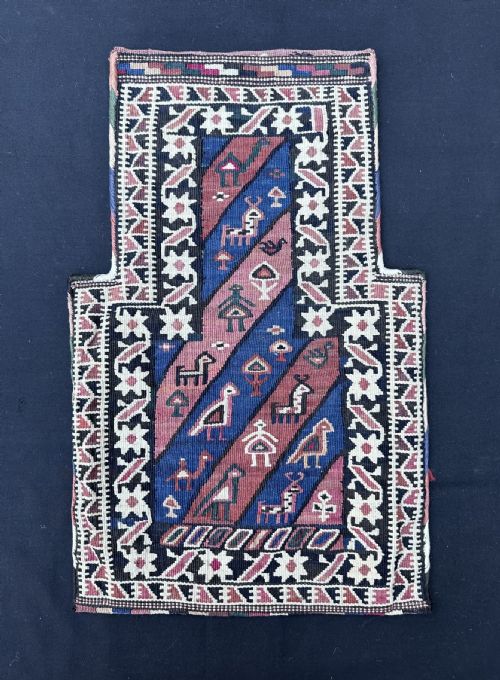
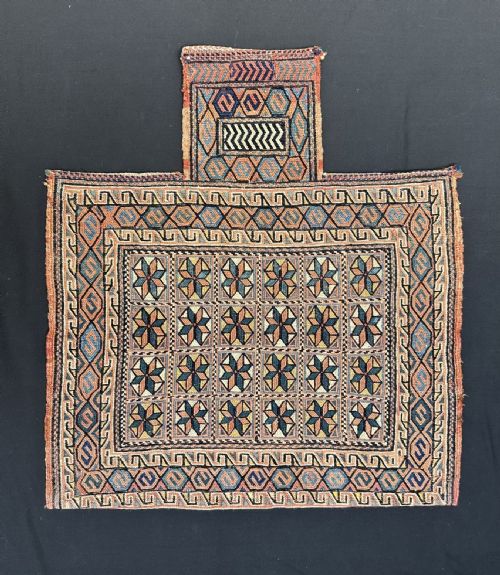
A persian tribal flatweave bag encompasses functional utilitarian items such as salt-bags, saddle-bags, vanity bags, and wheat-sacks created by nomadic confederacies and tribes. These textiles served daily practical purposes for transport and storage during seasonal migrations across diverse landscapes.
The pieces available on this page reflect specific tribal groups including the Qashqai, Shahsavan, Bakhtiari, Afshar, and Kurdish tribes. Each group produced distinctive utilitarian containers shaped by their geographic regions and cultural traditions.
How They Were Made
The construction relies heavily on hand-spun wool and cotton foundations, often incorporating goat hair for added durability along edges and backs. Natural dyes provide the palette, while soumac work and flatweave techniques create the structured surfaces.
Details such as cowrie shells, leather, and metal elements frequently appear on specific containers to reinforce seams or provide ornamentation. These materials reflect the accessible resources of pastoral nomads operating within regional Persian markets.
Nomadic weavers occasionally incorporated cowrie shells onto storage bags to ward off the evil eye during travels.
What Varies in Quality
Quality rests upon the tightness of the weave and the precision of the geometric or pictorial motifs, such as birds and dragons rendered in soumac technique. Finer examples display meticulous control over the flatweave structure and consistent dyeing methods utilising natural materials.
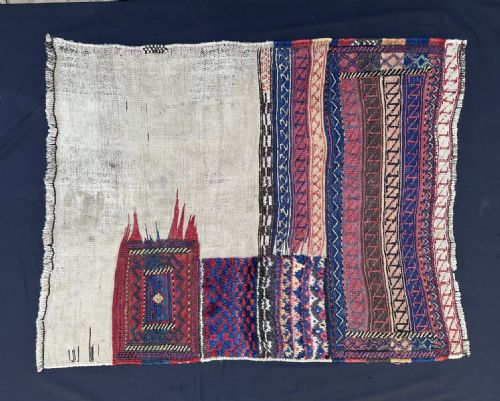
The preservation of original elements, including plain weave backs and complete paired sections, distinguishes superior survivals from partial bag faces. The handled integrity of the wool and the clarity of regional iconography determine the standing of each textile.
The Persian Tribal Flatweave Bag Glossary
- Soumac
- A supplementary weft wrapping technique that creates a durable, ribbed surface texture on the face of the textile. This method allows for crisp geometric designs.
- Khorjin
- The Persian term for a double saddle-bag used by nomads for transport on pack animals. These pieces typically feature two pouches joined by a central slit.
- Tacheh
- A large flatwoven wheat-sack or storage container utilised by nomadic groups in western regions. They often feature robust plain weave backs.
- Chanteh
- A small personal vanity bag or salt-bag woven by tribal women for intimate daily use. These smaller pouches frequently exhibit refined decorative work.
Persian Tribal Flatweave Bag: Frequently Asked Questions
What were persian tribal flatweave bags used for?
These functional textiles served nomadic households as containers for salt, wheat, personal items, and gear transported during seasonal migrations.
Different sizes and shapes corresponded to specific tasks, from small hanging salt-bags to large paired saddle-bags carried by pack animals.
How do I care for an antique flatweave bag?
Keep these textiles out of direct sunlight to protect natural dyes from fading over time. Gentle vacuuming through a mesh screen helps remove dust without damaging the fragile hand-spun wool.
Avoid hanging heavy pieces by a single point to prevent distortion of the structure.
How can I tell different tribal designs apart?
Tribal attribution relies on specific structural techniques, colour palettes, and characteristic motifs associated with groups like the Shahsavan, Qashqai, or Afshar. Regional markers in the weave structure provide clues to geographic origins across Persia.
Consulting specific tribal motifs helps connect individual bags to particular nomadic confederacies.
What is the difference between a bag face and a complete bag?
A bag face represents the decorative front panel of a storage container that has been separated from its plain weave back over time. Complete pieces retain their original reverse sides, closures, and joining strips.
Complete sets offer a more intact representation of the original utilitarian object.