


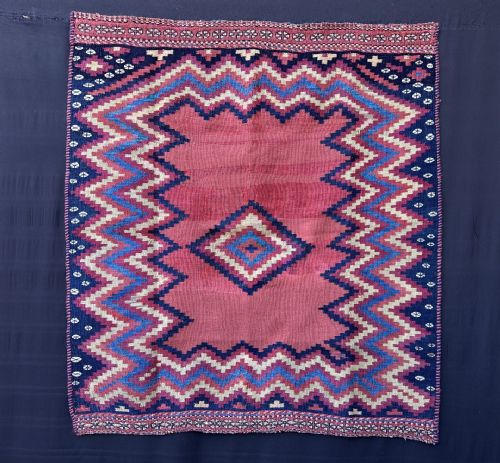


Persian Sofreh Wall Hanging
A persian sofreh wall hanging brings genuine tribal textile history into a room, offering striking geometric designs woven by nomadic makers across Persia.
Persian Sofreh Wall Hanging
A persian sofreh wall hanging originates as a flatweave cloth utilised by nomadic and village groups for dining or processing bread. These textiles appear in forms such as flatweave rugs, tribal rugs, and dining or bread sofreh cloths.
The examples available here span from the late nineteenth century into the early decades of the twentieth century, specifically from periods recorded as 1870, 1880, 1900, 1910, and 1920. Tribal makers from regions including Khorassan, Kerman, Luristan, and Kamo produced these functional cloths.
Buyers seeking a persian sofreh wall hanging encounter authentic pieces made by tribal groups such as the Baluch Salar Khani, Afshar nomads, and Lor tribes. These items transition naturally from traditional floor or domestic use to vertical display as textile art.
Materials and Construction
Weavers constructed these textiles primarily using wool and cotton, occasionally incorporating camel hair for structural or tonal variation. Natural dyes provide the rich colour palette seen across the pieces.
The manufacturing technique relies on flatweave construction, creating supple, pileless surfaces well suited for both domestic handling and wall suspension. Tribal workshops executed these weaves without standard commercial templates, ensuring each cloth is structurally unique.
Materials recorded on this page include wool, cotton, camel hair, and natural dyes applied to flatweave rugs and textiles.
Evaluating Quality and Character
Quality in a persian sofreh wall hanging rests upon the clarity of the flatweave structure and the depth of the natural dyes utilised by the weaver. Finer examples display tighter tension and precise geometric execution.
Regional provenance and tribal attribution also influence character, with specific nomadic groups demonstrating distinct design vocabularies and material selection. The integrity of the original edges and surviving fibre condition complete the assessment of a piece.
The Persian Sofreh Wall Hanging Glossary
- Sofreh
- A traditional Persian spread or cloth used for meals or bread preparation. These textiles served central domestic functions within nomadic households before finding new life as wall hangings.
- Flatweave
- A textile produced without knotted pile by interlocking warp and weft threads. This technique yields a thin, durable fabric characteristic of kilims and sofrehs.
- Natural Dyes
- Colourants derived from plant, insect, or mineral sources rather than synthetic chemical agents. These materials produce the nuanced, stable hues found in older tribal weaving.
- Afshar
- A major nomadic and semi-nomadic tribal group originating in southern Persia. Their textile output is celebrated for bold geometric arrangements and rich colouration.
- Baluch
- A tribal grouping associated with regions of north-east Persia. Their weaving traditions emphasise sturdy construction and deep, saturated tones.
Persian Sofreh Wall Hanging: Frequently Asked Questions
What is a Persian sofreh?
A sofreh is a woven cloth traditionally used in Persian households for spreading meals or handling dough and bread. Nomadic and village communities made them as utilitarian objects rather than decorative items.
Today, collectors appreciate these flatweaves as wall art because their geometric symbols and natural dyes showcase traditional tribal craftsmanship.
How do I hang a textile safely?
Hanging a flatweave requires distributing the weight evenly across the entire top edge to prevent fibre distortion. Using a fabric sleeve stitched to the reverse or a padded wooden support works well.
Avoid direct, strong sunlight to protect the natural dyes from fading over time.
Which tribes made these pieces?
The listings show pieces attributed to nomadic groups such as the Afshar, Baluch, and Lor tribes. These makers worked in various Persian provinces including Kerman, Khorassan, and Luristan.
Each tribe maintained distinct weaving habits and regional design motifs.
What materials were used?
Weavers relied on wool and cotton as the primary structural fibres, sometimes including camel hair for texture. Natural dyes supplied the distinct colour palette across all recorded pieces.
These materials combined to create a durable, flexible flatweave cloth.
How do I date a sofreh?
Dating relies on examining structural characteristics, material wear, and the specific palette of natural dyes used in the weave. Pieces on this page date from the late nineteenth century through the early twentieth century.
Comparing regional tribal patterns also helps establish the approximate period of manufacture.