
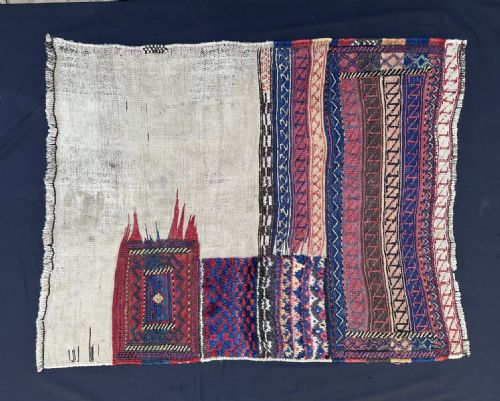


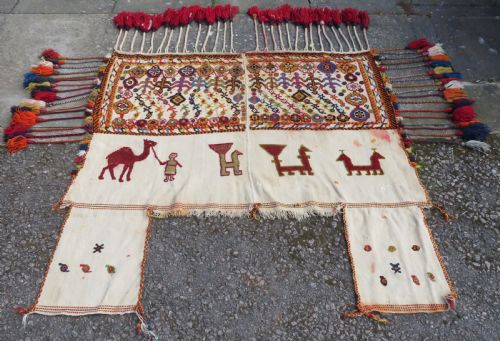

Cream Persian Textile
These cream persian textile pieces are tribal wheat sacks, bread sofreh, and ceremonial embroideries woven across western and southern Persia.
Cream Persian Textile
A cream persian textile covers utilitarian nomadic items such as grain sacks, bread cloths, water-pipe bags, and horse blanket covers. The evidence shows these pieces originating from tribal groups including the Lori-Bakhtiari nomads, Qashqa'i confederacy, and Kurdish tribes across western and central Persia. Most examples span the late nineteenth century into the early twentieth century.
Buyers encountering this page will primarily find flatwoven or embroidered tribal pieces, often featuring pale or neutral backgrounds. Specific utilitarian forms like the tacheh wheat sack and the sofreh bread cloth dominate the material record here. These functional objects carried household goods or aided in food preparation before entering the decorative market.
How they were made
Weavers utilised natural materials including wool, hand-spun wool, cotton, goat hair, and occasional silk for these textiles. Natural dyes provided the colour palette, working alongside foundational textile techniques like embroidery and flatweaving.
Nomadic workshops and tribal weavers constructed these items for daily utility, employing durable fibre combinations to withstand heavy domestic or travel use. The structural integration of wool and cotton gave these sacks and cloths the necessary strength for holding grain or bread.
Listings feature pieces spanning five decades from 1870 to 1920, utilising wool, cotton, goat hair, and natural dyes.
What varies in quality
The sophistication of the weave and the finesse of the spinning separate standard utility pieces from finer tribal examples. Finer textiles exhibit tighter knotting or more controlled flatweaving and embroidery structures.
The integrity of the natural dyes and the quality of the fibre preparation dictate the longevity and visual depth of each textile. Greater precision in regional tribal patterns indicates superior artisan skill.
The Cream Persian Textile Glossary
- Sofreh
- A cloth used for serving or preparing bread, often flatwoven by tribal groups in Persia. These textiles served a strictly domestic purpose within nomadic households.
- Tacheh
- A traditional tribal wheat or grain sack used for storage and transport. These utilitarian pieces frequently display distinctive regional motifs from western Persia.
- Qashqa'i
- A confederation of nomadic pastoralist tribes in south-west Persia known for distinctive textile production. Their woven goods often incorporate intricate tribal iconography.
- Bakhtiari
- Pastoral nomadic tribes originating from the Chahar Mahal region of western Persia. Their textiles are recognised for robust construction and traditional regional patterns.
Cream Persian Textile: Frequently Asked Questions
How are tacheh sacks used?
Tacheh sacks served as functional wheat or grain sacks for storage and transport among nomadic tribes in western Persia. Families relied on these sturdy bags to carry staple foodstuffs during seasonal migrations.
Constructed with robust flatweave techniques, they accommodated heavy loads of grain while maintaining structural integrity. Today, these sacks survive as collectible examples of tribal textile art.
Where were these textiles made?
These textiles originated in various regions of Persia, particularly the Chahar Mahal valley, Fars province, and central areas like Kamo. Different tribal confederations, including the Lori-Bakhtiari and Qashqa'i, produced them within their respective territories.
Each region developed specific structural methods and design vocabularies tied to local nomadic traditions. This geographic diversity allows collectors to trace individual pieces back to specific tribal groups.
What fibres appear in these pieces?
Weavers utilised local materials such as sheep wool, hand-spun wool, cotton, goat hair, and occasionally silk. Natural dyes sourced from plants and minerals provided the colour palette for the threads.
Goat hair often reinforced high-wear edges, while wool and cotton formed the main body of sacks and cloths. These organic materials ensured the textiles could endure harsh nomadic living conditions.