

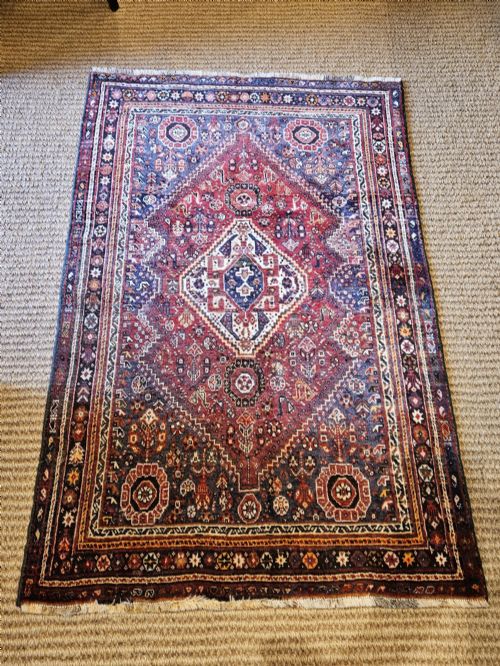


Persian Sarouk Runner
A Persian sarouk runner brings enduring elegance to long corridors with dense motifs and rich wool pile woven in western Persia.
Persian Sarouk Runner
A Persian sarouk runner is a specialised floor covering designed for hallways and corridors, created in western Persia during the early decades of the twentieth century. These pieces combine traditional Persian styling with robust proportions, featuring notable examples that stretch to exceptionally long and narrow dimensions.
The selections available on this page encompass various formats including narrow carpet runners and traditional rug runners dating across the 1900s, 1910s, 1920s and 1930s. Buyers will also encounter related regional variants such as Ferahan, Mohajeran Saroukh, and Mahal types within the wider grouping.
Makers in these traditions produced format varieties ranging from compact hallway lengths to sweeping formats measuring over seven metres. Each piece serves to anchor narrow domestic spaces with time-honoured design patterns characteristic of western Persian workshops.
Materials and construction methods
The foundation of a Persian sarouk runner typically relies on sturdy cotton warps and wefts to provide structural stability. Artisans knotted resilient wool pile directly onto this cotton grid, ensuring the finished textile could endure heavy foot traffic along corridors.
Weavers utilised natural dyes and durable spinning techniques to achieve the deep rust backgrounds and intricate pictorial elements seen in traditional pieces. These construction choices preserved flexibility while maintaining tight knots across large surface areas.
Current listings feature pieces exclusively dated between 1900 and 1930, constructed from wool and cotton.
Distinctions in quality and execution
Proportion and scale also influence the standing of an individual runner, particularly those maintaining exceptionally long and narrow dimensions without distortion. The integrity of the wool pile and the preservation of the original cotton foundation dictate long-term durability.
The Persian Sarouk Runner Glossary
- Runner
- A long, narrow carpet format specifically suited for hallways, corridors, and stairs. These pieces guide movement through domestic spaces while protecting wooden floors.
- Sarouk
- A style of Persian rug originating from the village of Sarouk and surrounding districts in western Persia. Known for dense wool construction and sophisticated traditional motifs.
- Ferahan
- A stylistic classification linked to fine Persian weaving traditions noted for refined floral vocabulary and detailed composition. These pieces often pre-date or overlap with standard Sarouk production.
- Mahal
- A designation for room-size and runner carpets produced in the region, generally featuring more relaxed overall patterns than strict city-centre rugs. They offer decorative versatility in traditional interiors.
- Pile
- The upright or knotted surface of a rug formed by the cut ends of yarn. Wool pile provides cushioning and warmth underfoot.
Persian Sarouk Runner: Frequently Asked Questions
Where should I place a runner?
These long carpets suit hallways, corridors, and narrow passageways where linear floor coverings soften footfalls and warm timber boards.
They also work effectively in galley kitchens or beside bedroom furniture where restricted widths require tailored proportions.
How do I care for wool pile?
Regular gentle vacuuming without a beater bar removes surface dust and grit from the wool fibres without pulling the knots.
Professional cleaning tailored to antique textiles ensures the cotton foundation and natural dyes remain stable over decades of use.
What defines the early twentieth century style?
Pieces from the decades between 1900 and 1930 frequently display traditional Persian floral vocabulary combined with robust wool construction.
Distressed patination and oxidized rust backgrounds often develop naturally through age and domestic habitation.
How do I measure for a narrow hallway?
Leave an equal margin of exposed wooden floorboards around the perimeter of the carpet to frame the runner correctly within the corridor.
Account for door clearances at both ends of the passage to ensure the rug does not impede everyday movement.