
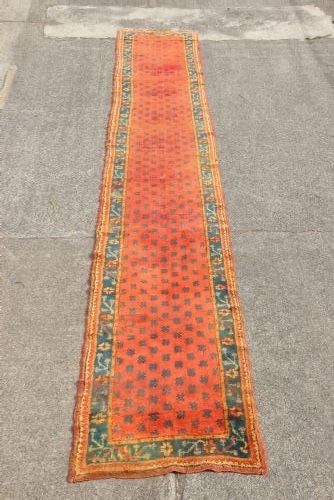
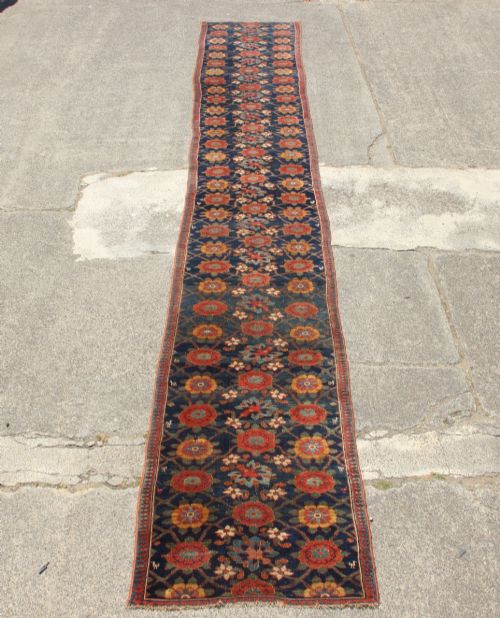
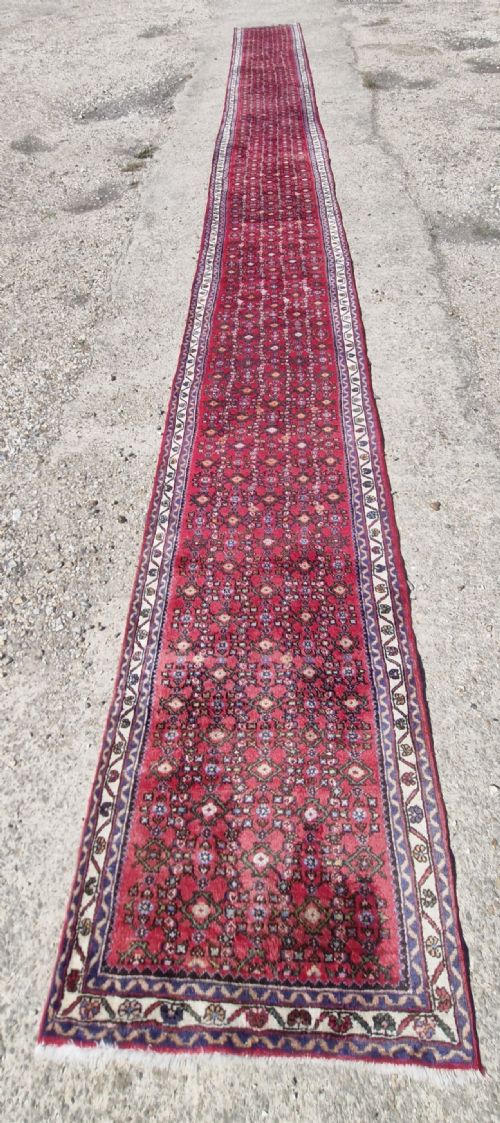


Extra Long Corridor Runner
An extra long corridor runner spans grand halls and lengthy landings with wool and cotton underfoot.
Extra Long Corridor Runner
An extra long corridor runner provides narrow, extended flooring for hallways, corridors, and landings. These floor coverings bridge long distances in domestic architecture, often stretching well beyond standard rug lengths.
The selections span tribal, traditional, and regional designs originating from periods such as the nineteenth and twentieth centuries. Buyers encounter styles ranging from Kurdish tribal and Moroccan Berber to traditional Persian weaves like Heriz and Malayer.
Most pieces on this page utilise wool pile set on cotton foundations, tailored specifically for narrow spaces. Dimensions frequently exceed four metres in length while maintaining restricted widths suited to corridors.
Materials and construction
Weavers constructed these runners almost exclusively using wool for the surface pile and cotton for the structural warp and weft foundations. Wool supplied durability for high-traffic hallways while cotton provided stable tension across extended lengths.
Traditional hand-knotting and weaving techniques created dense, resilient floor coverings designed to withstand decades of foot traffic. Artisans tied individual knots by hand across narrow looms to achieve specific tribal or regional patterns.
Listings feature wool and cotton runners spanning production dates from the mid-nineteenth century through the 1960s.
What separates the grades
The degree of knot density and precision in pattern execution dictates the refinement of a runner. Finer weaves display intricate motifs such as Mina Khani designs with greater clarity along the extended field.
Proportion and scale distinguish exceptional lengths from standard formats, particularly when weavers maintained straight, uniform widths across massive spans exceeding six or twelve metres. The harmony of natural dye variations also influences the visual weight of the piece.
The Extra Long Corridor Runner Glossary
- Runner
- A long, narrow carpet designed specifically for hallways, stairs, and corridors. These pieces measure significantly longer than they are wide.
- Warp
- The vertical foundation threads stretched lengthwise on a loom, carrying the fringe and supporting the entire textile. Cotton is commonly utilised for this purpose in these pieces.
- Weft
- The horizontal threads passed across the warp strands to lock the knots in place after every row of pile. Together, warp and weft form the supportive grid of the rug.
- Pile
- The raised, soft surface of a rug formed by the clipped ends of knot threads or woven loops. Wool serves as the primary material for this wear layer.
- Kelleh
- A large, oblong format of Persian carpet traditionally narrower than a standard room-size rug but broader than a typical corridor runner.
Extra Long Corridor Runner: Frequently Asked Questions
Where should I place an extra long corridor runner?
These narrow floor coverings fit naturally in extended hallways, long galleries, and expansive landings where standard rugs fall short. Their restricted width accommodates narrow architectural spaces without crowding skirting boards or doorways.
Positioning them centrally allows the pattern to guide the eye down the full length of the passage while protecting underlying floorboards from heavy foot traffic.
How do I measure for a long hallway runner?
Measure the clear floor space of your corridor, leaving an equal margin of exposed wood or tile visible on all sides. Account for door clearance so that doors swing freely over the pile without catching.
Take measurements from multiple points along the length, as older hallways can vary slightly in width from one end to the other.
Are these runners made of wool and cotton?
Traditional runners of this type utilise wool for the soft upper pile and cotton for the hidden foundation threads. Wool resists wear from footsteps while cotton offers the structural stability needed for extreme lengths.
This combination ensures the textile maintains its shape along spans measuring several metres.
How do I tell different tribal styles apart?
Kurdish and Moroccan styles often feature geometric, tribal motifs with expressive, asymmetric touches born of nomadic weaving traditions. Persian types like Heriz and Malayer typically present structured medallion layouts and traditional floral interpretations.
Examining the border arrangements and colour palettes helps reveal the specific regional origin of each piece.