




Persian Sarouk Carpet
A persian sarouk carpet brings dense floral motifs and rich wool pile woven in West Persia into domestic spaces.
Persian Sarouk Carpet
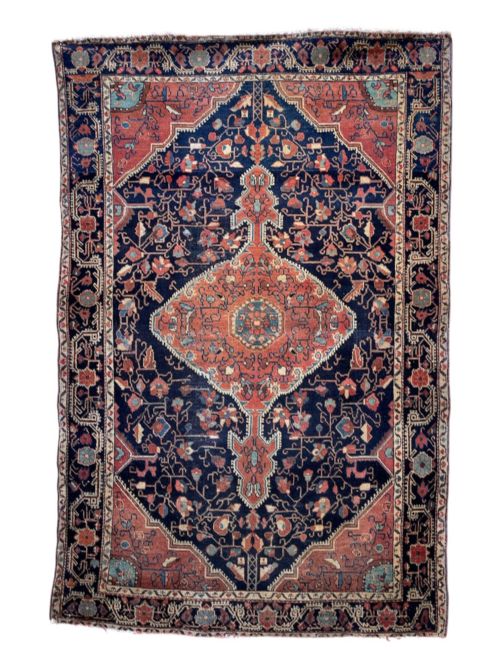
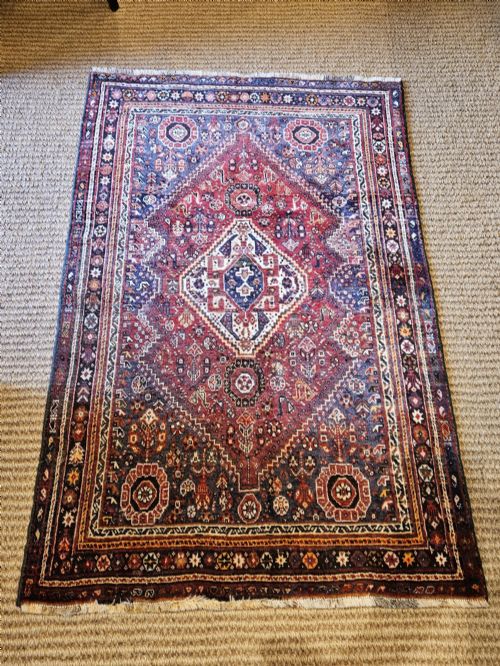
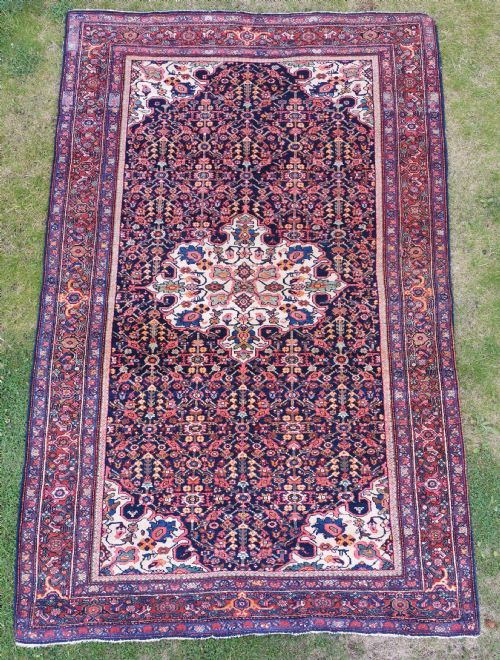
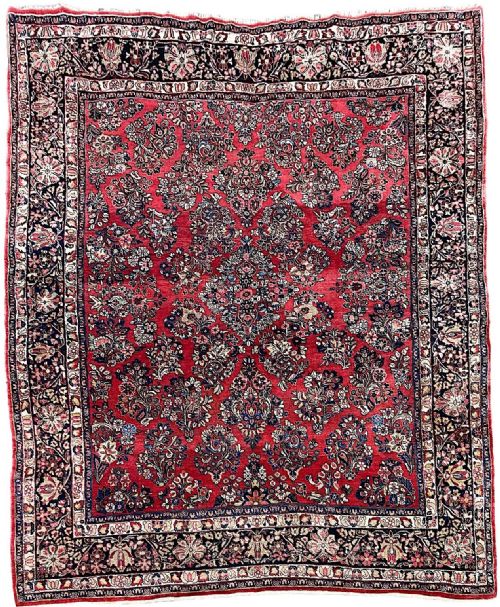
A persian sarouk carpet originates from the Markazi province of West Persia, specifically drawing on traditions from villages like Jozan and Ferahan. Buyers encounter various room formats here, spanning large carpets, smaller scatter rugs, and notably long narrow runners.
The objects listed display production dates stretching from the late nineteenth century through to the 1930s. Traditional formats range from compact village weaves to expansive room-size carpets created for grand interiors.
Materials and Construction
Makers constructed these floor coverings utilising durable wool pile knotted firmly onto sturdy cotton foundations. This pairing provided the structural stability required for heavy daily use while permitting precise detail in the floral patterns.
Weavers employed traditional Persian techniques, yielding dense knots that support intricate designs such as boteh motifs, garden elements, and birds amongst pomegranates. The resulting fabric holds its form across extended runner lengths and wide room-size formats alike.
Certain antique runners stretch over seven metres long, built strictly for endless corridors.
Assessing Quality and Execution
Quality rests upon knot density and the precision of the weave, where finer examples display tighter pile and sharper delineation of floral layouts. The handling of natural dyes also dictates visual depth, separating standard village production from exceptionally fine signed pieces.
Proportion and scale influence desirability, particularly in long narrow runners or exceptionally large room-size carpets that maintain structural integrity across challenging dimensions. Surviving pile condition further distinguishes well-preserved specimens from heavily worn alternatives.
The Persian Sarouk Carpet Glossary
- Sarouk
- A type of Persian carpet originating from the Markazi region, known for resilient wool construction and detailed floral arrangements. These pieces often incorporate village-specific stylistic elements from surrounding areas like Jozan.
- Ferahan
- A village style associated with fine nineteenth-century Persian weaving. Pieces bearing this attribution display delicate floral drawing and exceptional wool quality.
- Boteh
- A stylised almond or paisley motif representing a floral shoot or cypress tree. It appears frequently throughout traditional Persian textile designs.
- Jozan
- A village producing rugs characterised by sturdy construction and distinct local patterns within the broader Sarouk tradition. These items often feature rich colour palettes.
- Runner
- A long, narrow carpet format designed for hallways, staircases, or corridors. Examples in this category exhibit extended proportions relative to their width.
Persian Sarouk Carpet: Frequently Asked Questions
Where were these carpets made?
These textiles originate from West Persia, specifically villages and towns within the Markazi province including Sarouk, Jozan, and Ferahan. Local workshops produced them for both domestic use and export.
Production flourished from the nineteenth century through the early decades of the twentieth century, establishing distinct regional identities across different towns.
How do I maintain my carpet?
Protect the wool pile by using a quality underlay to prevent sliding and reduce friction against hard floors. Vacuum gently without using a aggressive beater bar.
Rotate the rug periodically to ensure even wear patterns from foot traffic and sunlight exposure. Professional cleaning suited for antique wool is recommended when necessary.
What designs appear on these rugs?
Common motifs include intricate floral arrangements, central medallions, trailing vines, and the traditional boteh shape. Certain pieces incorporate pictorial elements such as birds and pomegranates.
Background colours often feature rust, deep reds, or softer muted tones that highlight the complexity of the woven patterns.
How are different periods identified?
Dating relies upon stylistic markers, structural characteristics, and dye types visible in the wool and cotton foundation. Late nineteenth-century examples often exhibit finer village weaves and specific palette nuances.
Early twentieth-century pieces frequently display standard room-size formats or extended runner proportions suited to changing interior demands.