





Persian Qashqai Rug
A persian qashqai rug brings the rich nomadic heritage of South-West Persia directly onto the floor through intricate tribal weaving and expressive motifs.
Persian Qashqai Rug
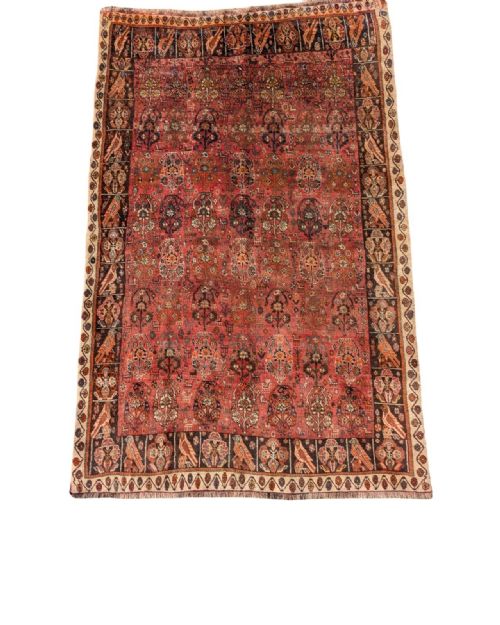
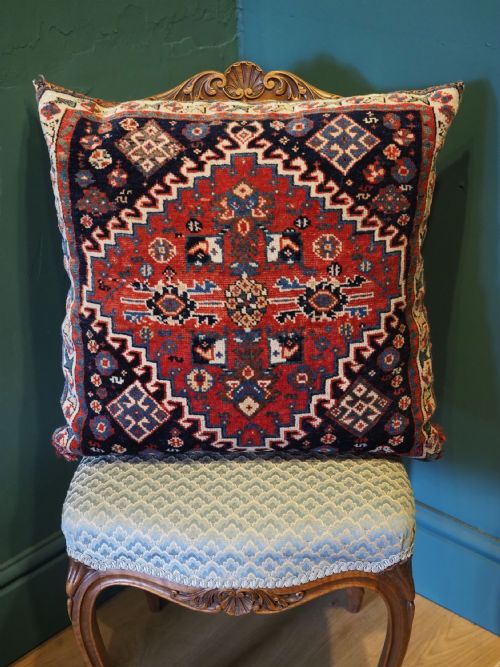
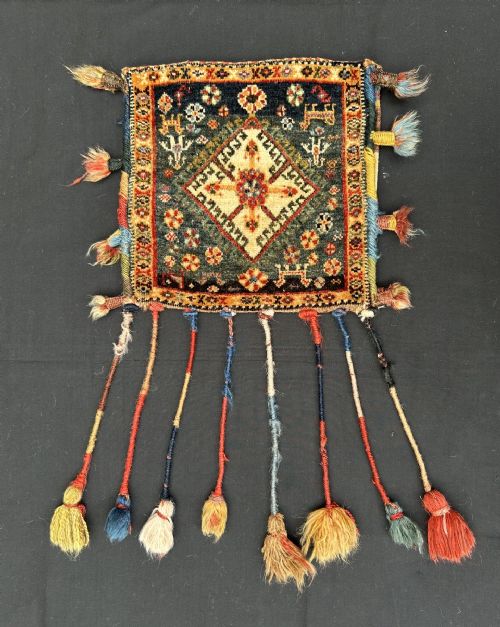
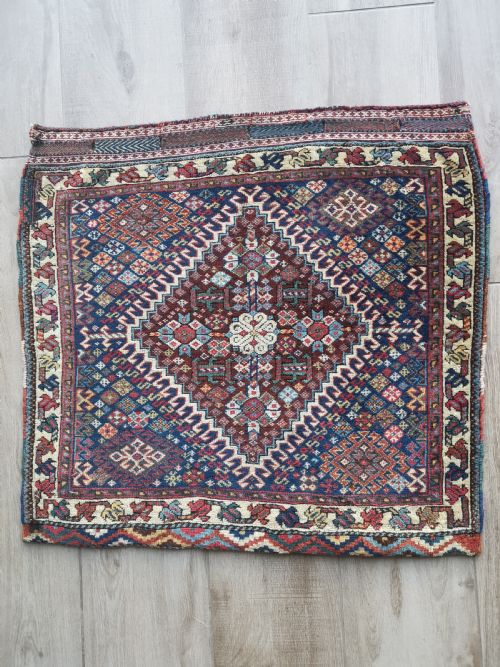
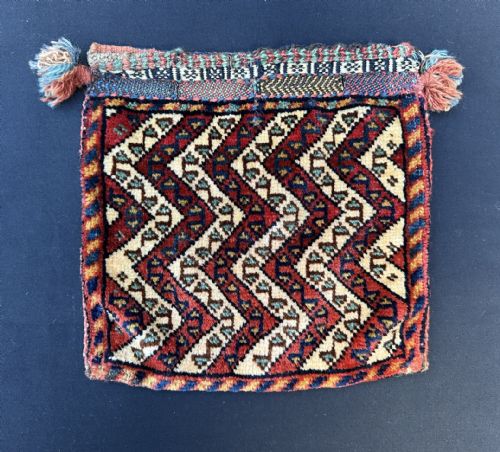
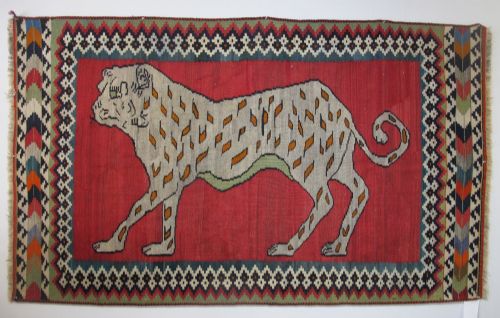
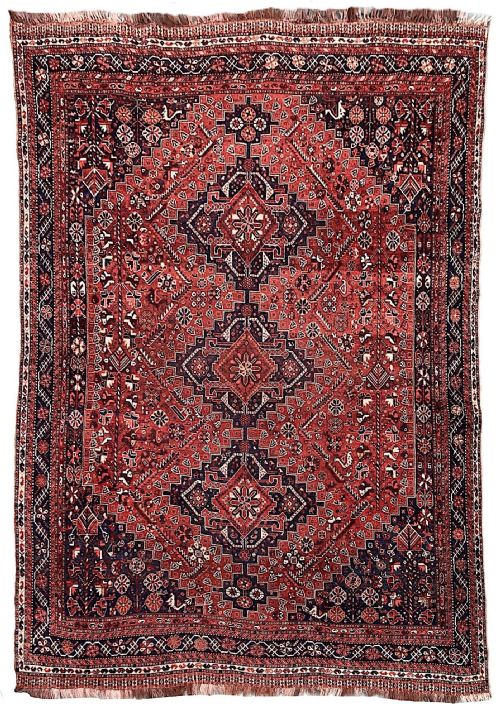
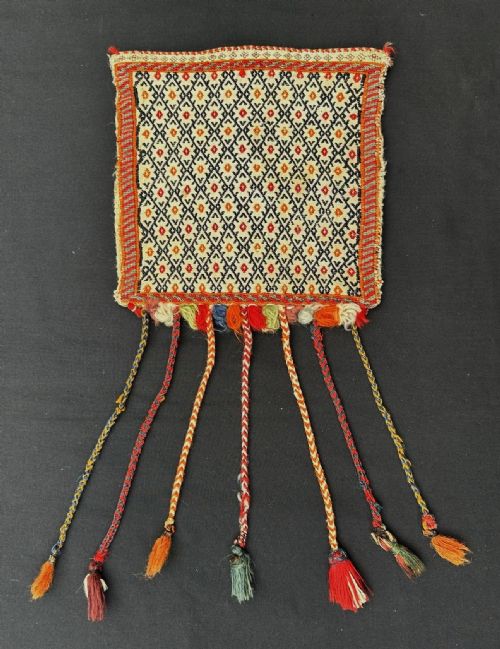
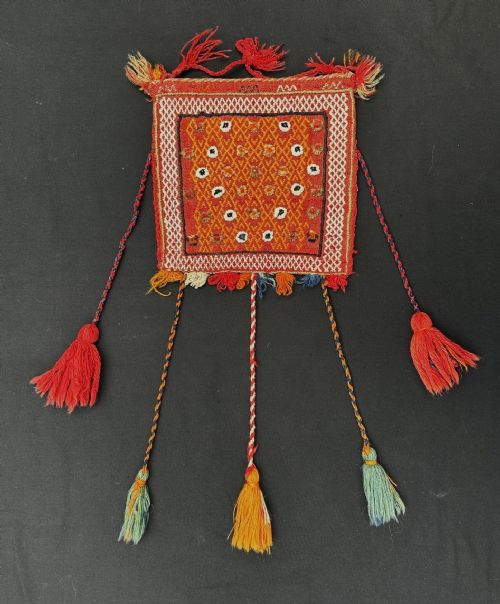
When searching for a persian qashqai rug, collectors encounter traditional tribal floor coverings originating from the Fars province of South-West Persia. These pieces include larger carpets, area rugs, kilims, and smaller utilitarian items such as saddlebags and vanity bags.
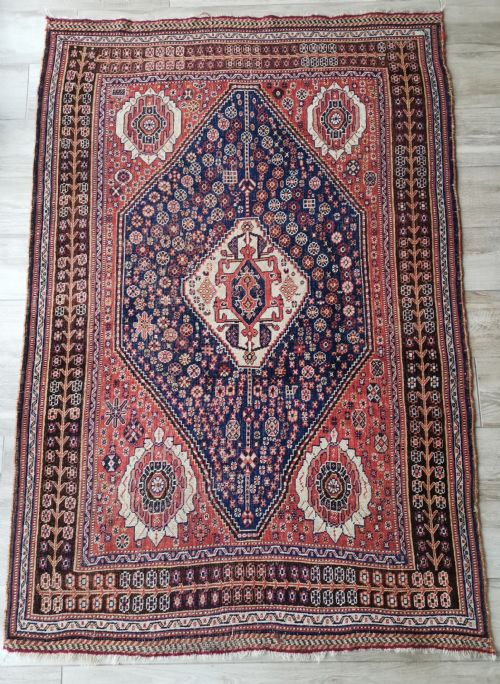
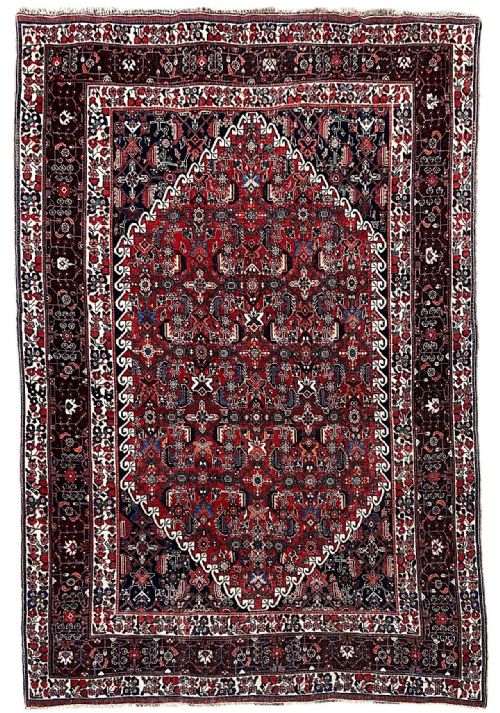
The pieces on this page stem largely from the late nineteenth and early twentieth centuries, spanning from the 1870s up through the 1930s. Buyers are most likely to meet authentic room-size rugs and smaller tribal weavings bearing classic medallion layouts or animal motifs.
Weavers from tribal confederacies and specific sub-tribes produced these textiles using traditional designs passed down through generations. The resulting works range from straightforward geometric field patterns to elaborate compositions featuring peacocks, lions, and boteh motifs.
How They Were Made
Traditional makers utilised hand-spun wool for the pile and structure, combining this with cotton foundations on specific pieces. Natural dyes provided the deep palette recorded across these historical carpets and tribal bags.
Weavers hand-knotted the pile onto the warps or executed flat-woven kilim structures without a pile. Leather and wood elements occasionally appear on functional saddlebag faces and infant cradles from the region.
Persian Qashqai Rug Retail Price Guide 2026
Typical asking prices for persian qashqai rug among the pieces listed under this phrase on Sellingantiques today, from the lower quarter to the upper quarter. They describe what is for sale here now, not the wider market.
What Varies in Quality
The fineness of the knotting and the tightness of the weave set exceptional pieces apart from standard examples. Greater density in the foundation allows complex geometric medallion and animal designs to appear sharper and more articulate.
The vibrancy and depth of the natural dyes distinguish superior textile work. Subtle variations in tone across hand-spun wool reflect traditional dyeing methods rather than uniform modern processing.
The Persian Qashqai Rug Glossary
- Kilim
- A flat-woven carpet or rug produced without a pile. These pieces rely entirely on the interlacing of warp and weft threads to form geometric patterns.
- Medallion
- A central ornamental motif placed in the middle of the rug field. Tribal weavers often arranged single, double, or triple medallions symmetrically along the vertical axis.
- Boteh
- A stylised almond or pear-shaped motif representing a floral shoot or cypress tree. This ancient symbol appears frequently across South-West Persian weaving.
- Gabbeh
- A thick, coarsely knotted tribal rug featuring open fields and minimal geometric designs. These pieces were traditionally made for domestic floor use by nomadic weavers.
- Saddlebag face
- The decorative front panel of a utilitarian double bag used for transport on animals. These compact panels often survive independently as small collector pieces.
Persian Qashqai Rug: Frequently Asked Questions
How do I identify a true Qashqai rug?
Look for characteristic tribal motifs such as multiple central medallions, stylized peacocks, or boteh designs set against deep wool fields. The inclusion of specific sub-tribe attributions or Fars province origins often confirms the attribution.
Examine the back of the textile to check for hand-spun wool and hand-knotted construction typical of nineteenth and early twentieth-century Persian nomadic output.
Where were these rugs made?
These textiles were produced by nomadic and semi-nomadic confederacies residing in the Fars province of South-West Persia. Specific sub-tribes such as the Kashkuli, Shekarlu, and Darrehshuri worked within this region.
The regional environment and traditional pastoral lifestyle directly influenced the materials and motifs chosen by the weavers.
How should I care for a vintage rug?
Protect the wool pile by placing the rug in areas with moderate foot traffic and avoiding direct, harsh sunlight. Gentle vacuuming without a rotating brush roll helps remove embedded dust safely.
Consult a professional textile specialist experienced in antique oriental carpets for deep cleaning and conservation work.
What are bag faces used for today?
These compact tribal panels function wonderfully as small decorative wall hangings or distinct accent pieces on furniture. Their detailed geometric patterns give them strong visual impact despite their modest dimensions.
Collectors frequently display them as individual textile artworks rather than floor coverings due to their original utilitarian format.