




Persian Lattice Pattern Carpet
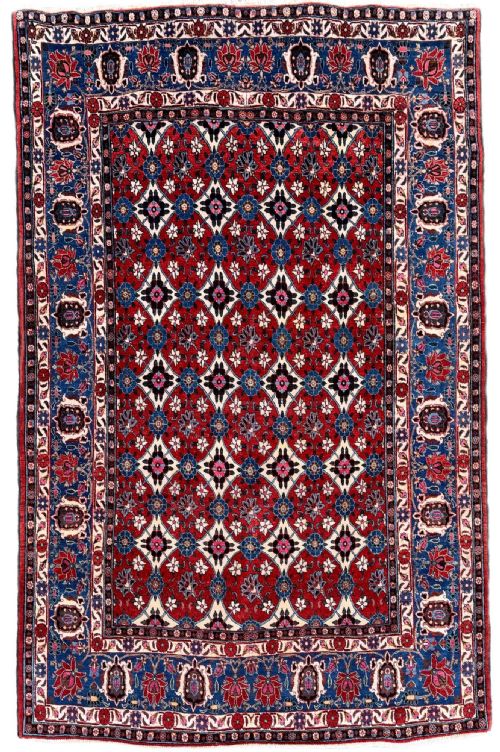
A persian lattice pattern carpet brings geometric rhythm and structured floral motifs into a room.
Persian Lattice Pattern Carpet
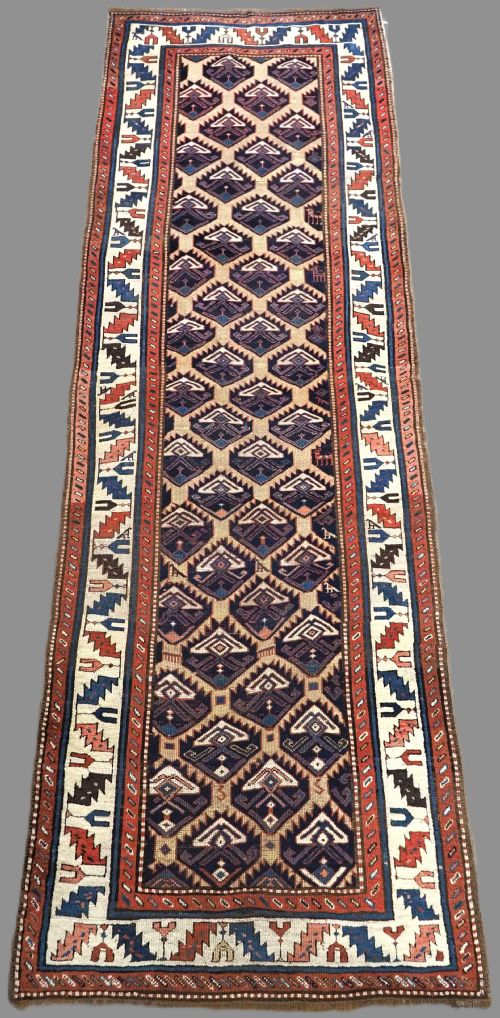
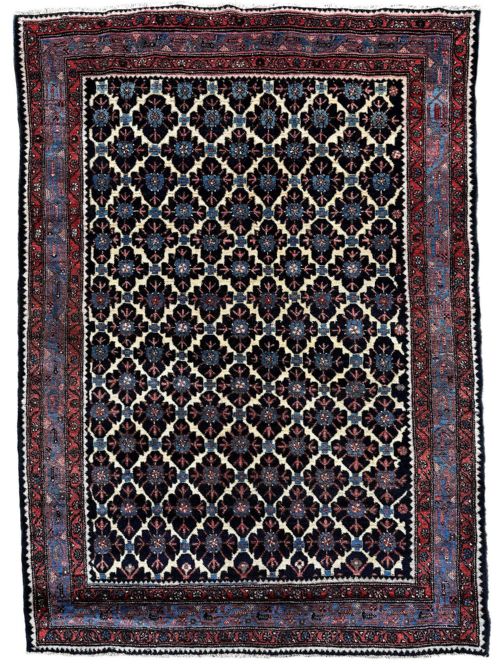
A persian lattice pattern carpet organises its field with repeating geometric grids or trellis networks, often enclosing floral sprays or blossom motifs. Buyers seeking this type of floor covering encounter traditional village and town weaving traditions spanning from the late nineteenth century through to the mid-twentieth century.
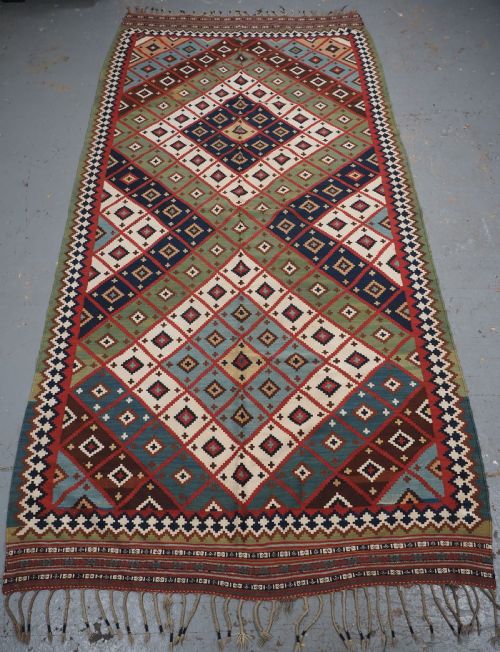
The inventory on this page includes diverse formats such as hallway runners, area rugs, and large carpets. Originating from various regional centres and tribal groups, these pieces display distinct interpretations of the lattice layout, from formal town workshop designs to looser tribal compositions.
Materials and construction
Weavers constructed these carpets primarily using wool pile on cotton foundations, occasionally utilising hand-spun wool for added resilience and texture. The natural resilience of wool fibres combined with sturdy foundation threads allowed these textiles to withstand generations of daily use.
Dyers employed natural and traditional colourants to achieve the deep reds, blues, and ivory tones seen across the field and border designs. Knotting techniques varied according to regional workshops and tribal practices, determining the density and handle of each individual floor covering.
Some runners are remarkably narrow, dipping below eighty-one centimetres wide to fit tight historical corridors.
Assessing quality and execution
The distinction between tiers rests on the precision of the lattice geometry and the clarity of the enclosed motifs. Finer examples maintain crisp alignment across the entire field, whereas simpler pieces exhibit organic variations inherent to hand-knotted tribal production.
Material selection and dye depth also influence overall calibre, with hand-spun wool and well-saturated palettes yielding greater visual richness. The integrity of the foundational weave and the preservation of original borders further separate standard room rugs from superior collector pieces.
The Persian Lattice Pattern Carpet Glossary
- Lattice
- A repeating network of intersecting lines forming diamond or grid compartments across the carpet field. This framework frequently houses stylised flowers or geometric ornaments.
- Mina Khani
- A traditional repeating pattern featuring interconnected floral heads arranged within a lattice grid. It appears widely in classical Persian and tribal village weaving.
- Runner
- A long, narrow carpet format designed specifically for corridors, hallways, and staircases. These pieces balance repeated border motifs with restrained field patterns.
- Kilim
- A flat-woven carpet produced without a pile by tightly interweaving warp and weft threads. This technique creates a lightweight, reversible textile with sharp geometric designs.
- Foundation
- The structural framework of a carpet, consisting of warp and weft threads that support the knotted pile. Cotton is the standard material used for these foundational threads in the listed pieces.
Persian Lattice Pattern Carpet: Frequently Asked Questions
How do I style a lattice carpet?
Place the carpet in a room with neutral furnishings to let the geometric grid and repeating motifs anchor the floor space. The structured pattern works particularly well in hallways, living rooms, and studies where linear elements complement the interior.
Allow sufficient breathing room around the edges of the rug to showcase the primary borders. Pairing the textile with simple wooden furniture highlights the depth of the natural wool pile.
How do I identify a tribal design?
Tribal carpets often display looser geometry, expressive irregularities in the lattice grid, and a more spontaneous arrangement of filler motifs. These characteristics reflect the nomadic or village origins of the weavers.
In contrast, town rugs tend to exhibit formal symmetry and precise workshop execution. Examining the palette and border styling provides further clues to the regional provenance.
How should I clean my carpet?
Vacuum the rug regularly with the suction attachment set to low, avoiding the beating action of modern rotating brush heads. Professional cleaning by a specialist in antique textiles is recommended every few years to protect the wool fibres.
Attend to spills immediately by blotting gently with a clean, dry cloth rather than rubbing. Keep the textile out of direct, harsh sunlight to preserve the natural dye colours over time.