
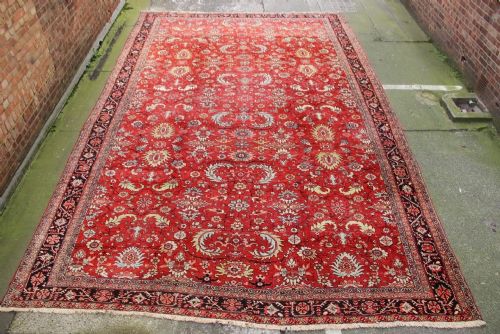
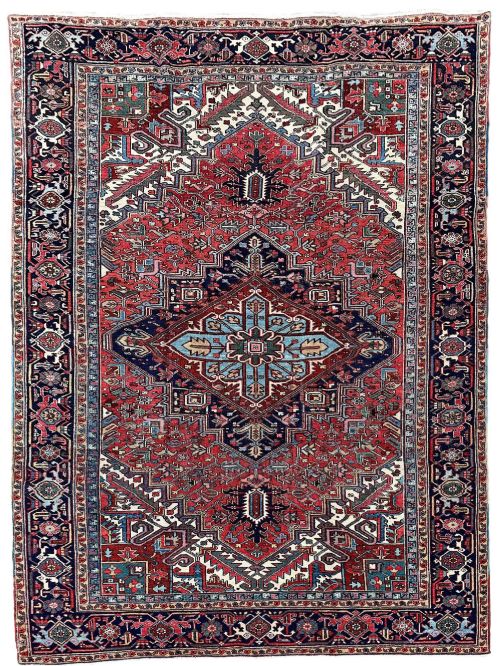
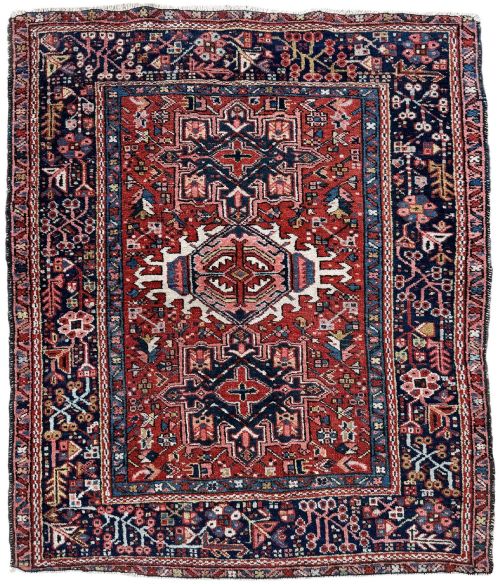
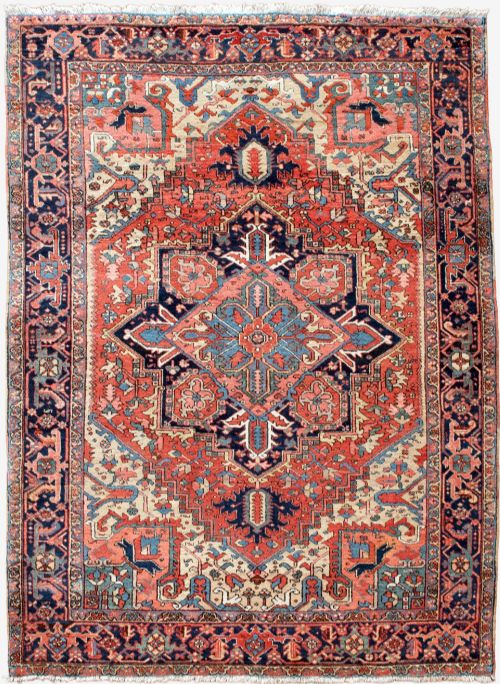




Persian Heriz Wool Carpet
A persian heriz wool carpet brings structured geometry and durable warmth to a room, offering enduring floor art woven in the mountain workshops of north-west Persia.
Persian Heriz Wool Carpet
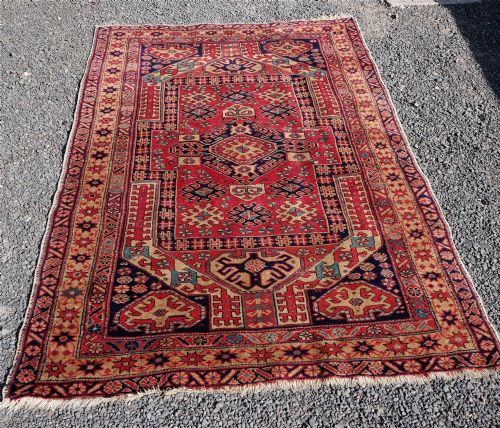
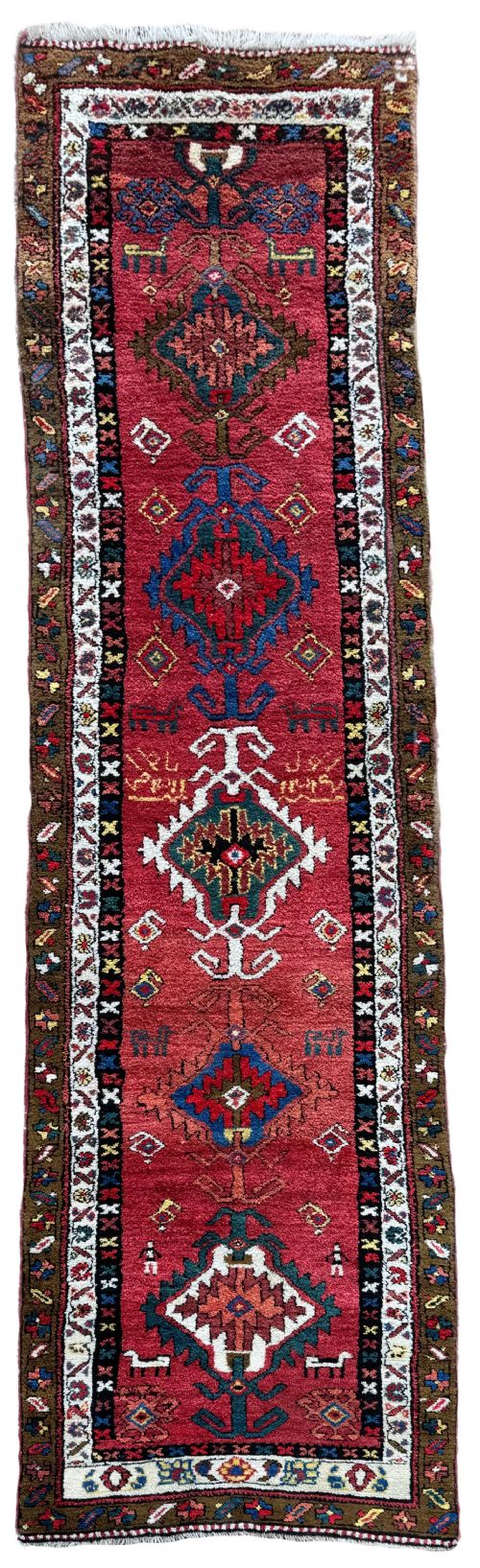
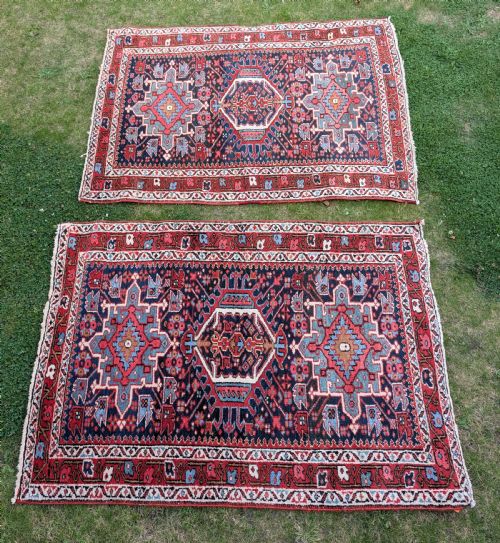
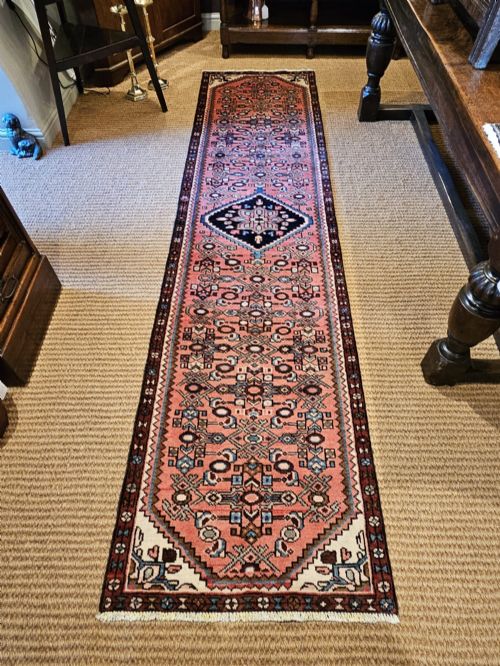
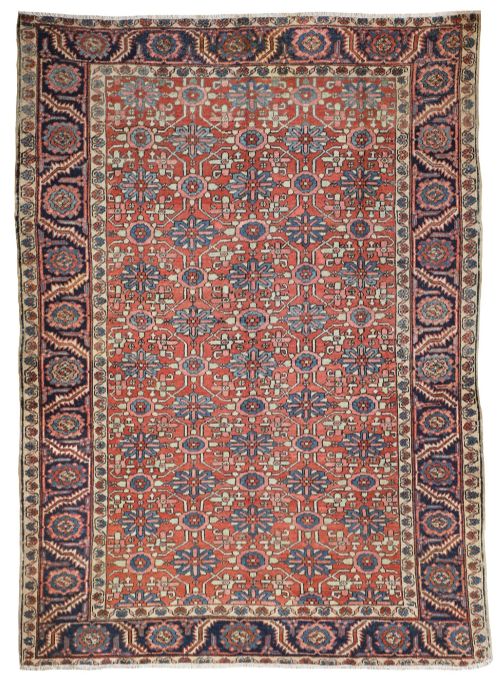
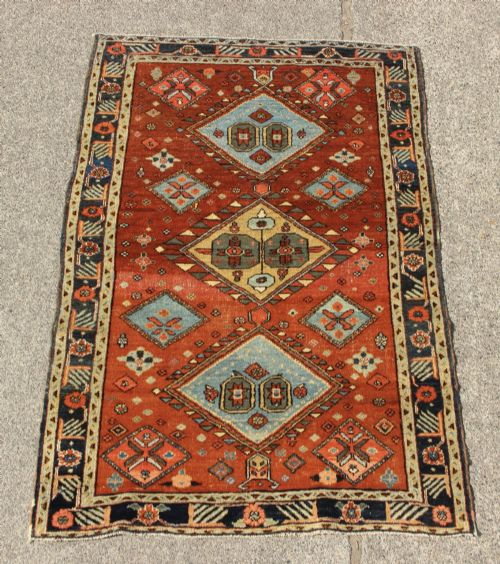
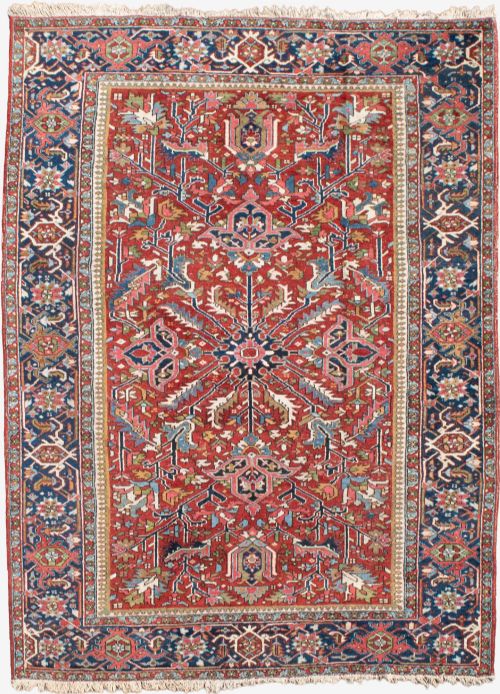
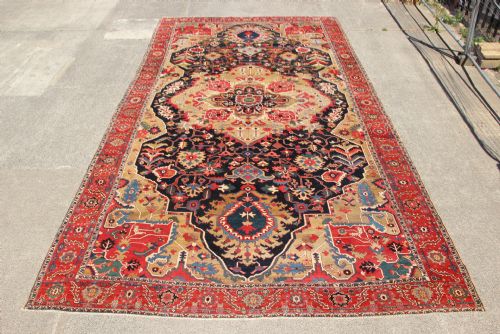
When searching for a persian heriz wool carpet, collectors look at room-sized carpets, smaller rugs, and long hallway runners originating from north-west Persia. These heavy floor coverings range from compact formats to grand proportions exceeding six metres in length.
The selection includes pieces spanning several decades from the late nineteenth century into the early twentieth century. Alongside traditional Heriz weaves, related regional types such as Serapi, Bakshaish, Karaja, and Ahar appear frequently across the inventory.
How they were made
These carpets employ sturdy wool pile knotted onto strong cotton foundations to withstand generations of foot traffic. The combination of resilient wool and tightly packed structural cotton gives each runner and area rug its characteristic substantial weight.
Weavers in north-west Persian districts utilised local materials to construct geometric medallions and bold botanical motifs. Natural dye traditions supplied the rich colour palettes seen in sky blue, ivory, and deep chromatic grounds.
Listings span periods from 1850 to 1930, featuring wool and cotton construction across formats from small mats to extensive runners and carpets.
What varies in quality
Knot density and fineness separate standard room rugs from exceptionally delicate pieces such as Serapi carpets. Greater intricacy in the geometric field pattern and superior handling of secondary colours mark out the finer examples.
Proportion and scale influence desirability, as do balanced borders and crisp drawing within the central medallion. Overall preservation of the wool pile across large formats dictates the standing of each individual carpet.
The Persian Heriz Wool Carpet Glossary
- Heriz
- A region in north-west Persia known for durable carpets featuring large geometric medallions and sturdy cotton foundations. These rugs often display bold architectural layouts.
- Serapi
- A sub-style associated with older Heriz carpets that typically exhibits more open designs and finely detailed drawing. Collectors prize these for their spacious compositions.
- Bakshaish
- A neighbouring weaving district producing carpets with relaxed geometric patterns and earthy colour palettes. Such pieces pre-date many standard twentieth-century village rugs.
- Karaja
- A village production area creating smaller rugs and runners with distinctive geometric repeats and tribal character. They share stylistic links with broader Heriz region output.
- Runner
- A long, narrow carpet format designed specifically for corridors, hallways, and staircases. These pieces maintain strong directional patterns suitable for linear spaces.
Persian Heriz Wool Carpet: Frequently Asked Questions
Where were these carpets made?
These floor coverings originate from the towns and villages of north-west Persia, particularly the Heriz district and surrounding communities.
Local weavers produced these textiles using traditional knotting techniques handed down through generations.
How do I choose the right size?
Consider the floor space and function of the room before selecting a runner, area rug, or large room-sized carpet.
Long formats suit hallways and corridors, while wider rectangular carpets anchor central living spaces and dining areas.
What materials are used?
The pile consists of durable wool, which provides a soft yet resilient surface for daily use.
Foundations are woven from cotton, giving the carpets structural stability and keeping the heavy geometric designs straight.
How do I date a carpet?
Dating relies on stylistic traits, colour palettes, and structural characteristics recorded from late nineteenth and early twentieth-century production.
Older pieces often display looser geometry and specific regional dye combinations characteristic of nineteenth-century village workshops.