

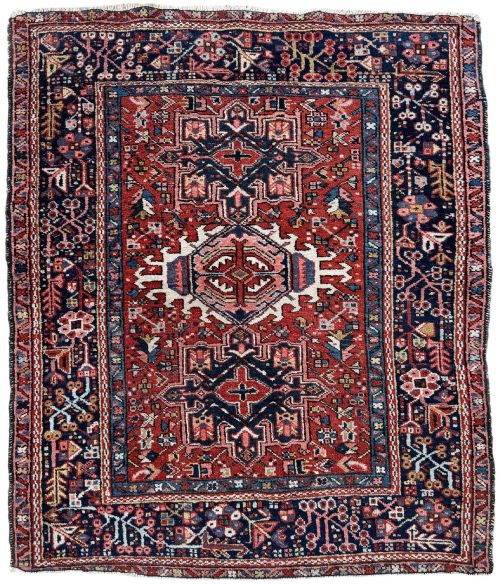
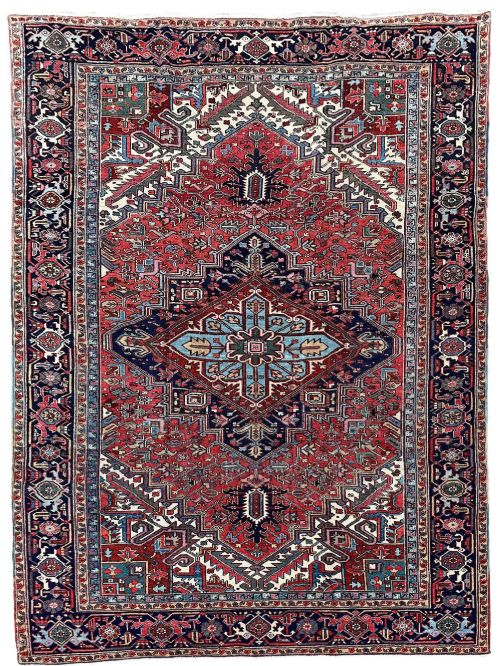


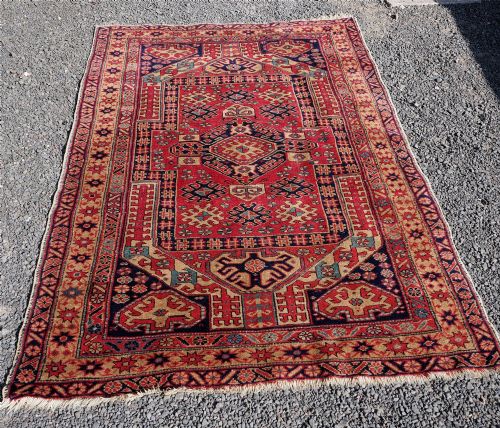
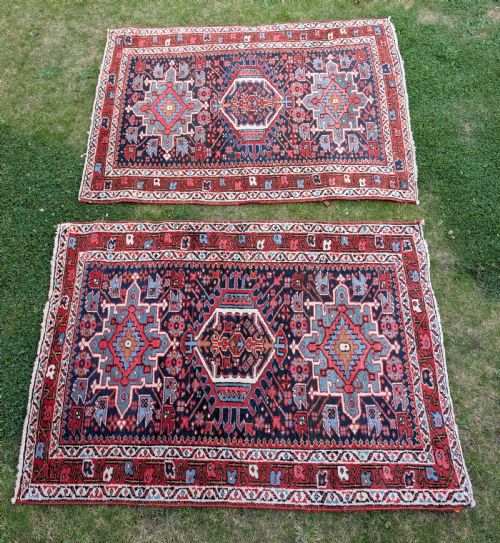
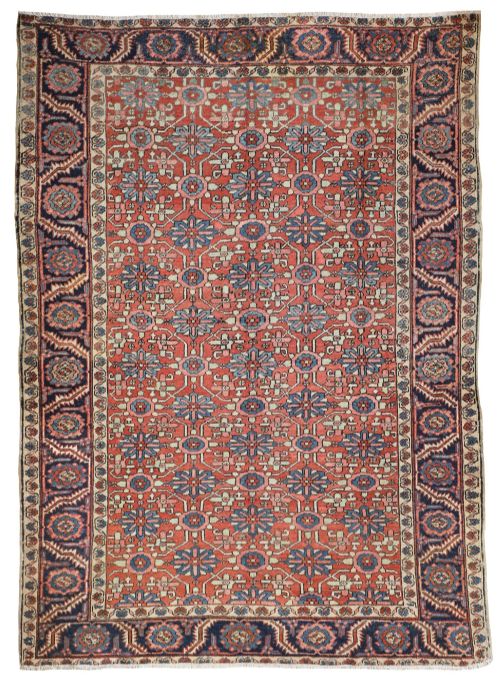
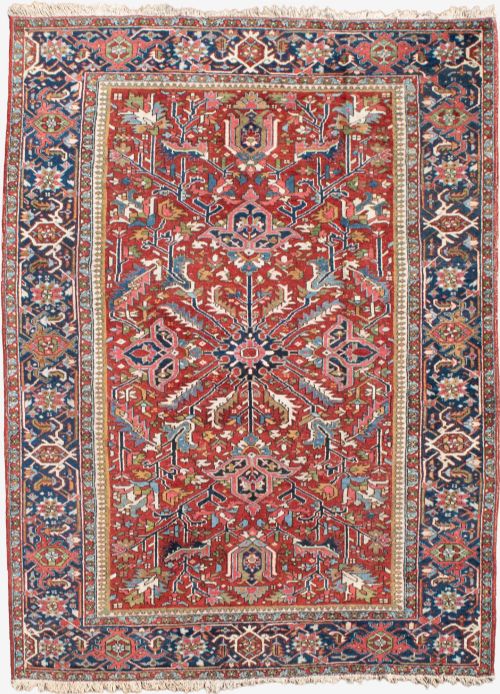
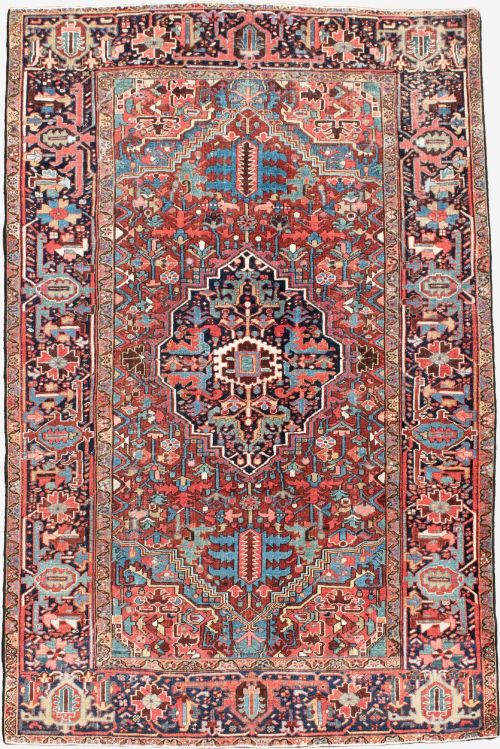
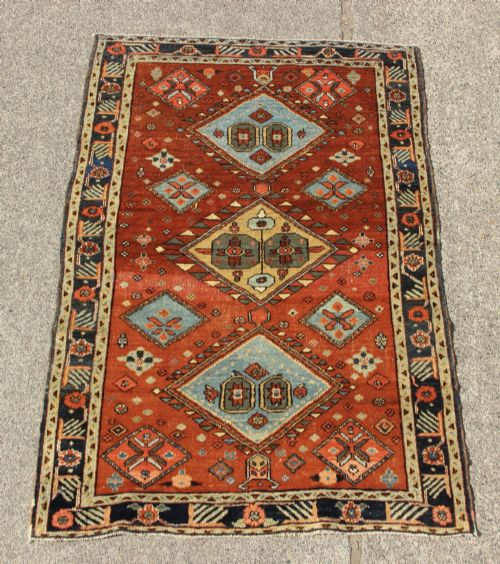
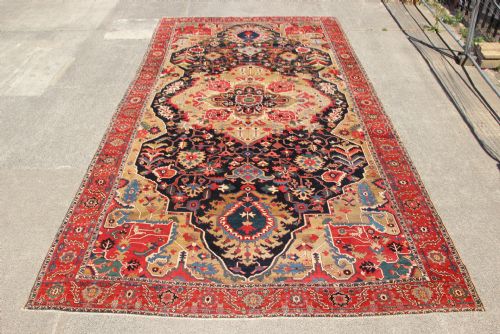

Persian Heriz Area Carpet
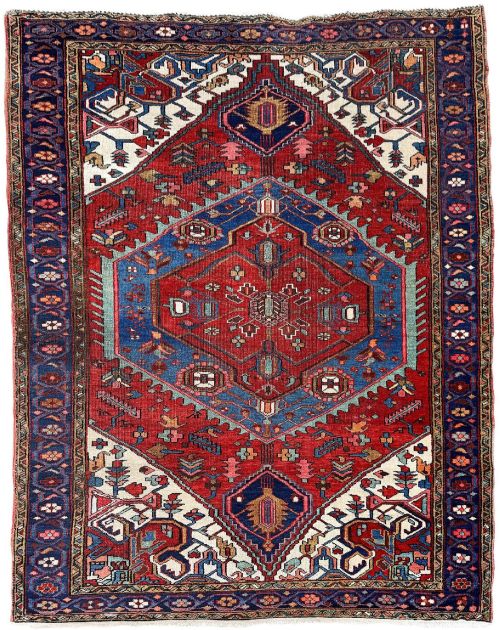
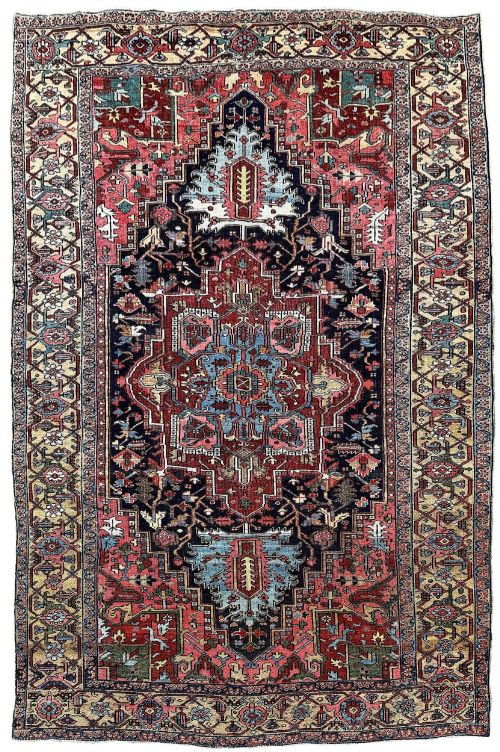
These heavy, geometric Persian heriz area carpet examples bring monumental room presence through bold central medallions and robust village weave construction.
Persian Heriz Area Carpet
A persian heriz area carpet is a room-sized or room-anchoring floor covering originating from the northwest region of Persia, defined by sturdy proportions and architectural central medallion designs. These hand-knotted room carpets span production from the late nineteenth century through the early twentieth century, including pieces dated across the 1850s, 1880s, 1890s, 1900s, 1910s, 1920s, and 1930s.
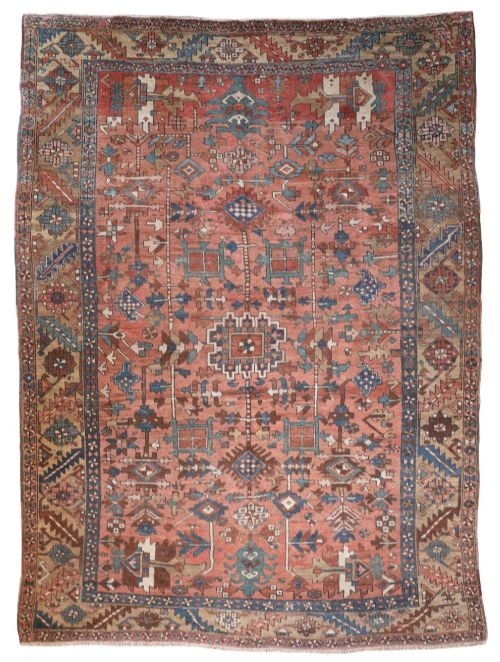
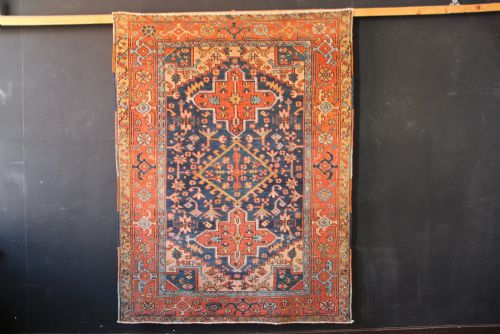
The version most commonly encountered on this page is a large-format antique carpet or smaller area rug featuring distinct geometric styling, sometimes catalogued under related regional names such as Serapi, Karaja, Bakshiash, or Ahar. These floor coverings vary in scale from compact scatter formats up to monumental proportions exceeding six metres in length.
Materials and construction methods
Construction relies upon durable wool pile hand-knotted onto sturdy cotton foundations, frequently utilising hand-spun wool and cotton warp threads to achieve a heavy, rigid handle that lies flat upon the floor. This robust village assembly technique differs from fine urban Persian workshop weaving by prioritising structural longevity and thick tactile substance over ultra-dense knot counts.
The wool used in these floor coverings takes natural dyes with rich variance, producing saturated ground colours including terracotta, ivory, and sky blue alongside colourful geometric borders and secondary motifs.
Persian Heriz Area Carpet Retail Price Guide 2026
Typical asking prices for persian heriz area carpet among the pieces listed under this phrase on Sellingantiques today, from the lower quarter to the upper quarter. They describe what is for sale here now, not the wider market.
Listings span production dates from the 1850s through the 1930s, utilising hand-spun wool and cotton warp materials across diverse formats.
Evaluating structural and visual quality
Quality in a persian heriz area carpet rests upon the crispness of the geometric drawing, the harmony of the abrash colour shifts within the wool, and the integrity of the original side cordings and end finishes. Higher quality examples display balanced proportions in the central medallion and well-defined corner spandrels executed in clear, saturated dyes.
The grade of the wool and the tightness of the knotting dictate how well the pile resists heavy foot traffic over generations, while uneven wear or historical structural interventions distinguish everyday utilitarian rugs from finer decorative display carpets.
The Persian Heriz Area Carpet Glossary
- Heriz
- A region in north-west Persia renowned for producing geometric village carpets characterised by large central medallions and bold, angular botanical motifs.
- Serapi
- A sub-style associated with older Heriz carpets, typically displaying more open fields, finer knotting, and softer, muted palettes.
- Abrash
- Variations in wool dye colour resulting from different dye lots or yarn batches, creating subtle horizontal bands of shading across the carpet.
- Warp
- The vertical foundation threads, typically cotton in these regional Persian carpets, running the entire length of the piece and visible at the fringes.
- Spandrels
- The triangular corner sections of a carpet border design, which frame the central field and medallion in Heriz village weaving.
Persian Heriz Area Carpet: Frequently Asked Questions
How do I clean an antique Heriz carpet?
Gentle surface vacuuming without the rotating brush bar removes loose dirt from the wool pile safely on a regular basis. Professional textile conservators should handle deep washing or stain removal to protect the natural dyes and cotton foundations.
Water saturation or chemical household cleaners can cause dye bleeding and weaken the historic wool fibres. Keeping the carpet out of direct, prolonged sunlight preserves the original intensity of the terracotta and blue ground colours.
Can these carpets handle heavy hallway traffic?
The sturdy cotton warp and thick wool pile construction makes these floor coverings well-suited for everyday domestic use in active living spaces. Placing a quality underlay beneath the carpet prevents slippage and reduces friction against hard flooring.
Rotating the rug every year ensures even wear patterns across areas exposed to direct foot traffic or heavy furniture placement. Regular maintenance allows these resilient village carpets to endure decades of active daily living.
How do I distinguish Heriz from Serapi rugs?
Serapi carpets generally represent an older, finer weaving tradition with more spacious fields and delicate geometric drawing. Standard Heriz carpets tend to feature bolder, heavier graphic outlines and more densely populated geometric ornamentation.
Both styles originate from the same north-west Persian district, sharing similar structural materials and village workshop traditions. The distinction lies primarily in the fineness of the knotting and the openness of the overall design composition.
What is a cotton warp foundation?
The warp consists of the foundational vertical threads stretched across the loom before knotting begins. Cotton provides stable structural tension that prevents the heavy wool carpet from distorting or stretching over time.
Visible cotton warps at the ends of the rug often terminate in short original fringes. This stable core material distinguishes traditional village weaving from nomad work built entirely on wool.