




Persian Garden Carpet
A persian garden carpet brings the geometry of a walled paradise into your home through enduring wool and cotton.
Persian Garden Carpet
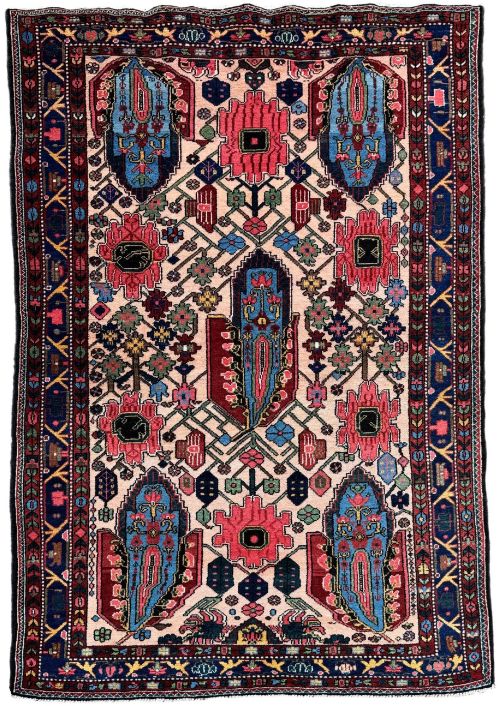
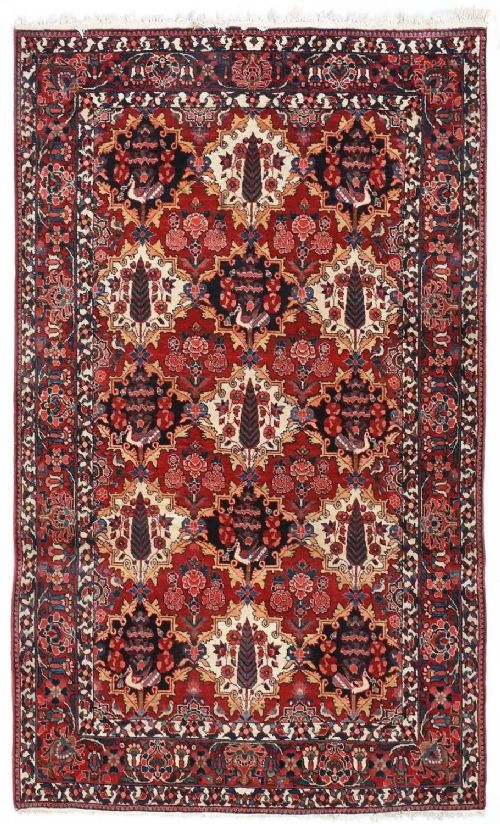
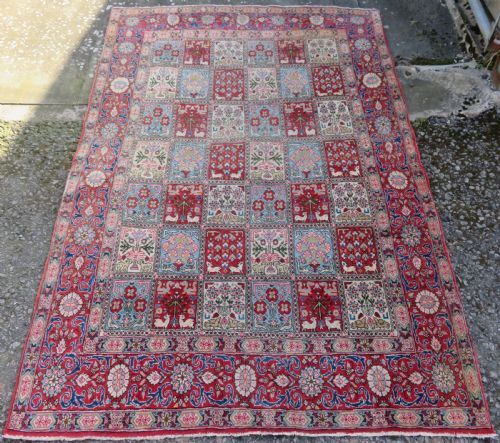
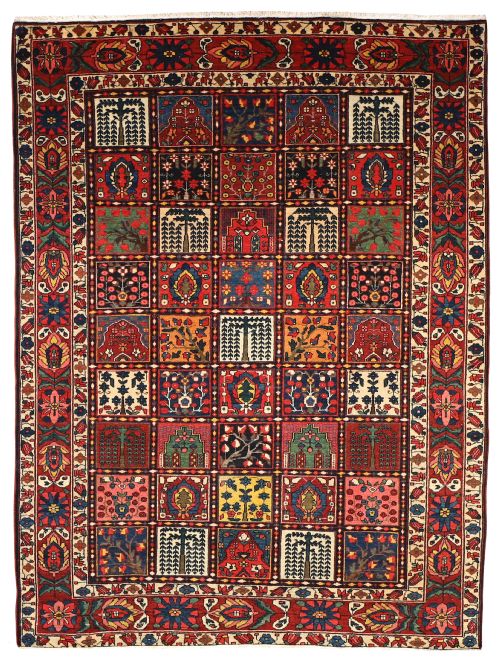
A persian garden carpet organises natural motifs into structured compartments, offering buyers a geometric floral map that recalls traditional courtyard layouts. These textiles often appear as rugs and carpets featuring distinctive tile patterns and compartment designs associated with regional weavers.
Buyers will encounter various room-sized carpets and smaller area rugs utilising wool pile on cotton foundations. The field divisions within these textiles range from classical garden panel layouts to more individual nomadic expressions.
How they were made
Weavers constructed a persian garden carpet using hand-knotted wool pile secured to sturdy cotton warps and wefts. This pairing of materials provided the structural integrity necessary for hard-wearing floor coverings that retained their form over decades.
Dyers utilised natural and early synthetic colourants to achieve the deep tones seen in nineteenth-century and twentieth-century examples. The pile was hand-clipped to create an even surface that allowed the intricate tile pattern geometry to remain legible.
Persian Garden Carpet Retail Price Guide 2026
Typical asking prices for persian garden carpet among the pieces listed under this phrase on Sellingantiques today, from the lower quarter to the upper quarter. They describe what is for sale here now, not the wider market.
Periods represented span from the nineteenth century through the nineteen-forties, covering early twentieth-century Anatolian and Persian production.
What varies in quality
The sophistication of the compartmental layout separates standard pieces from finer examples, with master weavers executing more complex botanical motifs inside each tile. Knot density also dictates the crispness of the architectural lines dividing the garden sections.
Condition and colour retention shape the standing of individual carpets, as surface wear affects the visual impact of the original dyes. The integrity of the cotton foundation and the completeness of the original borders further determine the grade of the textile.
The Persian Garden Carpet Glossary
- Bakhtiari
- A regional style originating from the pastoral highlands of southwestern Persia, known for robust construction and compartment garden motifs. These rugs frequently employ durable wool well-suited to heavy foot traffic.
- Kirman
- A Persian weaving tradition centred in the southern city of Kirman, recognised for fine knotting and elegant floral compositions. Carpets from this origin often display sophisticated medallion and garden layouts.
- Qum
- A city in central Persia associated with the production of fine silk and wool rugs featuring precise curvilinear designs. Examples from this centre demonstrate meticulous attention to detail.
- Tile pattern
- A geometric arrangement dividing the carpet field into individual squares or rectangles, mimicking formal garden beds. Each compartment typically encloses stylised flowers, cypresses, or water channels.
Persian Garden Carpet: Frequently Asked Questions
What is a persian garden carpet?
A persian garden carpet is a traditional textile woven with a grid-like layout that represents walled paradise gardens. The design divides the central field into geometric compartments filled with floral and architectural motifs.
These pieces reflect historical Persian weaving traditions and appear in various regional styles, including Bakhtiari and Kirman. Collectors value them for their structured pictorial storytelling and decorative impact.
How do I care for my carpet?
Protect your wool and cotton textile by placing it in a low-traffic area out of direct sunlight to prevent colour fading. Regular gentle vacuuming without a beater bar removes trapped grit from the pile.
Rotate the carpet periodically to ensure even exposure and wear. Consult a professional specialist experienced in antique textiles for deep cleaning.
Where were these carpets made?
These carpets originate primarily from various weaving centres across Persia, including the Bakhtiari region and Kirman. Additional examples come from Turkish workshops and Anatolian towns.
Each region imparted distinct structural characteristics and colour palettes to their garden designs. Local materials and spinning techniques shaped the unique character of each piece.
How old are these pieces?
The pieces available here generally date from the nineteenth century through the early decades of the twentieth century. Specific manufacturing periods span from the late eighteen hundreds up to nineteen forty.
Stylistic markers and structural materials help establish the approximate age of each individual textile. Comparing knot styles and dye types aids in dating these historical rugs.