
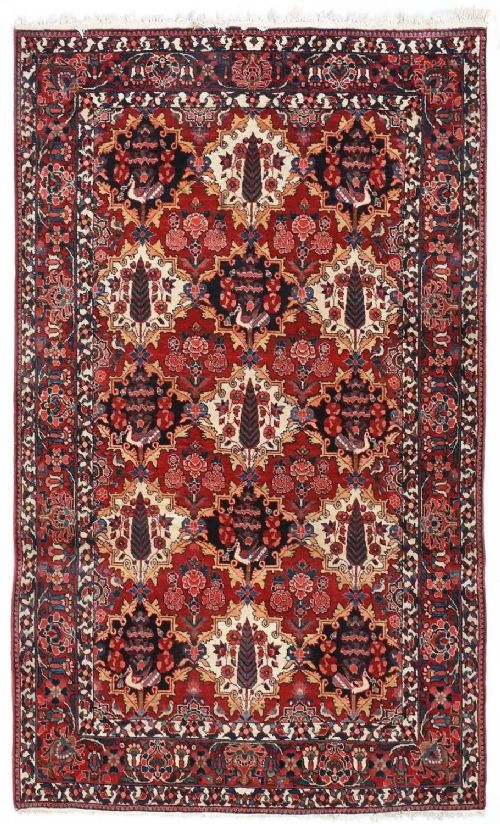


Antique Bakhtiari Rug
An antique bakhtiari rug brings the bold geometric motifs and rich natural dyes of Western Persia directly into a room.
Antique Bakhtiari Rug
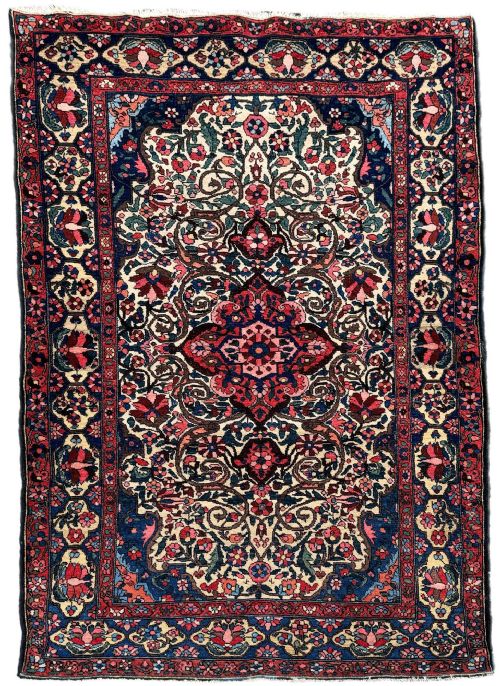
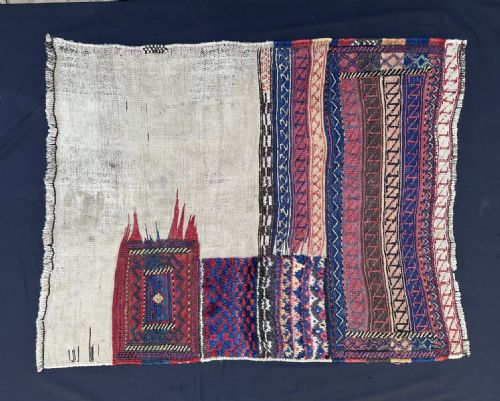
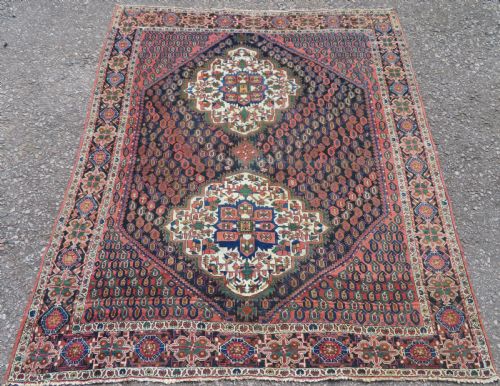
An antique bakhtiari rug originates from the Chahar Mahal valley in Western Persia, woven by tribal and village groups including Lori-Bakhtiari and Kurdish communities. The selection encompasses floor coverings ranging from small mats and runner rugs to large carpets, alongside functional nomadic textiles such as wheat-sacks, saddlebags, and flatweaves.
Most examples encountered date from the late nineteenth century through the early decades of the twentieth century. These pieces reflect traditional Persian tribal designs, featuring floral medallions, garden panel layouts, and distinctive compartment motifs.
How They Were Made
Weavers utilised sturdy wool and hand-spun wool for the pile, often combined with cotton foundations for structural stability and goat hair for durable side cords. Natural dyes provided the deep palette, sourced from local plants and minerals to create lasting depth in the blues, reds, and earth tones.
The construction relies on sturdy hand-knotting techniques characteristic of village production, producing dense piles suited to heavy domestic use. Flatweave pieces and utilitarian grain sacks demonstrate alternative textile methods such as slit-tapestry or supplementary weft techniques.
Antique Bakhtiari Rug Retail Price Guide 2026
Typical asking prices for bakhtiari rug among the pieces listed under this phrase on Sellingantiques today, from the lower quarter to the upper quarter. They describe what is for sale here now, not the wider market.
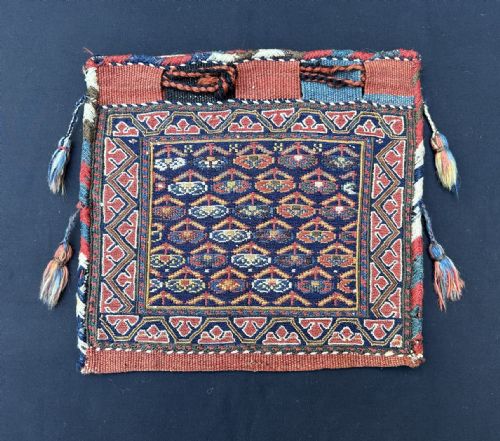
Nomadic weavers packed their belongings into sturdy wheat-sacks that now hang gracefully on modern walls.
What Varies in Quality
The fineness of the knotting and the precision of the tribal design set superior examples apart from standard village work. Tighter foundations and more intricate execution in garden panel or medallion layouts indicate greater skill at the loom.
The saturation and complexity of the natural dye palette heavily influence the visual impact of each piece. Tones that retain their brilliance and variety across the field distinguish the most accomplished weaving.
The Antique Bakhtiari Rug Glossary
- Chahar Mahal
- The mountainous region in Western Persia where Bakhtiari tribes and village weavers produced these textiles. This valley is renowned for its long-standing weaving traditions.
- Tacheh
- A traditional tribal wheat-sack or storage bag woven in flatweave or pile techniques. These functional items frequently double as decorative wall hangings or small floor spreads.
- Khorjin
- A paired saddlebag utilised by nomadic and village tribes for transport. Surviving examples often appear as half-faces or complete bags.
- Mina Khani
- A repeating pattern of small flowers linked by a lattice network across the field. This traditional motif appears frequently in Persian village carpets.
- Garden design
- A formal layout divided into compartments or panels depicting stylised trees, shrubs, and birds. This structural format is distinctive to the region.
Antique Bakhtiari Rug: Frequently Asked Questions
Where were antique bakhtiari rugs made?
These textiles were produced by nomadic and village populations residing in the Chahar Mahal valley of Western Persia. The weavers belonged to Bakhtiari, Lori, and Kurdish tribal groups.
Production centred on domestic workshops and nomadic camps within this mountainous region. The local environment and available materials directly shaped the character of the weaving.
How do I care for an old tribal rug?
Protect the textile by placing a suitable underlay beneath it to prevent slipping and reduce pile friction. Regular gentle vacuuming without a beater bar removes trapped dust effectively.
Keep the piece away from prolonged direct sunlight to protect the natural dyes. Professional cleaning should be undertaken periodically by a specialist in antique oriental textiles.
Are these rugs durable enough for daily use?
The sturdy wool pile and dense village construction make these pieces resilient against regular foot traffic. Many were originally created as heavy-duty floor coverings for daily domestic life.
Placing them in hallways, living areas, or dining spaces is entirely appropriate when supported by a quality pad. Their robust materials ensure they withstand normal household wear.