
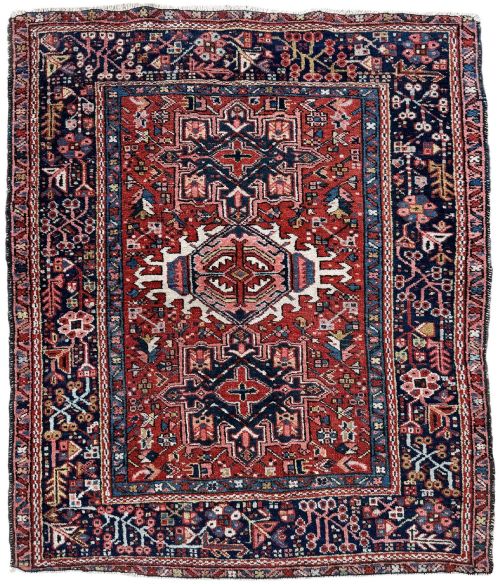
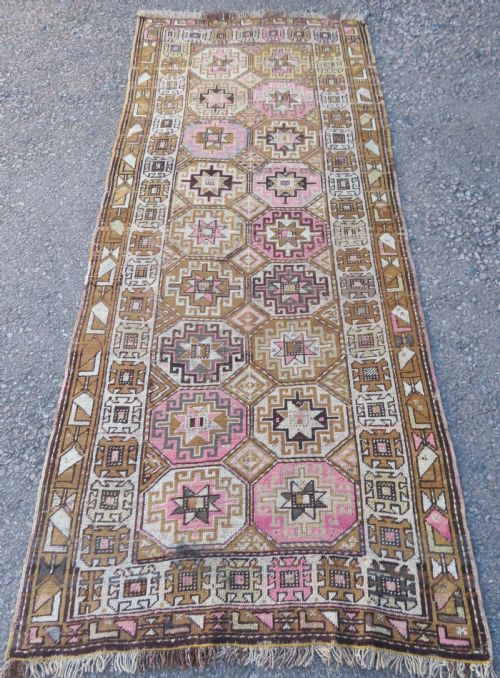



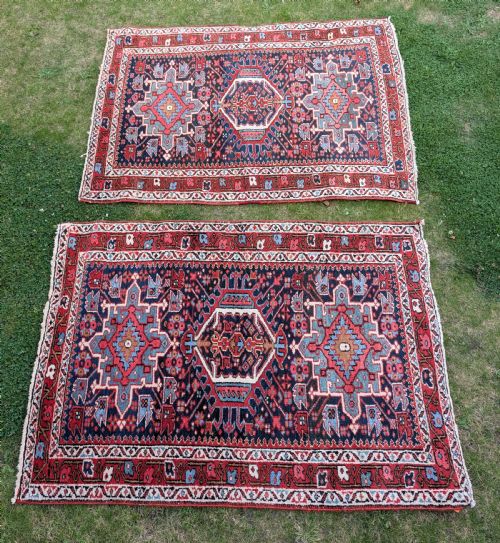
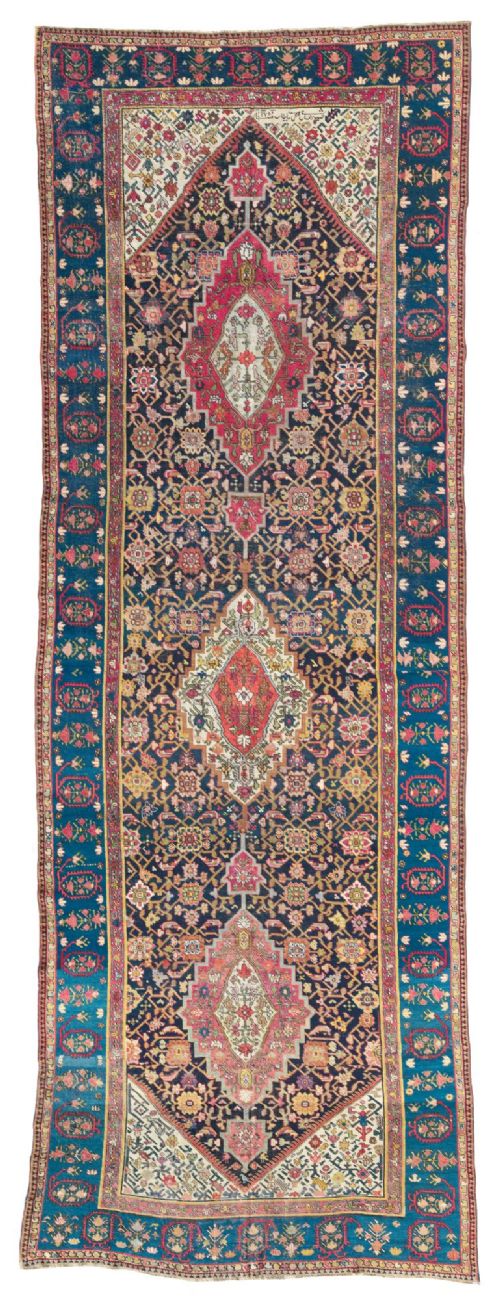
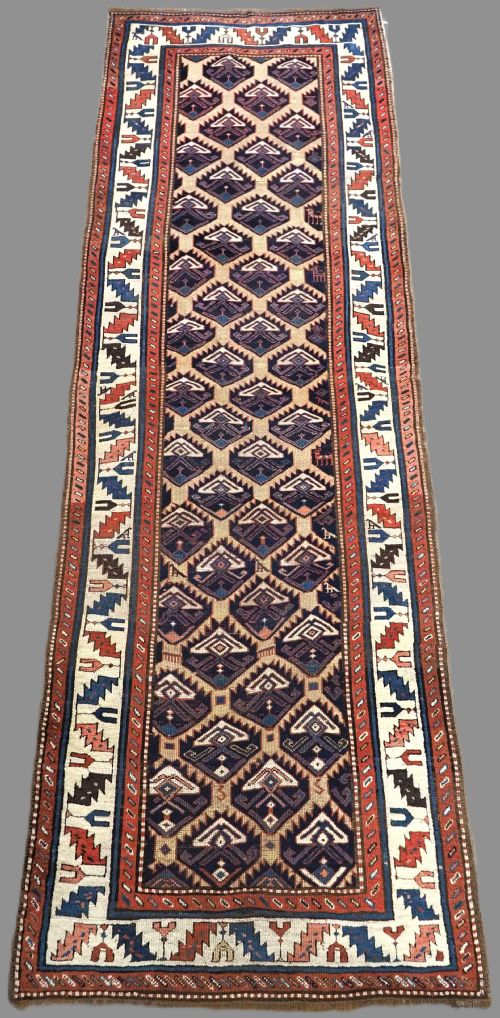
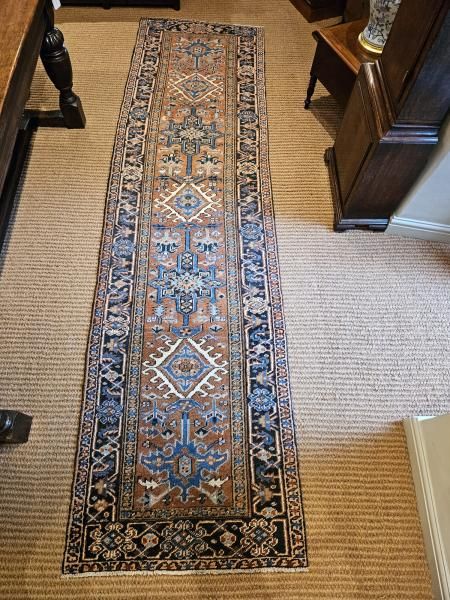
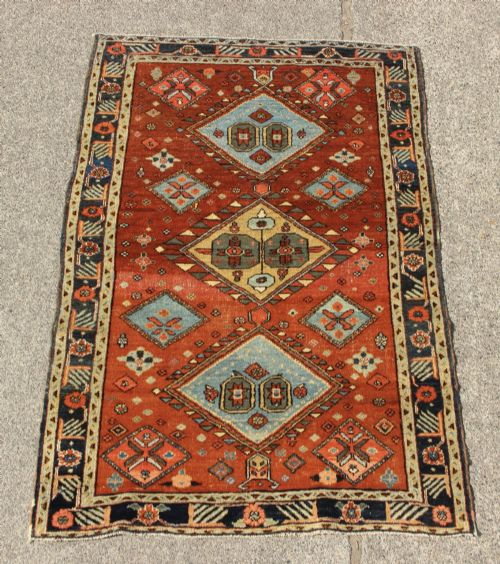
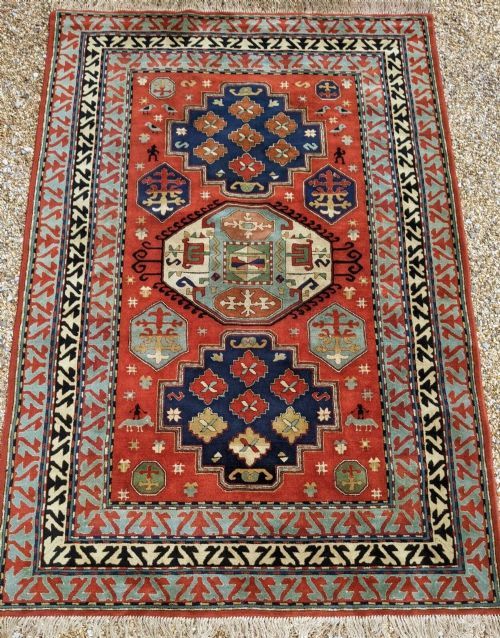

Persian Caucasian Rug
These persian caucasian rug pieces span nineteenth-century tribal weaving traditions and village workshops, offering dense geometric designs and rich hand-spun wool.
Persian Caucasian Rug
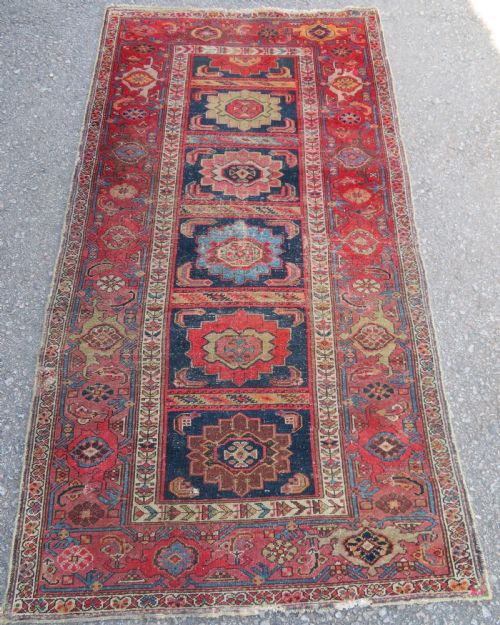
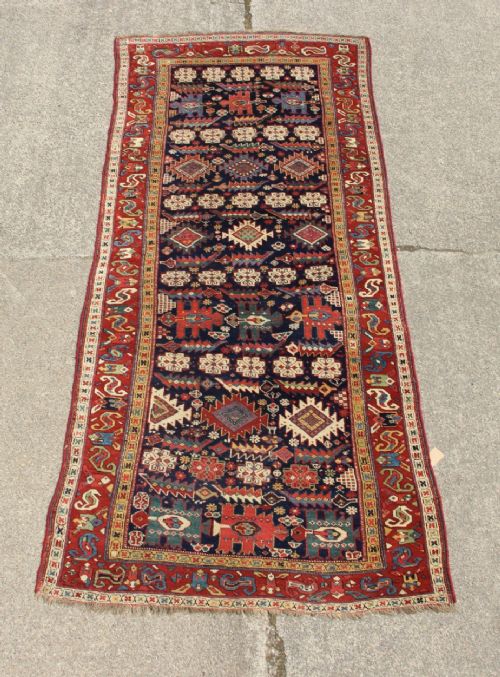
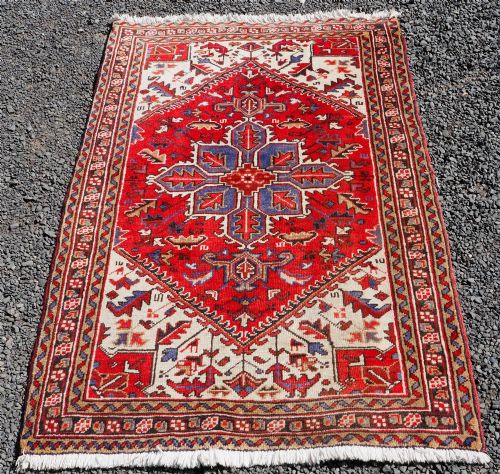
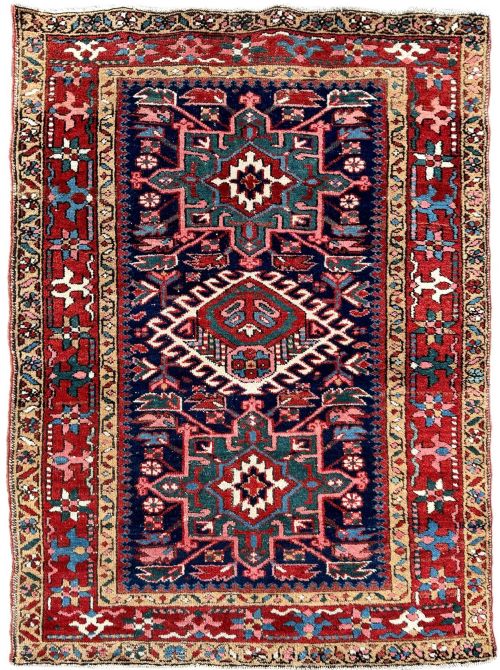
When buyers search for a persian caucasian rug, they encounter handwoven floor coverings and textiles originating from regions across the Caucasus and Persia. These pieces include runners, village carpets, long rugs, and smaller saddle-bags produced by nomadic and settled weavers.
The selections on this page concentrate heavily on traditional village and tribal output, such as Kurdish, Karaja, Heriz, Shahsevan, and Kazak pieces. The formats range from narrow runners suited for hallways to square format carpets and compact bag faces.
Most examples date from the nineteenth century up through the early twentieth century, spanning decades such as eighteen-eighty to nineteen-twenty. Buyers meet formats shaped by the practical needs of nomadic life and village households.
How they were made
Weavers constructed these textiles primarily using wool for the pile and foundation, often supplemented by cotton foundations in later village pieces and occasional silk elements. Hand-spun wool yarns provide the characteristic texture and handle of the pile.
Makers utilised natural dyes to colour the wool, creating deep tones that age gracefully across decades of exposure. Artisans knotted the wool by hand onto warps, producing durable surfaces designed for daily domestic use.
Several runners display delightfully crooked geometries where nomadic weavers simply let the straight lines wander.
What varies in quality
The calibre of a rug rests upon the handling of its natural dyes and the crispness of its geometric or lattice design execution. Rich, varied colouration distinguishes superior examples from simpler village work.
Knot density and the fineness of the hand-spun wool foundation dictate structural integrity across different formats like runners and kelims. Tightly packed structures provide greater resilience under foot traffic.
Shahsevan Nomads of Moghan
The Persian Caucasian Rug Glossary
- Runner
- A long, narrow carpet format designed primarily for hallways or corridors. These pieces measure significantly longer than they are wide.
- Sumac
- A flat-weave technique where extra decorative weft threads are wrapped around the warp threads during construction. This method creates a sturdy, textured surface without a pile.
- Kelleh
- A large format rectangular carpet traditionally positioned along the long side of a room. These pieces offer expansive fields for complex medallion or lattice patterns.
- Khorjin
- A traditional pair of saddle-bags used by nomadic groups for transport. These items often feature compact pictorial or geometric designs on their face panels.
- Guls
- Repeated octagonal or medallion motifs frequently found in tribal weaving traditions. These patterns act as identifying markers for specific tribal groups.
Persian Caucasian Rug: Frequently Asked Questions
How were these rugs used originally?
Nomadic and village weavers utilised these textiles as floor coverings, bedding storage, and animal transport bags in daily domestic life.
Runners and large carpets warmed stone or timber floors, while smaller bags stored household goods during migrations.
How do I clean a vintage rug?
Gentle surface brushing and professional specialist cleaning preserve the natural dyes and hand-spun wool pile.
Harsh chemical treatments and immersion washing damage antique fibres and alter historic colour balance.
How can I tell tribal styles apart?
Tribal attribution relies on examining specific geometric motifs, border arrangements, and colour palettes unique to each weaving group.
Kurdish, Kazak, and Shahsevan pieces each display distinct structural characteristics and drawing styles.
Where should I place a runner?
Narrow runner formats suit long hallways, staircases, or galley kitchens where linear floor space requires definition.
Their elongated dimensions accommodate high-traffic transition areas while showcasing detailed geometric repeats.