



Persian Boteh Pattern Runner
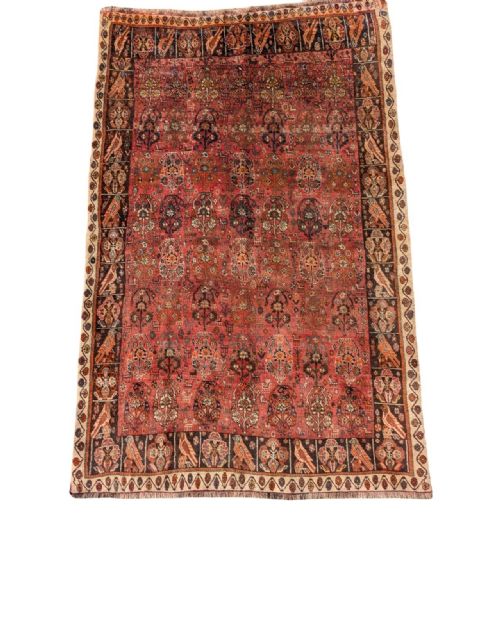
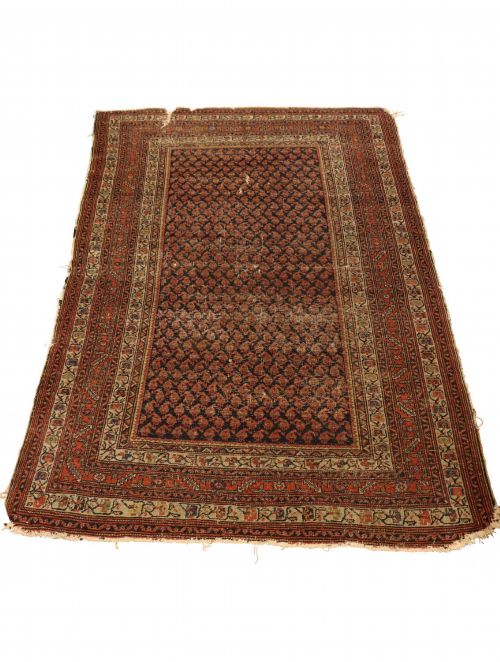
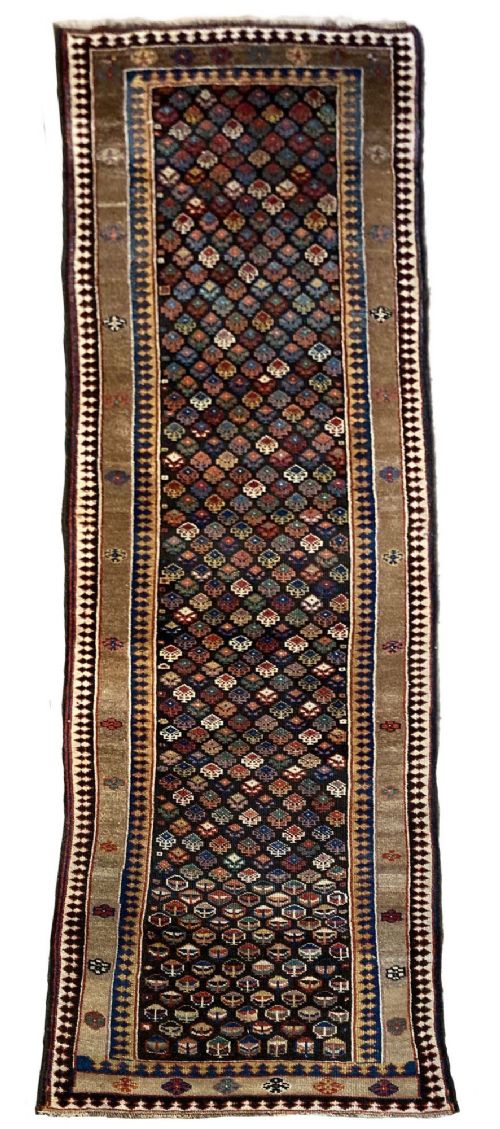
A persian boteh pattern runner brings historic regional weaving directly to a hallway, offering repeating almond-shaped motifs tied to ancient textile traditions.
Persian Boteh Pattern Runner
When you search for a persian boteh pattern runner, you are looking at narrow, elongated floor coverings characterised by the repeating vegetal or paisley-like motif known as the boteh. These textiles span periods from the nineteenth century through to the early decades of the twentieth century, originating from workshops and tribal regions across Persia and the Caucasus.
The examples gathered here include specific regional formats such as Kurdish, Afshar, Serabend, Gendje Kazak, and Malyor runners. They appear alongside broader traditional classifications, offering varying lengths suited to long corridors and galleries.
How they were made
These pieces are constructed using hand-knotted techniques executed with wool pile foundations supported by cotton warps and wefts. The traditional method relies on manual knotting by regional weavers, building up dense pile surfaces designed to withstand heavy foot traffic.
Natural dyeing methods provide the colour palettes seen across the nineteenth and early twentieth-century examples, resulting in rich tones that age with character. The structural integrity depends upon tight hand-knotting and secure selvedges characteristic of tribal and village production.
Persian Boteh Pattern Runner Retail Price Guide 2026
Typical asking prices for persian boteh pattern runner among the pieces listed under this phrase on Sellingantiques today, from the lower quarter to the upper quarter. They describe what is for sale here now, not the wider market.
Some runners are long enough to stretch the entire length of a grand hallway, featuring rows of tiny botanical flames marching toward your front door.
What varies in quality
Quality in these runners rests upon the fineness of the hand-knotting and the clarity of the boteh pattern across the field. Tighter knots allow for sharper definition in the geometric and curvilinear details of the design.
The depth and preservation of the wool pile, alongside the vibrancy of the regional dyes, set finer examples apart from heavily worn or faded pieces. Structural completeness, including original ends and selvedges, also dictates the standing of an individual runner.
The Persian Boteh Pattern Runner Glossary
- Boteh
- A stylised floral or almond-shaped motif representing a palm leaf, bush, or flame, frequently repeated in rows across traditional runner fields.
- Hand-Knotted
- A textile construction technique where individual lengths of yarn are tied by hand to the warp threads, creating a durable pile.
- Warp
- The vertical threads stretched tightly on the loom that form the foundational skeleton of the rug and carry the fringe at each end.
- Weft
- The horizontal threads passed back and forth between warp threads to lock the rows of knots firmly into place.
- Selvedge
- The reinforced side edges of a runner, tightly bound to prevent the pile from unravelling along the length.
Persian Boteh Pattern Runner: Frequently Asked Questions
Where should I place a long runner?
These narrow formats suit hallways, corridors, and gallery spaces where floor length exceeds width.
They protect high-traffic wooden floors while introducing historic pattern and texture to transitional areas of a home.
How do I care for antique wool runners?
Gentle, regular vacuuming without a rotating brush roll prevents dust accumulation in the wool pile.
Professional specialist cleaning is recommended for antique textiles to preserve natural dyes and hand-knotted foundations.
What does the boteh motif represent?
The boteh is an ancient Persian symbol associated with life, eternity, and the Zoroastrian cypress tree.
In regional weaving, it appears singly or in all-over repeating fields across rugs and runners.
How do I distinguish regional weaving styles?
Regional attributions depend on specific knotting structures, colour combinations, and local design variations.
Kurdish, Afshar, and Caucasian pieces each employ distinct palette choices and geometric interpretations of the boteh.