



Persian Bidjar Rug
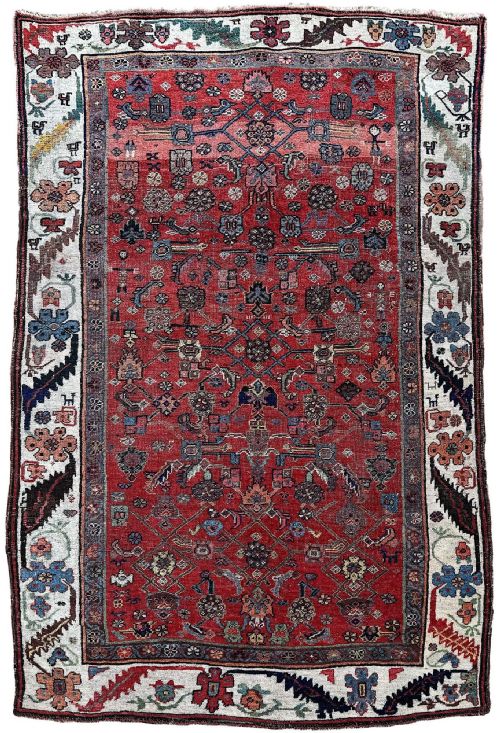
These heavy, durable persian bidjar rug examples are woven by Kurdish artisans in western Iran to withstand decades of daily use.
Persian Bidjar Rug
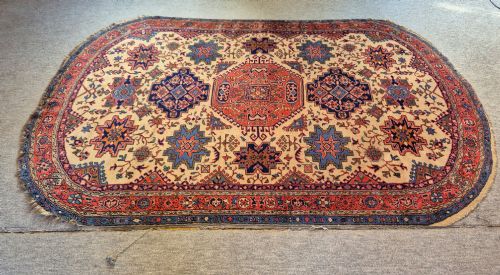
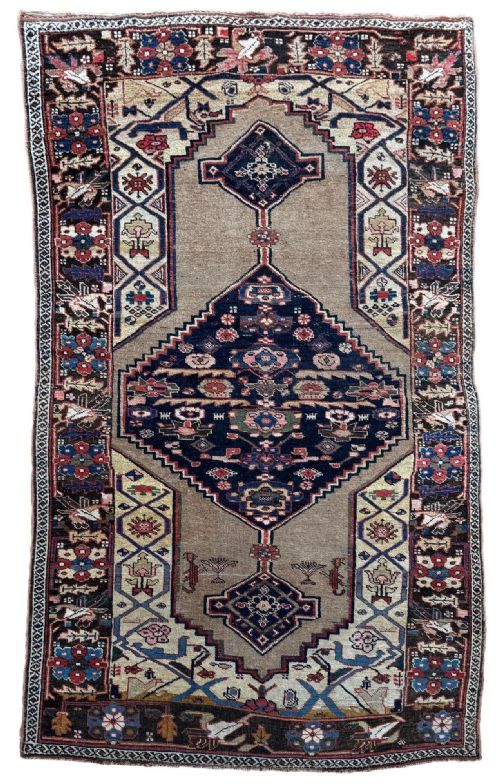
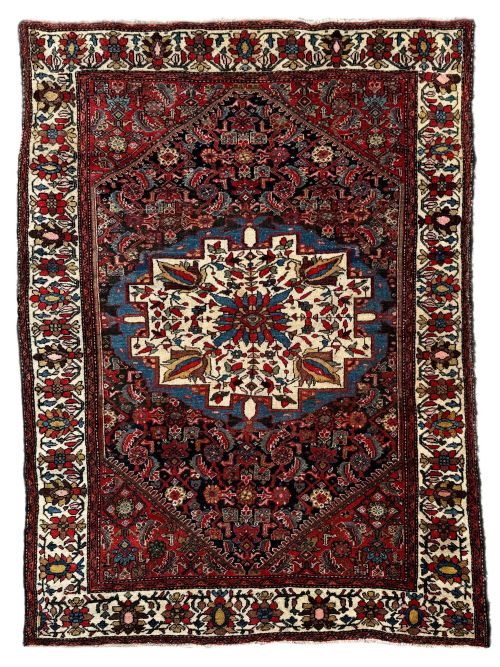
When searching for a persian bidjar rug, buyers encounter heavy village and tribal carpets originating from the Kurdistan region of Persia. These floor coverings span production dates from the nineteenth century through the early twentieth century, including pieces dated across the 1870s, 1880s, 1890s, 1900s, 1910s, 1920s, and 1930s. Most items appearing on this page take the form of standard rugs, area rugs, long runners, and large kelleh carpets.
The selection ranges from smaller scatter formats and bag faces to room-sized oversized carpets and kilims. Common stylistic descriptions encompass traditional Persian, tribal, and Kurdish classifications, sometimes featuring specific motifs like the Gul-i-Ferengi design or curve ended shapes.
How they were made
Weavers constructed a persian bidjar rug using wool piles knotted onto sturdy cotton foundations. The heavy handle characteristic of these items results from dampening the wool foundation and pounding the knots down tightly with a special heavy metal comb tool during the weaving process.
This rigorous technique packs the pile upright and dense, creating a stiff and resilient textile that resists wear. Natural dyes supplied deep ground colours, including unusual lemon shades alongside traditional tones.
Persian Bidjar Rug Retail Price Guide 2026
Typical asking prices for persian bidjar rug among the pieces listed under this phrase on Sellingantiques today, from the lower quarter to the upper quarter. They describe what is for sale here now, not the wider market.
Listings feature traditional wool and cotton textiles dated from the 1870s through the 1930s, including oversized formats.
What varies in quality
The distinction between ordinary and superior pieces rests on the density of the weave and the crispness of the drawn motif. Finer examples display intricate execution of traditional patterns, such as the Gul-i-Ferengi design, with tightly packed knots that ensure longevity.
Scale and format also drive variation, as expansive kelleh carpets and oversized room formats demand exceptional labour compared to smaller standard rugs or bag faces.
The Persian Bidjar Rug Glossary
- Kelleh
- A large rectangular Persian carpet format, typically longer than a standard room rug but narrower than a full palace carpet.
- Kilim
- A flatwoven carpet or rug produced without a pile, offering a lighter structure than knotted pile carpets.
- Gul-i-Ferengi
- A floral pattern translating to foreign flower, often depicting naturalistic roses inspired by French designs.
- Bag face
- The front panel of a nomadic storage bag, preserved and finished as a small decorative mat.
Persian Bidjar Rug: Frequently Asked Questions
How were these rugs originally used?
Nomadic and village households utilised these heavy carpets on packed earth or timber floors for insulation and daily seating. Larger formats defined central living spaces in substantial homes.
Smaller formats and bag faces served practical storage and transport functions within tribal daily life before entering the collector market.
How do I live with a heavy carpet?
Place a quality underlay beneath the textile to prevent sliding on hard floors and to cushion the dense wool pile against friction. This simple step protects the foundation from unnecessary stress.
Keep the textile out of direct, harsh sunlight to preserve natural dye integrity, and vacuum gently without a rotating brush roll.
How do I distinguish regional styles?
Look for the distinct Kurdish weaving traits, such as an exceptionally stiff, heavy handle caused by hammered wet foundations. These structural clues separate West Persian village production from finer urban workshop carpets.
Note specific ground colours like lemon or traditional dark fields, alongside characteristic tribal border arrangements and geometric floral interpretations.
What dates are common for these pieces?
The available selection primarily comprises nineteenth-century examples and pieces from the early decades of the twentieth century. Dates frequently span the 1870s through the 1930s.
Pieces carrying specific nineteenth-century attributions reflect traditional weaving methods passed down through Kurdish generations in the Bidjar district.