

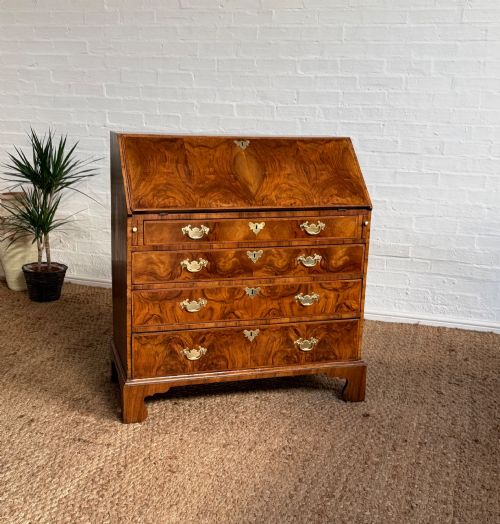
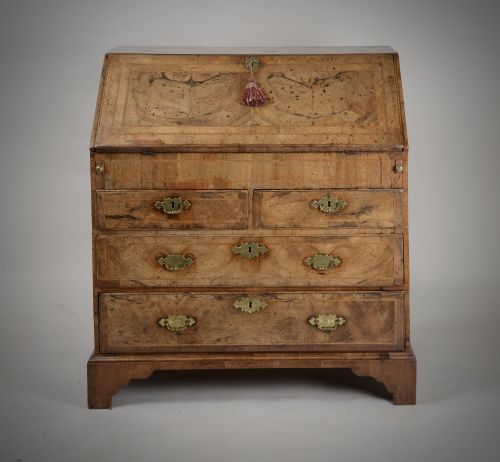
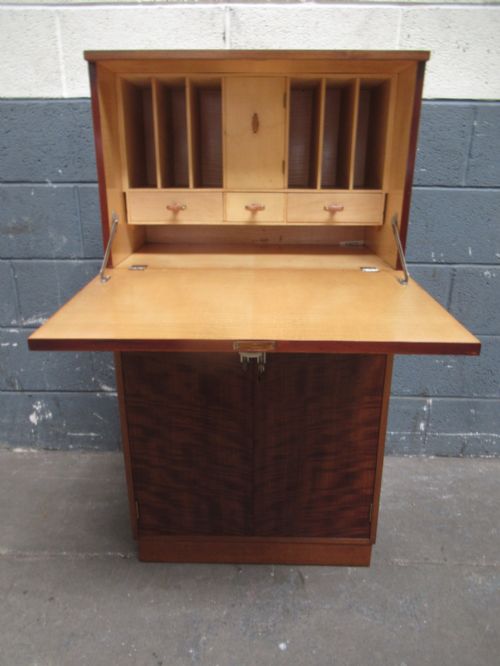
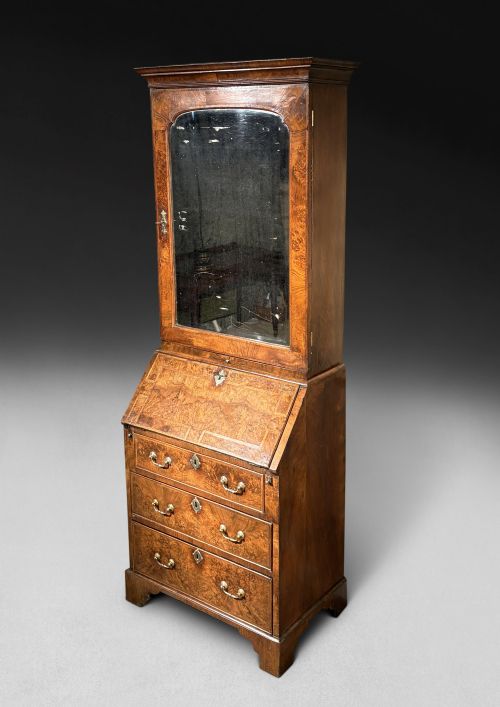


Period Walnut Bureau Cabinet
These pieces for period walnut bureau cabinet combine secret drawers and fitted writing compartments with imposing architectural presence, offering serious collectors exceptional timber figure and practical workspace.
Period Walnut Bureau Cabinet
A period walnut bureau cabinet unites a slant-front writing desk with an upper bookcase or cupboard section, creating a substantial piece of case furniture designed for domestic study or correspondence. These pieces span the late seventeenth and eighteenth centuries, taking forms such as the tall bureau bookcase, the drop-front escritoire, and the simpler slant-front desk.
Makers working during the William and Mary, Queen Anne, and Georgian eras constructed these cabinets to showcase the rich decorative potential of walnut and burr walnut timber. Buyers encounter examples ranging from monumental early bureau bookcases featuring mirrored doors down to compact writing desks attributed to makers like Gillows.
Materials and construction
Cabinetmakers utilised figured walnut and burr walnut veneers applied to primary structural timbers such as oak, creating striking geometric patterns across the fall-fronts and cabinet doors. Brass hardware, including drop handles, escutcheons, and hinges, secures the fitted interiors and drawers.
Secondary woods provide internal framework support, while specialist touches such as inset leather writing surfaces and glazed upper doors complete the construction of these complex writing cabinets.
Period Walnut Bureau Cabinet Retail Price Guide 2026
Typical asking prices for period walnut bureau cabinet among the pieces listed under this phrase on Sellingantiques today, from the lower quarter to the upper quarter. They describe what is for sale here now, not the wider market.
Current listings feature walnut and burr walnut bureau cabinets spanning the seventeenth, eighteenth, nineteenth, and twentieth centuries, including Art Deco interpretations.
Distinctions in quality and execution
Quality rests in the intensity and matching of the walnut veneer figure across the facade, where superior examples exhibit symmetrical burr patterns rather than plain grain. The sophistication of the internal stationery compartments, pigeonholes, and secret drawers also separates standard items from exceptional cabinet work.
Original surface patination and untouched brass hardware elevate a piece, whereas heavy restoration or replaced cabinetry elements alter the integrity of the antique.
Gillows
The Period Walnut Bureau Cabinet Glossary
- Burr walnut
- A prized timber harvested from walnut tree growths, featuring swirling, knotted grain patterns. Cabinetmakers sliced this wood into thin veneers to ornament the most prominent surfaces.
- Escritoire
- A tall writing cabinet featuring a drop-front writing surface that conceals an arrangement of small drawers and pigeonholes. This form predates the standard slant-front bureau.
- Bureau bookcase
- A composite furniture form featuring a lower writing desk combined with an upper shelving or cabinet section enclosed by doors. These units provide substantial storage for both books and papers.
- Patina
- The surface sheen and mellow colour developed by timber through age, handling, and waxing over centuries. Original patina is valued by collectors for its depth.
Period Walnut Bureau Cabinet: Frequently Asked Questions
What is a walnut bureau cabinet?
A walnut bureau cabinet is a tall piece of case furniture that combines a sloping or drop-front desk with an enclosed upper bookcase or cupboard. These dual-purpose units provided storage for correspondence, valuable documents, and books in wealthy households.
Craftsmen built them using rich timber veneers over solid carcases, incorporating numerous internal pigeonholes and secret compartments for security.
How do I identify William and Mary period pieces?
William and Mary pieces date from the late seventeenth and very early eighteenth centuries, often displaying robust architectural proportions and seaweed marquetry or bold burr walnut veneers. They frequently take the form of escritoires or tall bureau bookcases resting on bun feet or early bracket bases.
The interiors of these cabinets typically contain complex nestings of small drawers surrounding a central cupboard door.
Are these desks suitable for daily laptop use?
While these cabinets were designed for seventeenth and eighteenth-century correspondence using quill and ink, many drop-front or slant-front writing surfaces accommodate modern laptops. Buyers should measure the internal depth of the fall-front to ensure adequate clearance before placing electronic devices inside.
Protecting the antique timber and leather surfaces with a subtle blotter prevents wear during daily writing tasks.