



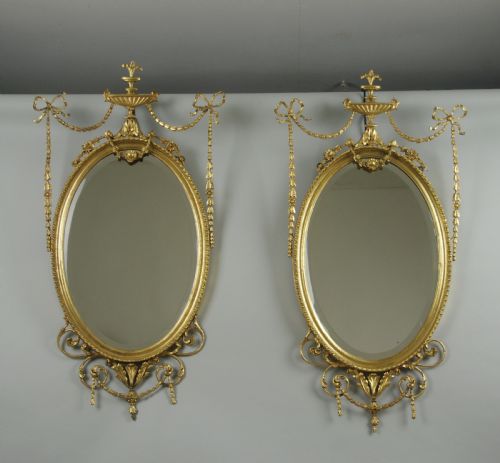


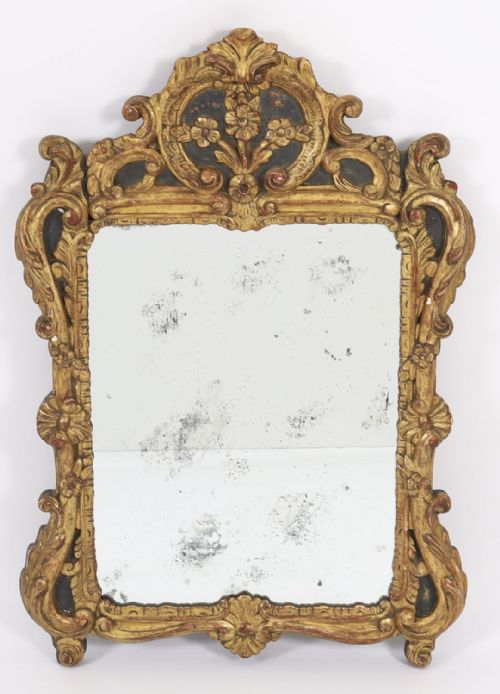


Period Style Gold Mirror
A period style gold mirror brings deep historical presence and luminous warmth to a room, reflecting light through centuries of design.
Period Style Gold Mirror
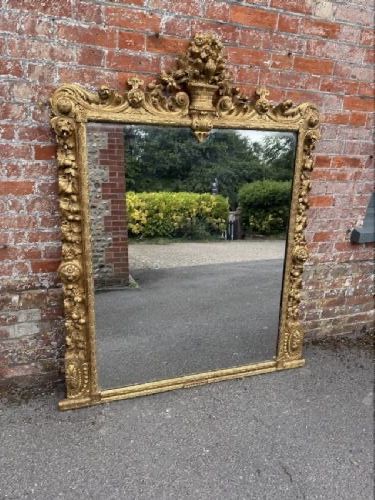
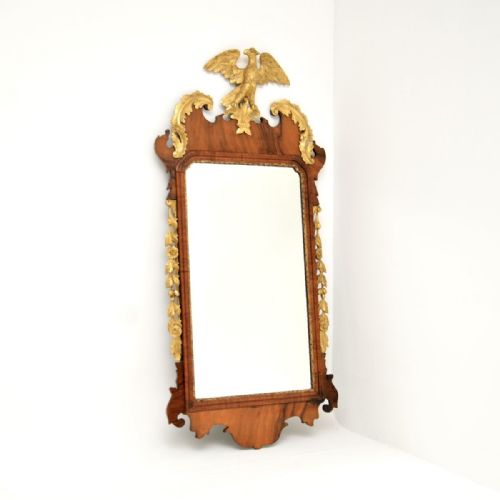
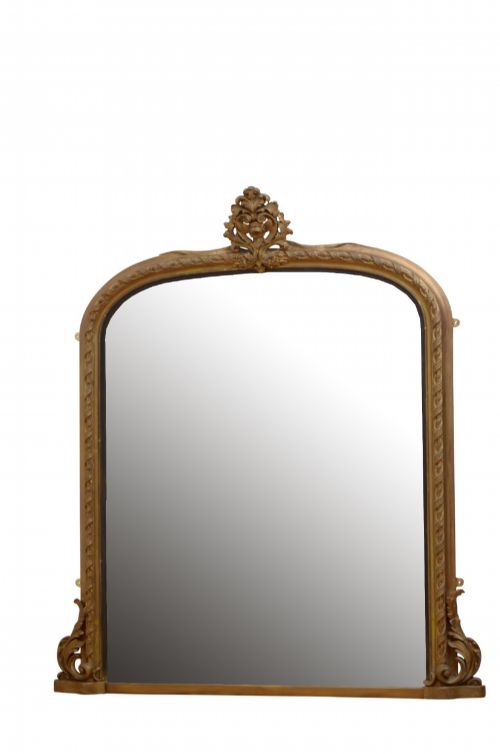
The most common versions met on this page span the Georgian, Regency, and Victorian eras, along with specific revivals such as George II style and French Empire designs. Buyers select these looking glasses to anchor a room scheme with traditional craftsmanship and substantial visual weight.
Materials and Construction
Frames are constructed from solid timber substrates, including mahogany, ebonised wood, and carved wood, which provide structural stability. Applied ornamentation often utilises gesso moulded over the wood to create sharp decorative relief before gilding takes place.
The luminous finish is achieved through the application of gold leaf or gilt layers, sometimes combined with black ebonised detailing or lacquer work. Reflective surfaces consist of original or period glass plates, occasionally framed by intricate composition details and carved wooden mounts.
Listings feature looking glasses spanning the eighteenth, nineteenth, and early twentieth centuries, incorporating mahogany, ebonised wood, gesso, and gold leaf.
Evaluating Quality
Quality rests in the crispness of the hand-carved wooden elements and the depth of the gilding, where finer examples display sharp relief and subtle tool marks rather than soft, flat moulding. The integrity of the original glass plate and backing boards also separates standard production from superior pieces.
Proportion and balance dictate the visual success of the frame, particularly in grand overmantel and pier formats where architectural elements must remain harmonious. Superior makers achieved fluid lines in rococo scrolls or precise symmetry in neoclassical frames, whereas lesser examples lack that sculptural authority.
John Belchier
The Period Style Gold Mirror Glossary
- Giltwood
- Wood that has been coated with gold leaf or a gold-coloured metallic finish. This technique creates a rich, reflective surface characteristic of formal period frames.
- Gesso
- A plaster-like mixture applied to wooden frame bases to build up smooth surfaces for intricate moulding and carving. It allows artisans to achieve sharp decorative relief.
- Overmantel Mirror
- A large looking glass designed specifically to hang above a fireplace mantelpiece. These pieces frequently feature landscape proportions or arched tops.
- Pier Mirror
- A tall, narrow mirror created to hang on the narrow wall space between two windows. They often match the height of adjacent furnishings and floor-standing tables.
- Convex Mirror
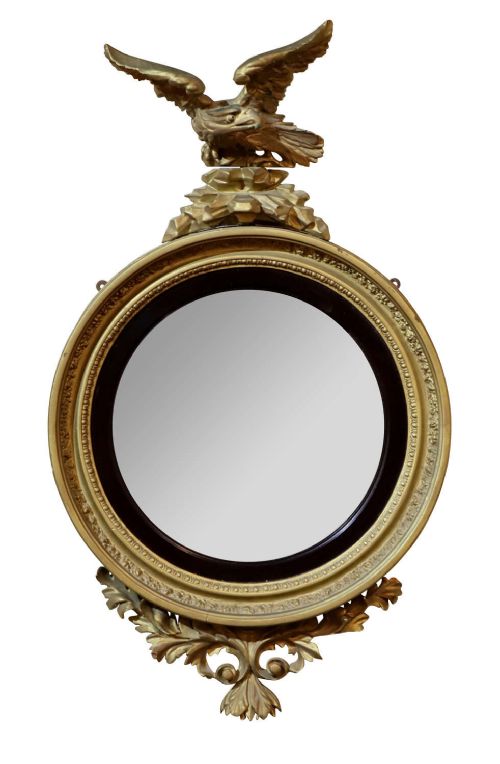
- A circular looking glass featuring a curved plate that reflects a wide, distorted field of view. These formats frequently incorporate eagle surmounts and candle arms.
Period Style Gold Mirror: Frequently Asked Questions
How do I hang a heavy overmantel mirror?
Heavy period frames require secure fixing directly into wall studs or masonry using substantial brackets rated for considerable weight. Professional installation is strongly advised to support the combined mass of timber, gesso, and glass.
Ensuring the hanging wire or integrated mirror rings distribute the load evenly prevents structural strain on the antique frame joints over time.
What is the difference between Georgian and Regency mirrors?
Georgian mirrors tend to feature elaborate, flowing rococo carvings, chinoiserie lacquer, and architectural Palladian symmetry influenced by Chippendale and Adam designs. Giltwood and mahogany are prominent during this eighteenth-century phase.
Regency mirrors, dating to the early nineteenth century, lean towards classical restraint, often incorporating circular convex formats, ebonised details, rope-twist mouldings, and prominent eagle surmounts.
Where should I place a pier mirror?
Pier mirrors work best positioned between two windows or above a narrow console table to maximise natural light diffusion around a room. Their vertical proportions draw the eye upward and add a sense of architectural scale.
Avoid placing them in direct, harsh sunlight or damp environments that could compromise the antique wood and delicate gilt surfaces.