



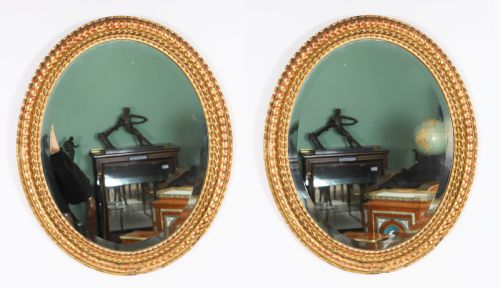
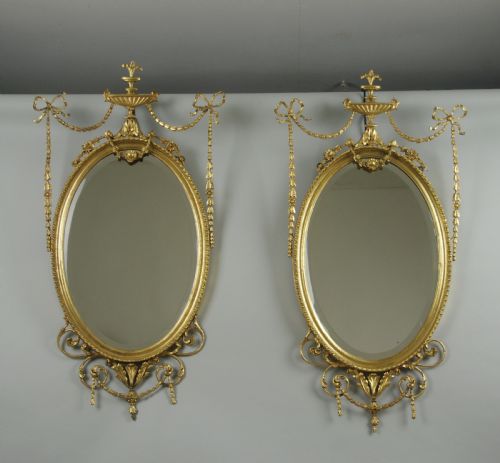


Pair Oval Wall Mirrors
These pair oval wall mirrors bring symmetry and light to a room, spanning periods from the eighteenth century to the art deco era.
Pair Oval Wall Mirrors
When you search for pair oval wall mirrors, you encounter balanced sets designed to hang opposite each other or flank a central architectural feature like a fireplace or doorway. The selections here range from compact miniature frames to large country house proportions, originating from English, French, and Italian workshops.
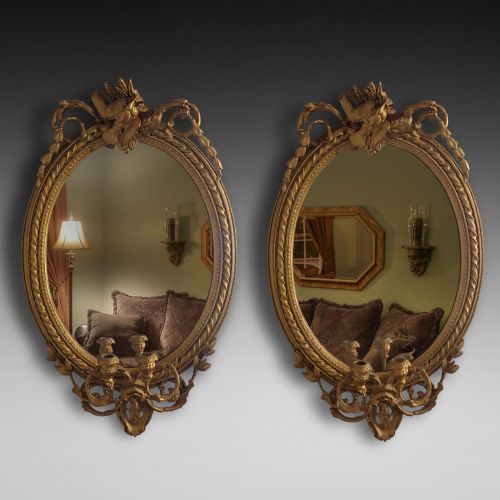
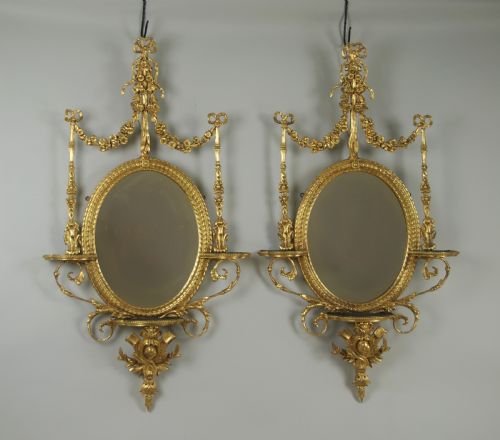
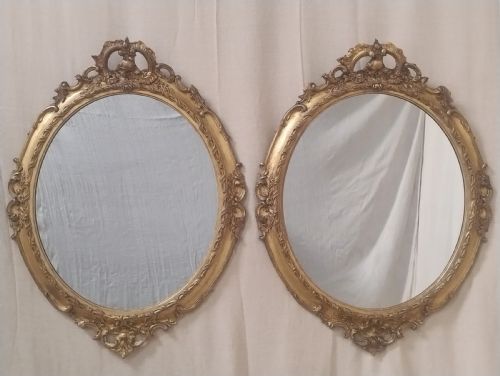
The most common versions on this page date from the Victorian period and the nineteenth century, often displaying giltwood or gesso finishes. Alongside standard wall mirrors, the evidence includes girandoles fitted with candle brackets and pieces decorated in Adam, Regency, and Rococo styles.
How they were made
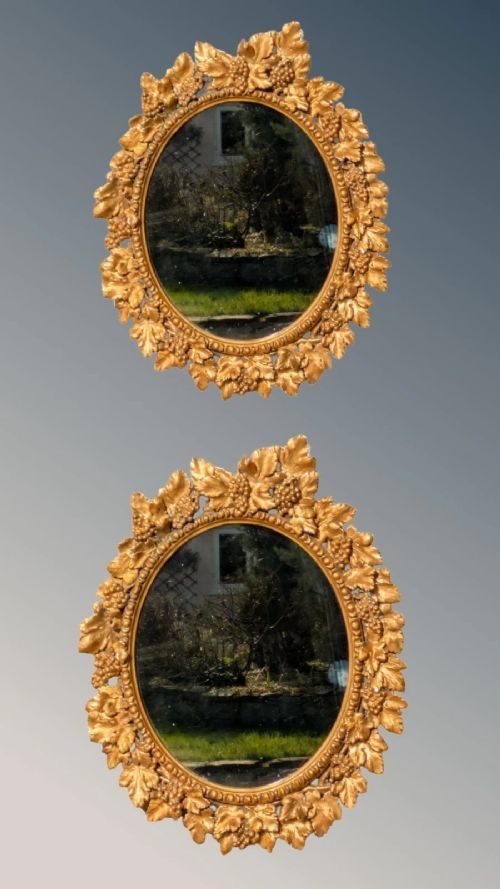
Carved wood, gesso, and plaster form the structural foundation of these frames, providing the intricate relief work seen on vine leaf and scroll decorations. Artisans applied gold leaf or gilt paint over these surfaces to achieve a luminous finish that catches natural light.
Metal components such as gilt brass appear on specific nineteenth-century French examples, alongside simulated wood finishes and painted surfaces. Original fittings and bevelled glass frequently accompany the older frames, recording period manufacturing techniques.
Listings span multiple centuries, including 18th Century, Regency, Victorian, Edwardian, and 1920s Art Deco periods.
What varies in quality
The depth and crispness of hand-carved decoration separate simpler moulded plaster frames from finely detailed giltwood examples. Superior execution shows in the precision of leaf work, acanthus scrolls, and cherub motifs.
The preservation of the original gilding and the integrity of the underlying wood or gesso determine the character of each piece. Retaining original fittings and untouched glass adds distinct historical interest to older items.
The Pair Oval Wall Mirrors Glossary
- Giltwood
- Wood that has been coated with gold leaf or a gold-coloured substance. This material defines the majority of the traditional frames listed.
- Girandole
- A decorative wall mirror featuring attached candle branches or sconces. These fixtures combine illumination with reflective glass.
- Gesso
- A plaster-like mixture applied to wood frames to create a smooth surface for carving and gilding. It allows for crisp decorative relief details.
- Adam style
- A neoclassical design language characterised by symmetry, classical urns, and delicate swags. This style appears frequently on eighteenth-century and revival pieces.
- Rococo revival
- A nineteenth-century design movement favouring asymmetrical C-scrolls, shell motifs, and naturalistic foliage. It represents a theatrical interpretation of earlier French aesthetics.
Pair Oval Wall Mirrors: Frequently Asked Questions
How were pair oval wall mirrors used?
These mirrors traditionally hung in formal reception rooms, often positioned above side tables or flanking mantelpieces to multiply candle light and brighten dark corners.
Their balanced proportions allowed them to anchor symmetrical wall arrangements in country houses and town residences alike.
How do I hang heavy giltwood mirrors?
Due to the substantial weight of carved wood, gesso, and glass, secure wall fixings into masonry or timber studs are essential for safe installation.
Using twin suspension points distributes the load evenly and prevents the frame from shifting over time.
Are original mirror plates common?
Older mirrors frequently retain their original glass, which can exhibit light foxing, minor pitting, and wavy distortions from historical manufacturing methods.
These optical imperfections confirm the age of the piece and contribute to the authentic visual character of the surface.
How do I tell Regency from Victorian frames?
Regency frames often display restrained classical motifs, reeded details, and crisp proportions influenced by ancient Greek and Roman design.
Victorian pieces tend toward heavier, more exuberant ornamentation, drawing on Rococo revival themes with dense leaf and grape decorations.