












Period Plate Display
Period plate display brings together decorative chargers, cabinet plates, and wall dishes designed to showcase historical porcelain, earthenware, and cloisonné enamel.
Period Plate Display
A period plate display centres on decorative plates, chargers, and dishes originating from centuries of ceramic and enamel craftsmanship. The listings here rely heavily on Japanese Imari porcelain from the Meiji period, alongside 18th-century Chinese pieces and Victorian English porcelain.
Forms range from large chargers and deep wall plates to hexagonal, square, and leaf-shaped dishes meant for visual impact. Buyers encounter everything from blue and white Delftware to vibrant polychrome palette designs.
Origins stretch from Edo and Meiji Japan to Ming and Qing Dynasty China, paired with 19th-century European interpretations. Each object serves primarily as a display piece rather than utilitarian tableware.
Factors influencing quality
Quality rests upon the precision of the hand-painted detail, the vibrancy and stability of the glaze or enamel, and the crispness of moulded forms like scalloped or pierced edges. Masterpieces show superior control over pictorial composition, whether depicting birds, flora, or narrative scenes.
The finesse of the metalwork in cloisonné items or the purity of the porcelain body in Kraak and Imari wares distinguishes standard production from exceptional examples. Balance in design and preservation of original gilding and surface finish determine the standing of each piece.
Period Plate Display Retail Price Guide 2026
Typical asking prices for period plate display among the pieces listed under this phrase on Sellingantiques today, from the lower quarter to the upper quarter. They describe what is for sale here now, not the wider market.
Listings span from sixteenth-century Chinese Kraak porcelain to twentieth-century Japanese Imari, covering porcelain, earthenware, enamel, and gold leaf.
Koshida·Minton·Spode·Darte Brothers
The Period Plate Display Glossary
- Imari
- A style of Japanese porcelain decorated in underglaze blue, iron red, and gilt, highly popular for decorative display. It takes its name from the port of export.
- Charger
- A large decorative plate or dish, typically measuring over thirty centimetres across, intended for display on a wall or dresser rather than dining use.
- Cloisonné
- An enamel technique where metal wires are affixed to a metal base to create compartments filled with enamel paste and fired. This method produces intricate pictorial designs.
- Kraak porcelain
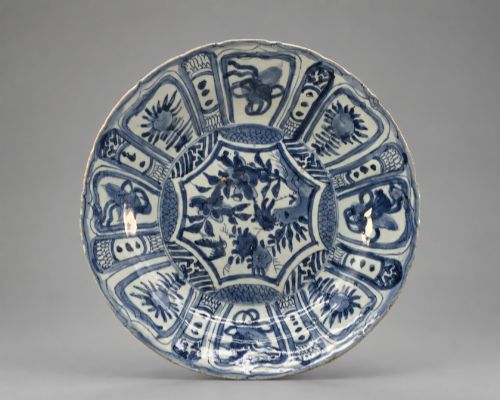
- Chinese export porcelain from the late Ming dynasty, characterised by panelled borders and central motifs painted in blue and white. It frequently appears in early collections.
- Aesthetic Movement
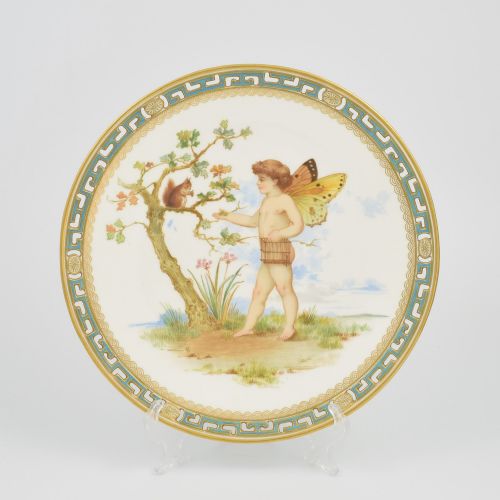
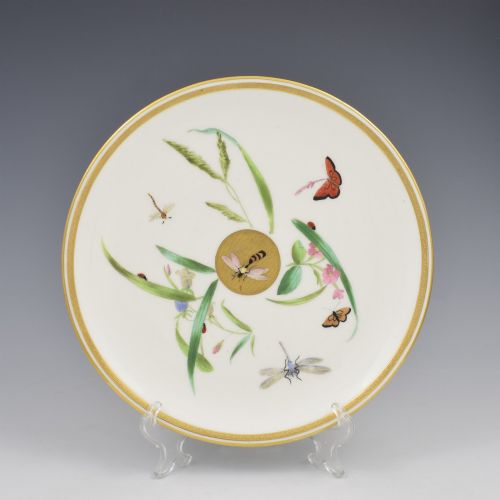
- A 19th-century design style that embraced the integration of Japanese artistic motifs into European decorative arts, visible in Minton dessert plates.
- Famille Rose
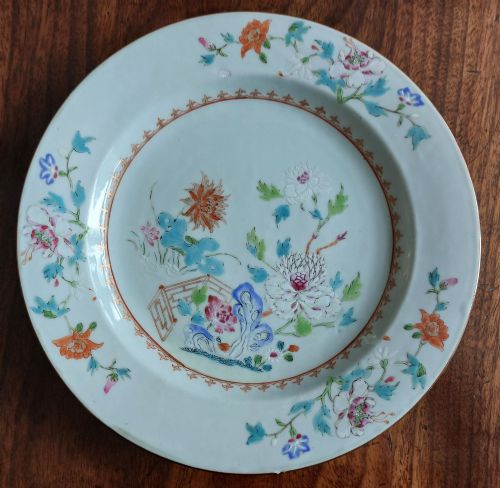
- A palette of Chinese porcelain enamels dominated by opaque pink or rose colours, introduced in the 18th century during the Qing dynasty.
Period Plate Display: Frequently Asked Questions
How were period plates displayed originally?
Historically, large chargers and decorative plates were arranged on buffets, sideboards, and Welsh dressers to demonstrate household wealth and taste. Many feature pierced feet or old hanging wire to facilitate mounting on walls.
Today, modern collectors utilise sturdy plate stands for cabinet placement or secure wall brackets to exhibit these historical ceramics safely.
What is the difference between an Imari plate and a charger?
Imari refers specifically to the decorative palette and porcelain style originating in Japan, defined by cobalt blue, red, and gold. A charger describes the large physical format of the dish.
While standard Imari plates measure closer to dinner plate dimensions, chargers provide a much wider canvas for complex bird, floral, and geometric compositions.
Can cloisonne plates be hung on walls?
Cloisonné chargers and trays possess solid copper or brass foundations that make them heavier than standard ceramic plates. Secure, weight-distributed hangers designed for metal objects are necessary for safe wall mounting.
Displaying them on flat surfaces using dedicated stands also protects the enamel edges from accidental knocks.
How do I identify a Meiji period Japanese plate?
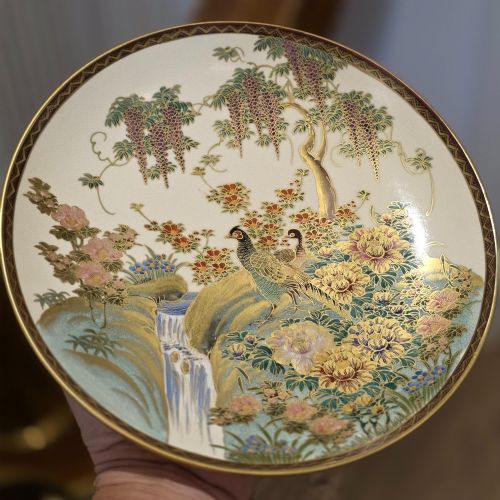
Meiji period pieces date from 1868 to 1912, a time when Japanese export ceramics reached unprecedented levels of technical refinement. Look for densely packed pictorial motifs, high-contrast Imari palettes, and meticulous hand-painted details.
Many incorporate Western compositional influences while retaining traditional Japanese flora, fauna, and narrative subjects.