
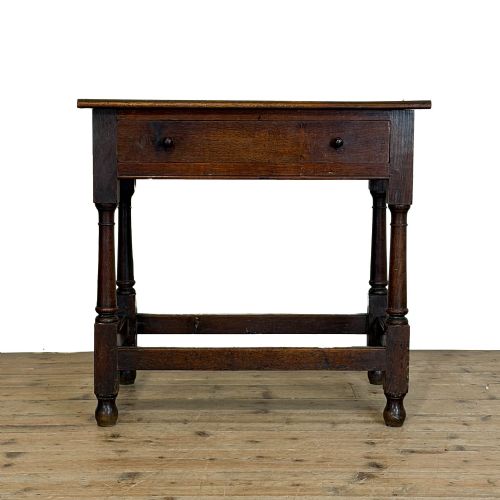
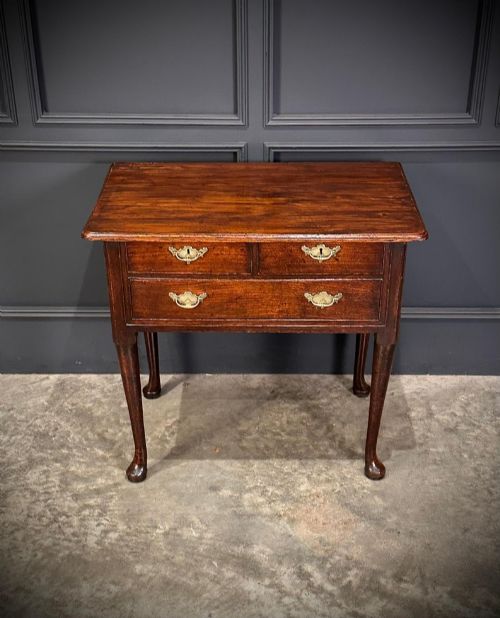
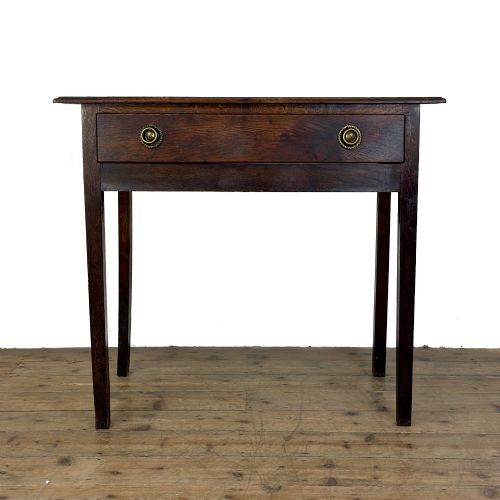
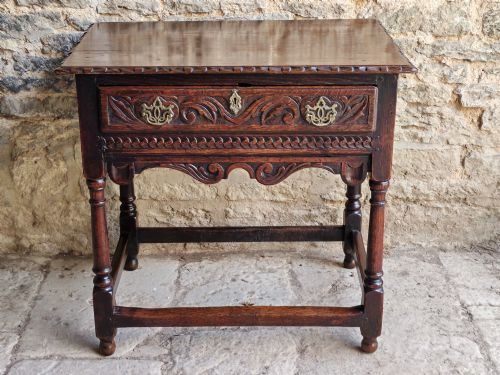


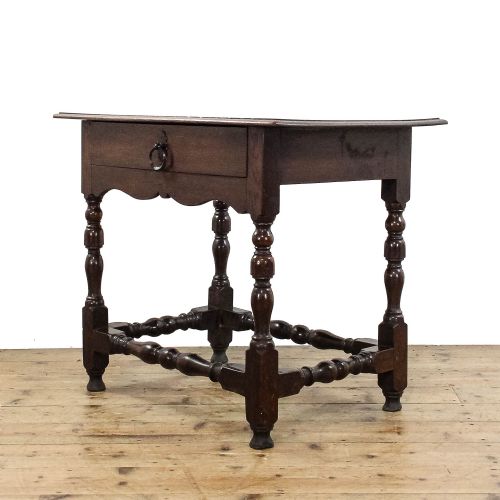


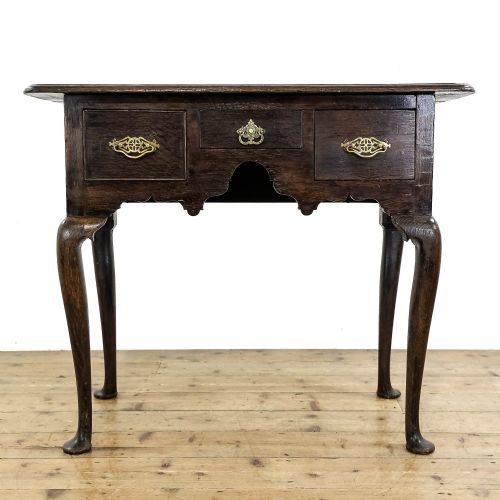

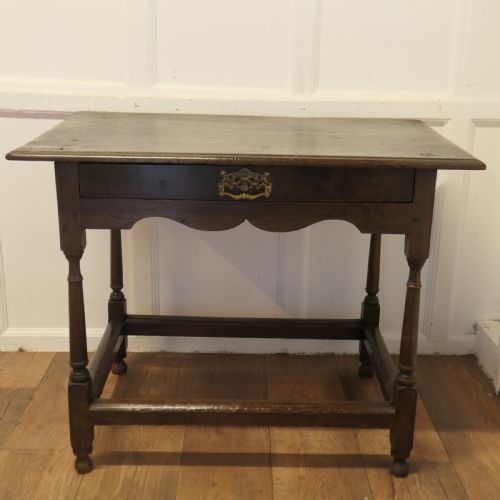

Period Oak Lowboy Desk
These period oak lowboy desk examples offer compact timber character, bringing sturdy eighteenth-century craftsmanship directly into modern domestic spaces.
Period Oak Lowboy Desk
A period oak lowboy desk functions as a small utilitarian table, often serving historically as a dressing or writing surface. These pieces emerge predominantly from the seventeenth and eighteenth centuries, reflecting enduring domestic utility.
The inventory on this page centres heavily on eighteenth-century examples, alongside select seventeenth-century precursors and nineteenth-century interpretations. Formats range from traditional lowboys and side tables to dedicated writing tables and dressing tables.
Makers constructed these lowboys using regional timbers, frequently pairing solid oak with fruitwood accents. Regional variations span from country house workshops to Welsh cabinet makers operating around the mid-eighteenth century.
Materials and construction methods
Cabinet makers relied primarily on solid oak for structural integrity, utilising fruitwood for secondary timbers and decorative contrast. Timbers display natural grain patterns developed through historical quarter-sawing techniques.
Hardware incorporates forged iron handles and brass drawer pulls, fastened securely to timber frameworks. Joinery relies on traditional pegged mortise and tenon construction rather than modern mechanical fasteners.
Many seventeenth-century writers balanced journals on these exact tables before ballpoint pens existed.
Indicators of superior execution
Quality separates pieces through the selection of timber and the preservation of original patination. Superior examples retain untouched surface finishes and authentic brass or iron hardware.
Refined construction is visible in the crispness of mouldings and the tight tolerances of drawer joinery. Lesser items often show heavy timber replacement or unsympathetic modern restoration work.
The Period Oak Lowboy Desk Glossary
- Lowboy
- A small pedestal table featuring drawers, traditionally used for personal grooming or writing. These compact tables sit low to the ground and typically feature four legs.
- Quarter-sawing
- A method of cutting logs that produces a distinct medullary ray pattern in oak. This technique yields dimensionally stable timber resistant to warping.
- Patina
- The surface sheen and colour acquired by wood through decades of handling and oxidation. This natural ageing process indicates genuine historical depth.
- Mortise and tenon
- An interlocking joint method where a projecting tenon fits snugly into a corresponding cavity. This traditional technique provides permanent structural rigidity without metal screws.
Period Oak Lowboy Desk: Frequently Asked Questions
What is a lowboy used for?
Historically, these compact tables served as dressing tables for grooming or writing desks for correspondence.
Today, buyers frequently utilise them as hallway console tables or compact writing desks in smaller rooms.
How do I date an oak lowboy?
Dating relies on examining construction marks, timber preparation methods, and historical styling details.
Early seventeenth-century pieces display heavier framing, while mid-eighteenth-century examples often incorporate cleaner Queen Anne or Georgian lines.
Are fruitwood and oak the same?
Oak is a hard, open-grained timber known for strength and prominent growth rings, used widely for structural frames.
Fruitwood offers a denser, smoother grain often utilised for contrasting drawer linings or decorative surface details.
How do I care for period oak?
Protect the timber by maintaining stable indoor humidity away from direct heat sources and sunlight.
Apply traditional beeswax occasionally to nourish the surface and preserve the historic patina without sealing the wood.