
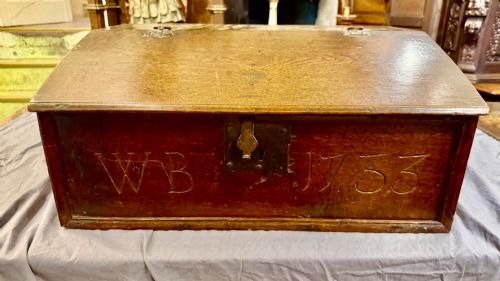
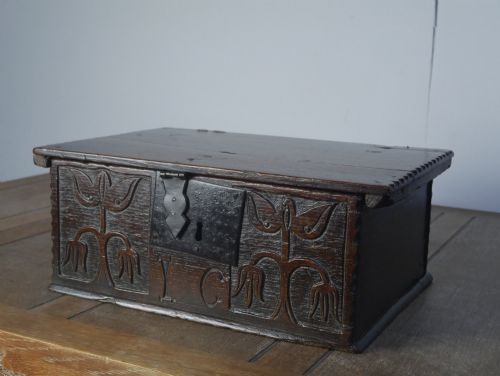
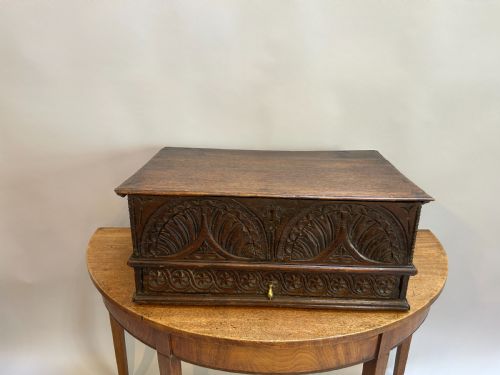
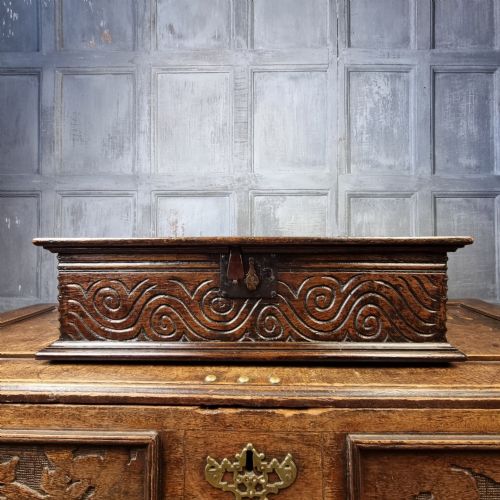




Period Oak Desk Box
These period oak desk box pieces are sturdy timber containers built for writing and storage that bring genuine seventeenth and eighteenth-century utility into a modern room.
Period Oak Desk Box
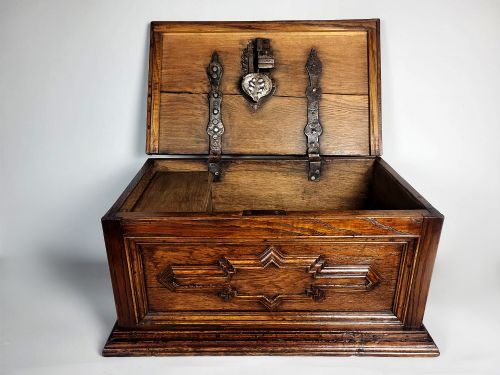
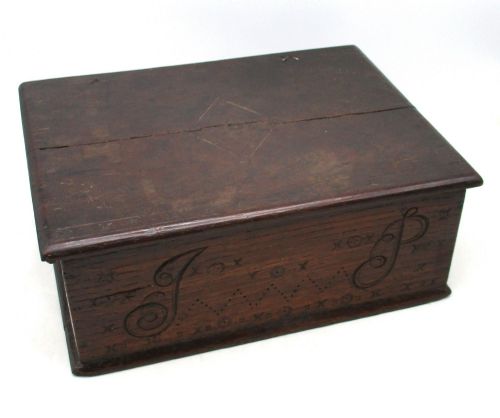
A period oak desk box is a solid timber container designed for holding writing materials, documents, and books, frequently doubling as a portable writing surface when hinged correctly. You encounter forms ranging from simple storage chests and Bible boxes to slant front writing slopes and table top bureaus.
The pieces on this page span the seventeenth and eighteenth centuries, taking shape through Jacobean, Charles II, William and Mary, and Georgian traditions. Many examples exhibit functional adaptations like complex steel locks, iron hardware, and internal compartments tailored for specific domestic or clerical tasks.
How they were made
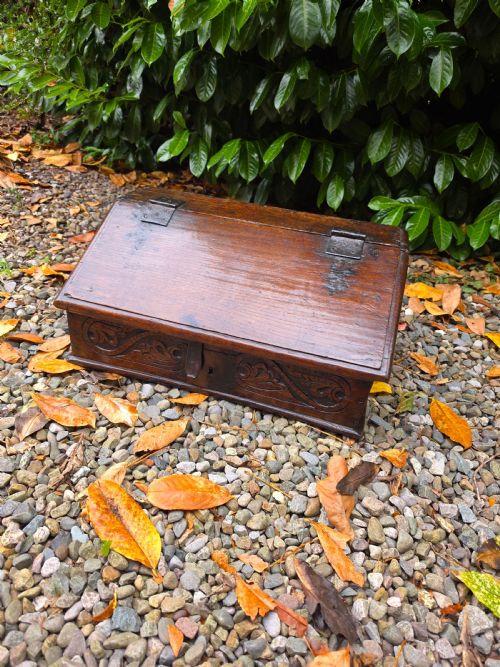
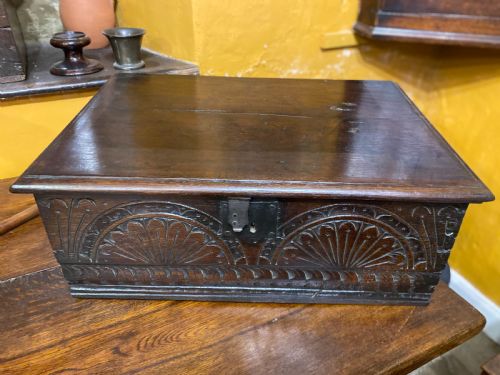
The primary material is oak, often joined with iron, brass, and steel for hinges, escutcheons, and complex internal locking mechanisms. Selected pieces incorporate contrasting details in holly and bog oak inlay alongside hand-carved decorative panels.
Cabinetmakers constructed these boxes using traditional jointing methods suited to dense timbers, mounting sloping lids or flat tops on sturdy hinges. Surfaces receive minimal modern intervention, retaining the natural grain and historic patination developed over centuries of use.
The listings span the seventeenth and eighteenth centuries, utilising oak combined with iron, brass, steel, leather, holly, and bog oak.
What varies in quality
Quality reveals itself in the crispness of the hand-carving on the front panels and the integrity of the original timber construction. Boxes featuring specialised internal compartments or complex contemporary hardware stand apart from simpler utility containers.
The survival of original brass or iron fittings and untouched surface patination distinguishes superior examples. Construction details such as the refinement of the dovetails and the condition of the oak boards dictate the overall grade of the piece.
The Period Oak Desk Box Glossary
- Bible Box
- A small tabletop chest originally intended to store a family Bible or devotional texts securely. These boxes frequently feature sloping lids that served as makeshift writing desks.
- Writing Slope
- A box with an angled lid designed to provide a comfortable surface for handwriting. Inside, you typically find compartments for inkwells, quills, and paper.
- Bog Oak
- Subfossil oak that has been buried in peat bogs for hundreds of years, turning a dark brown or black colour. Craftsmen utilised this dense material for contrasting inlay work.
- Escutcheon
- A protective plate surrounding a keyhole, usually fashioned from brass or iron. It prevents the timber around the lock from splitting during regular use.
- Jacobean
- The style of English art and architecture prevalent during the reign of James I, marked by solid proportions and geometric carved ornamentation. This aesthetic heavily influences seventeenth-century box design.
Period Oak Desk Box: Frequently Asked Questions
What is a period oak desk box?
A period oak desk box is a historic wooden container built during the seventeenth or eighteenth century to store writing equipment and important papers. Many feature sloping lids designed for writing upon directly.
These versatile objects served domestic, clerical, and religious purposes in homes and offices before freestanding desks became common.
How were these boxes used originally?
People placed these boxes on tables or desks to keep ink, quills, and correspondence organised in one secure place. The heavier models often held family Bibles or legal documents.
Porter-style handles or secure locks allowed owners to transport valuable papers safely between rooms or locations.
How do I date a seventeenth-century box?
Dating relies on examining the construction methods, tool marks, timber characteristics, and decorative carving styles typical of specific reigns like Charles II or William and Mary. Hardware such as iron locks and hinges also provides reliable chronological clues.
Comparing the board thickness and joint types against documented examples helps confirm the period of origin.
Can I use an antique box daily?
These robust oak containers are durable enough for everyday use as storage chests or modern desktop organizers. Their solid construction handles regular opening and closing well.
Treating the historic wood with care and avoiding excess moisture ensures these pieces remain functional for future generations.
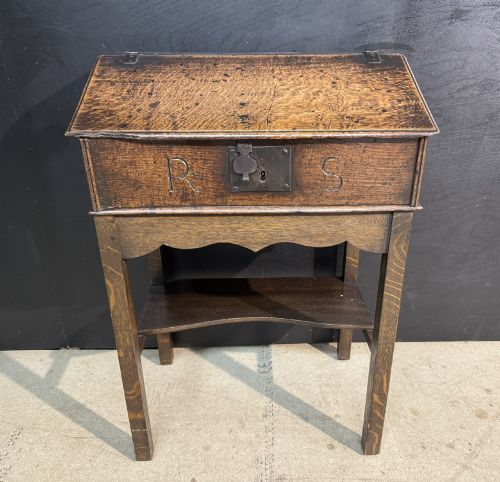
What is a slant front bible box?
A slant front Bible box combines the storage capacity of a traditional chest with an angled top surface suited for reading and writing. The hinged lid lifts to reveal interior compartments for small valuables or books.
This form represents a transitional design leading toward the development of full writing desks and bureaus.