
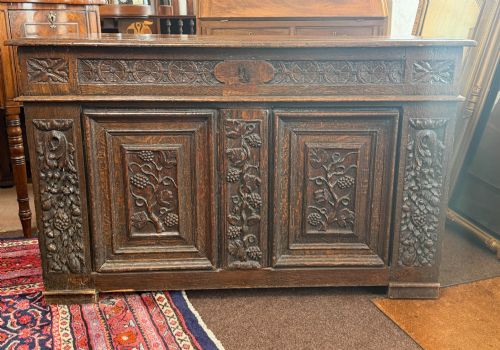
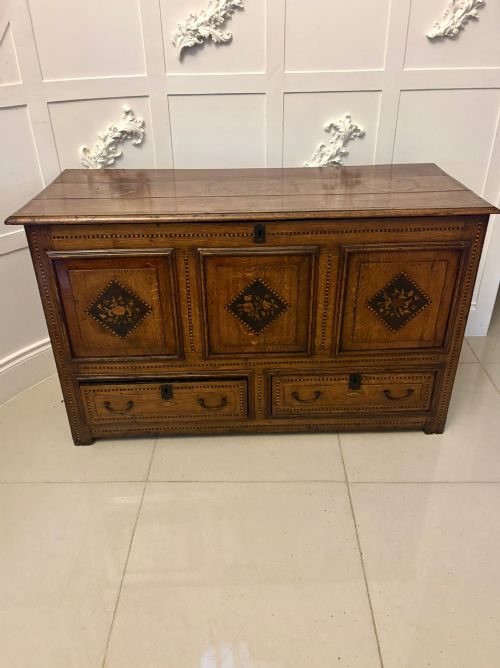


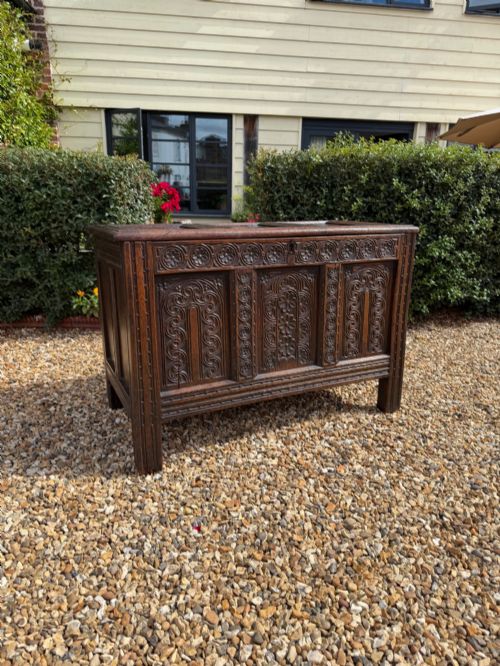
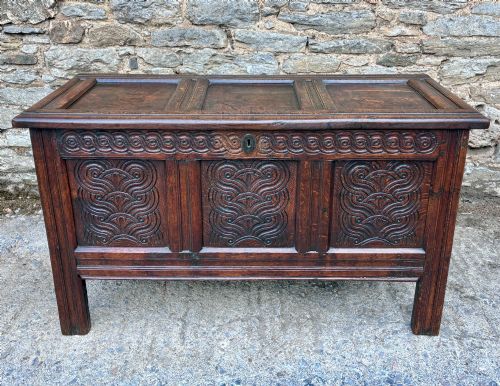
17th Century Carved Coffer
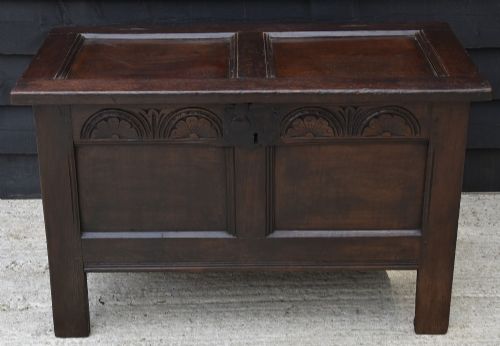
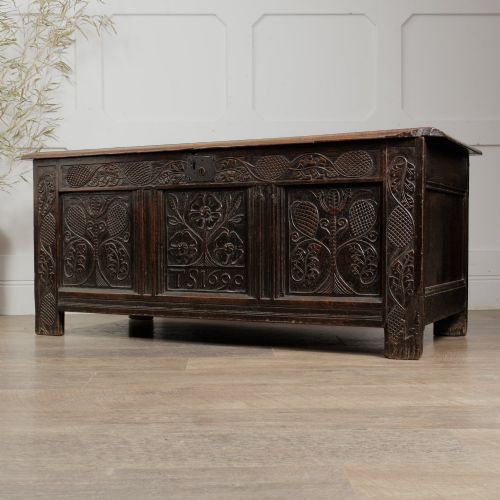
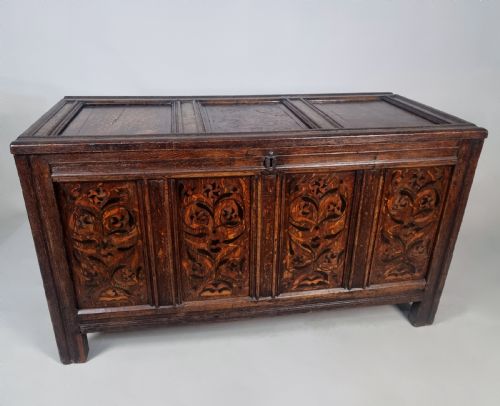
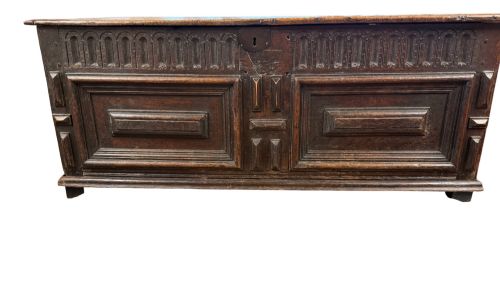
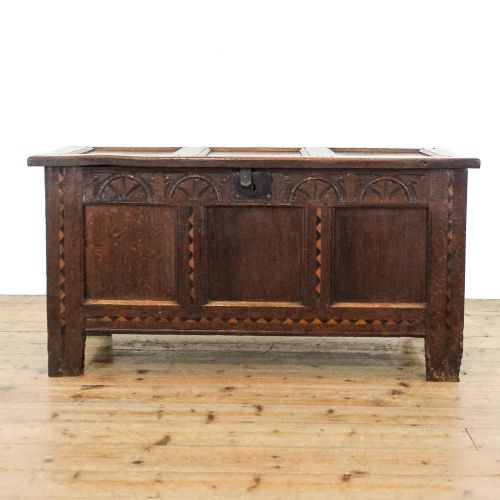
A 17th century carved coffer delivers solid domestic storage with centuries of heavy-relief panel work and pegged timber construction.
17th Century Carved Coffer
A 17th century carved coffer provides heavy timber storage through a hinged lid and deep structural box, frequently serving as blanket chests or regional receptacles in early homes.
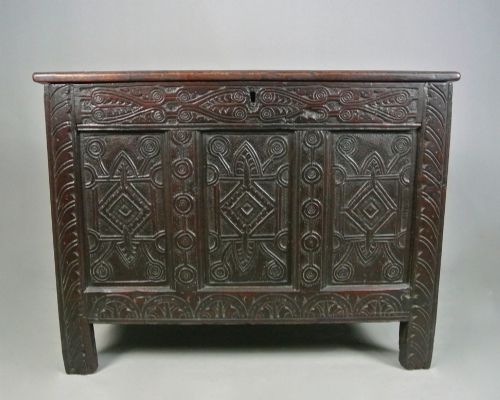
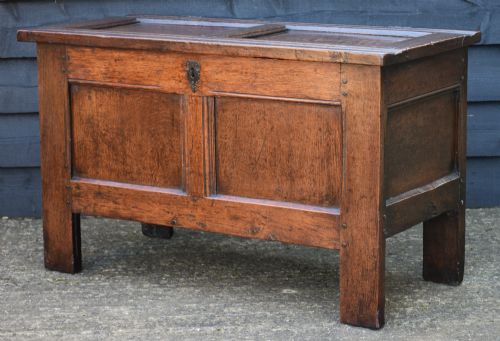
The dominant forms recorded in the listings include joined oak coffers with triple-panel fronts, alongside six-plank variants and occasional pieces utilising cypress, cedarwood, or mahogany.
While authentic pieces date predominantly from the 1600s through the reign of Charles II, the selection also incorporates later revival items from the Georgian era and the early twentieth century.
Materials and Construction Techniques
Construction relies heavily on native English oak shaped through frame-and-panel techniques, utilising pegged mortise and tenon joints to accommodate natural wood movement over centuries.
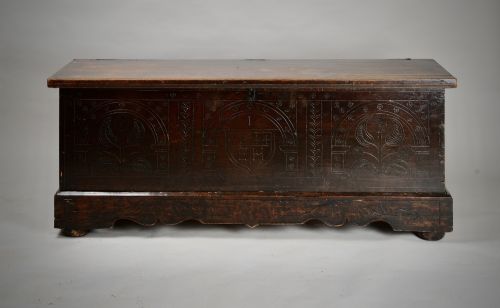
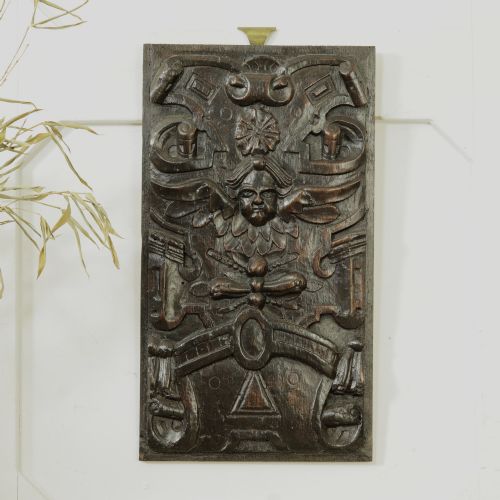
Decoration is achieved through hand-carved relief work, chip carving, and occasional marquetry inlay using mixed woods, brass, or iron hardware.
Secondary timbers such as elm, cypress, and cedarwood appear in specific regional or continental examples, preserving distinct surface patinas.
Some seventeenth-century boxes doubled as seats, giving rise to sturdy oak box stools that kept feet safely off cold stone floors.
Distinctions in Quality
Quality rests on the integrity of the original joined framing, the crispness of the hand-carved panels, and the survival of the original hinges and timber patina.
Pieces showing regional characteristics, such as specific Welsh or ecclesiastical provenance, display distinct joinery standards that elevate their historical interest.
The extent of later timber replacement or altered lid configurations distinguishes uncompromised early examples from heavily restored or 17th century style revival pieces.
The 17th Century Carved Coffer Glossary
- Coffer
- A heavy wooden chest with a hinged lid used for storage. These items typically feature boarded or panelled construction.
- Joined oak
- Furniture constructed using mortise and tenon joints secured by wooden pegs rather than simple nailed boards. This method defines much of the surviving seventeenth-century output.
- Marquetry inlay
- Decorative patterns formed by fitted veneers applied to the surface of the wood. Mixed woods create contrasting pictorial or geometric designs.
- Six-plank
- A primitive construction method utilising six individual boards joined directly at the edges to form the box. This style represents an earlier approach to chest building.
- Patina
- The surface sheen and colour developed by wood through age, handling, and wax polishing. Original patinas are valued by collectors for authenticity.
17th Century Carved Coffer: Frequently Asked Questions
What were 17th century carved coffers used for?
These heavy wooden chests served primarily for storing household valuables, textiles, documents, and provisions in early domestic interiors.
Their robust construction also allowed them to function as occasional seating or tables within the home.
How do I identify a 17th century oak coffer?
Authentic period examples display pegged mortise and tenon joinery, hand-cut panel mouldings, and genuine surface wear accumulated over centuries.
Examining the underside and interior boards reveals tool marks and timber ageing consistent with the sixteen-hundreds.
How should I care for an antique oak chest?
Maintain stable indoor humidity levels and protect the wood from direct heat sources to prevent timber splitting or joint separation.
Apply occasional traditional beeswax to nourish the surface without building up synthetic residues.
What is the difference between joined and plank coffers?
Joined coffers utilise a sturdy internal frame holding individual carved panels, representing more advanced seventeenth-century cabinet-making.
Plank coffers consist of boards nailed or joined directly at the edges, representing an earlier or more utilitarian method of construction.