



Period Oak Court Cupboard
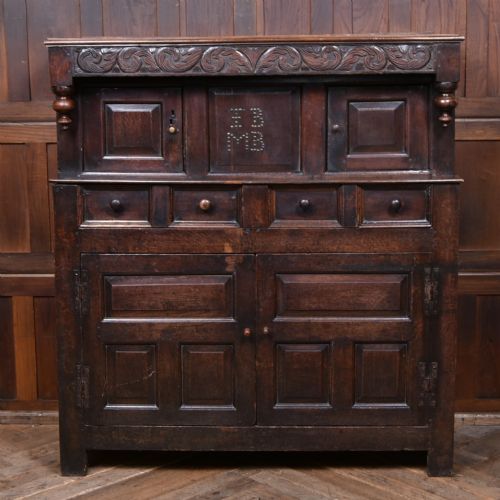
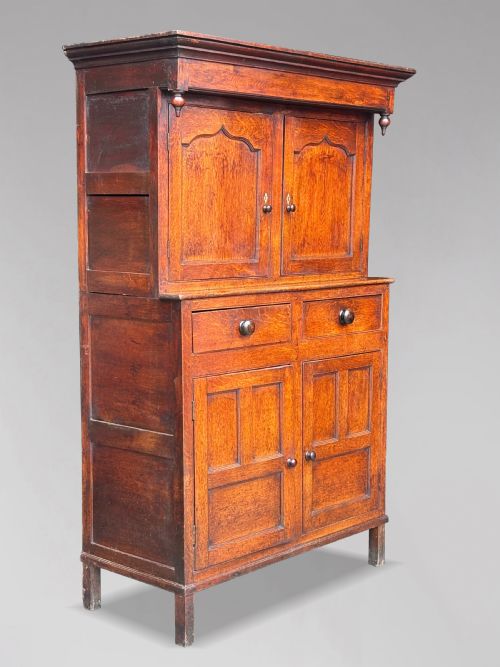
A period oak court cupboard brings monumental timber, layered carving, and deep history into a room.
Period Oak Court Cupboard
When you search for a period oak court cupboard, you are looking at substantial antique storage furniture built primarily from native timber across the sixteenth, seventeenth, and eighteenth centuries. These traditional display and storage pieces typically feature stacked tiers with upper and lower enclosed sections, often associated with Jacobean, Elizabethan, and Georgian eras.
The versions you are most likely to meet on this page span from pre-sixteenth century examples up to later Georgian interpretations and nineteenth-century revivals. They appear under various descriptions including livery cupboards, carved cupboards, and sideboards, reflecting the shifting domestic uses of timber furniture over successive centuries.
These heavy architectural items served as central storage for food, plate, and textiles in important households before evolving into decorative reception room furniture. Their robust construction and figured timber surfaces make them enduring focal points for traditional interiors.
How they were made
Master craftsmen built these pieces using solid oak, employing traditional frame-and-panel construction alongside pegged joints to allow the heavy timber to move naturally with seasonal humidity changes. Iron and brass hardware, such as hinges and handles, secured the heavy doors and drawers while complementing the dark grain of the wood.
Carving formed a primary decorative technique, with artisans gouging and chiselling intricate geometric patterns, foliate scrolls, and architectural motifs directly into the dense oak surfaces. Some late eighteenth-century examples incorporated specialised elements like secret compartments hidden within the robust cabinetry.
Some late eighteenth-century examples come equipped with hidden secret compartments, built for hiding valuables from prying eyes.
What varies in quality
The distinction between standard examples and the finest pieces lies in the depth and crispness of the carved ornamentation, as well as the proportion of original timber retained throughout the structure. Heavily embellished surfaces executed by skilled hands command greater appreciation than plain utilitarian variants.
Construction integrity also dictates standard, particularly where joints remain tight and untouched by extensive modern replacement timber or inappropriate hardware. The quality of the oak grain itself, showing rich medullary rays and deep patination, elevates the standing of an individual cupboard.
The Period Oak Court Cupboard Glossary
- Court cupboard
- A short sideboard or cabinet used for displaying plate and storing food or utensils, typically featuring upper and lower tiers. This form evolved significantly between the Elizabethan and Georgian periods.
- Livery cupboard
- A small storage piece traditionally used to keep rations and candles, often ventilated with turned spindles or pierced panels. These items frequently share stylistic traits with court cupboards.
- Jacobean
- The architectural and decorative style prevalent during the reign of James I, characterised by heavy proportions, strapwork, and geometric relief carving. Furniture from this era displays distinct dark oak patination.
- Joined oak
- Cabinetwork constructed using mortise and tenon joints locked with wooden pegs rather than metal nails. This method defines the sturdy joinery of sixteenth and seventeenth-century English furniture.
- Medullary rays
- The silver fleck markings visible across quartersawn oak timber that indicate the natural growth rings. Cabinetmakers prized this figure for its visual texture on prominent panels.
Period Oak Court Cupboard: Frequently Asked Questions
What is a court cupboard?
A court cupboard is a traditional multi-tiered storage unit designed for displaying plate and storing household provisions in early homes.
Over the centuries, these pieces shifted from utilitarian dining room furniture into grand architectural focal points featuring enclosed cabinets and open display tiers.
How old are these cupboards?
The pieces listed span from pre-sixteenth century origins through the Elizabethan, Jacobean, and Georgian periods up to later nineteenth-century interpretations.
Datings are established through construction methods, joinery techniques, and stylistic evolution across different reigns.
How were they used originally?
These cupboards served primarily to store food, wine, and valuable plate in wealthy households during the sixteenth and seventeenth centuries.
The upper and lower sections allowed separate compartments for locking away expensive items while displaying decorative vessels.
What timber was used?
Native English oak forms the primary structural and visible material for these traditional cupboards, valued for its immense strength and durability.
Additional hardware utilises iron and brass, while occasional decorative accents incorporate mother-of-pearl.
How do I care for antique oak?
Antique oak requires stable indoor humidity and temperature levels to prevent the dense timber from splitting or warping over time.
Regular application of traditional wax helps nourish the patinated surface without damaging the historic finish.