



Period Oak Corner Cupboard
A period oak corner cupboard turns wasted wall space into functional storage with classic Georgian proportion and honest timber.
Period Oak Corner Cupboard
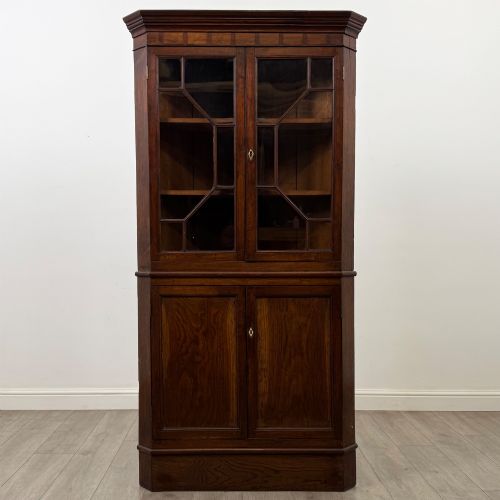
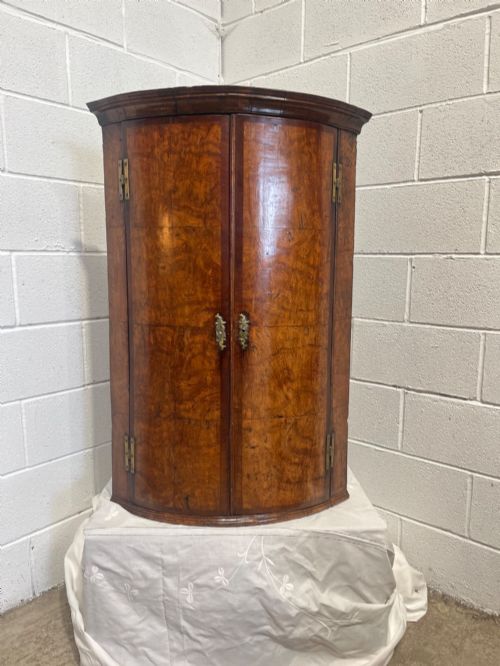
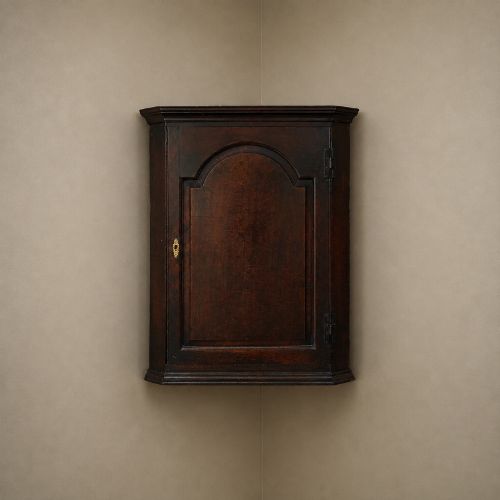
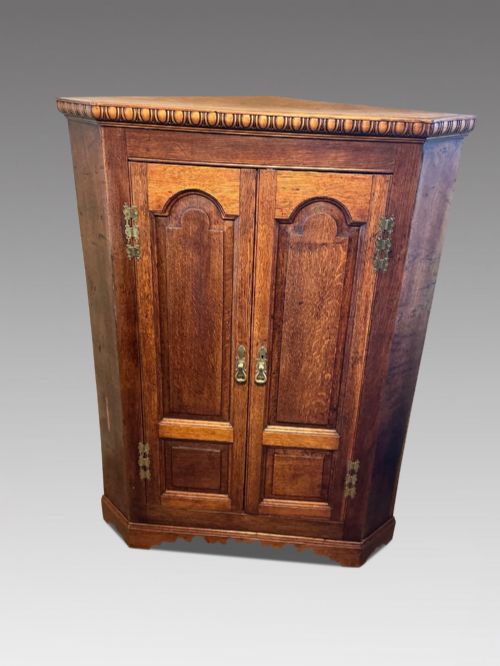
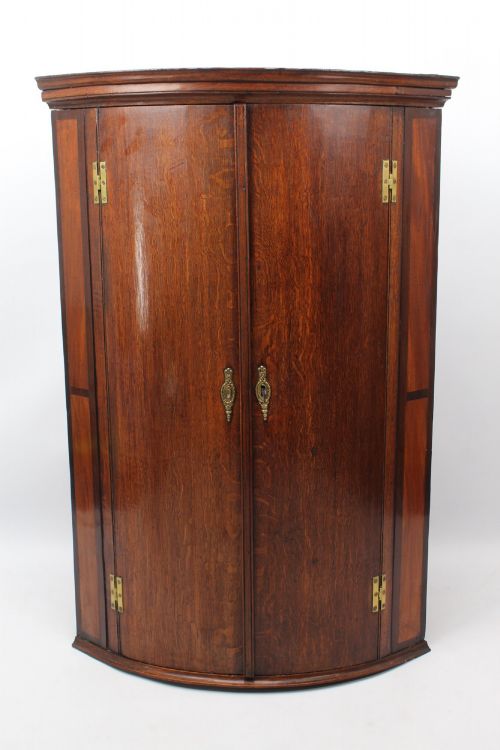
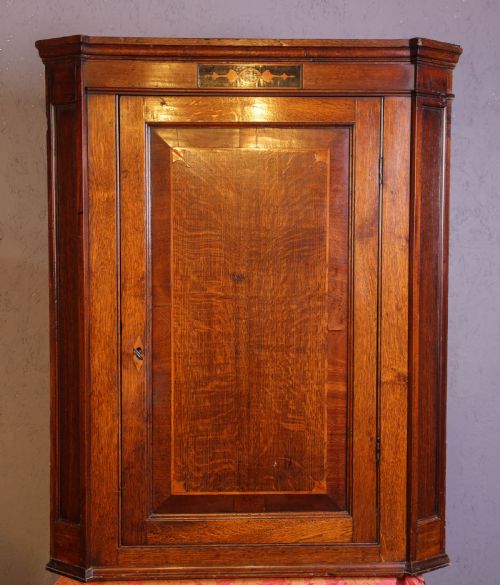
A period oak corner cupboard is a specialised storage cabinet designed to fit snugly into the intersection of two walls, making efficient use of otherwise neglected room angles. The pieces found here span the eighteenth century and the nineteenth century, encompassing both wall hanging formats and substantial floor standing models. Many examples display the regional character of Welsh cabinet making alongside standard Georgian forms.
The buyer meets various configurations within this selection, ranging from single door wall cabinets to tall two part standing cupboards and double door designs. Some items incorporate glazed doors or internal drawers, while others present clean panelled fronts intended for domestic use. The common thread uniting these objects is their construction in oak, often accompanied by secondary timbers such as mahogany or burr oak veneers.
How they were made
Cabinet makers constructed these cupboards using solid oak planks, frequently employing panelled techniques for doors and sides to accommodate natural wood movement. Wood inlay, mahogany cross banding, and burr oak highlights appear on select pieces to add decorative contrast to the primary timber. Brass hinges, escutcheons, and iron hardware provide the functional working parts.
Joinery methods rely on traditional framing and dovetail joints, particularly visible in internal shelving and drawer construction. Surface finishes develop naturally through decades of polishing and handling, preserving the grain and texture of the wood.
Listings feature oak combined with mahogany, burr oak, brass, glass, and iron across Georgian and nineteenth century periods.
What varies in quality
Quality rests in the crispness of the timber carving, the selection of figured oak or burr oak veneers, and the integrity of the original panel construction. Cabinets featuring well proportioned cornices and untouched patination stand apart from plainer, heavily restored examples.
Structural survival defines the better pieces, particularly where original brass hardware, working locks, and interior spice drawers remain intact. The clever integration of cross banding or mahogany detailing also signals a higher grade of workshop production.
The Period Oak Corner Cupboard Glossary
- Bow front
- A cabinet door or front that curves outward in a convex shape. This stylistic touch softens the rigid angles typically associated with corner furniture.
- Cross banding
- A decorative border technique where thin strips of veneer are laid with the grain running perpendicular to the surrounding wood. Mahogany is frequently utilised for this contrasting border.
- Raised panel
- A central wooden panel with edges thinned down to fit into a grooved frame. This traditional method allows the wood to expand and contract safely with changes in humidity.
- Floor standing
- A tall corner cabinet that rests directly upon the floor rather than hanging from a wall. These units often feature two distinct stacked sections.
- Hanging corner cupboard
- A wall mounted cabinet secured via internal brackets or screw holes. This form provides elevated storage without occupying floor space.
Period Oak Corner Cupboard: Frequently Asked Questions
How do I hang a wall cupboard?
Wall hanging versions require secure fixing to solid masonry or internal wall studs using appropriate heavy duty brackets. The weight of solid oak demands robust support to ensure stability.
Professional installation prevents strain on the original antique fixings and timber frame.
What is the difference between hanging and standing models?
Hanging models mount directly to the wall and typically offer single door access with compact proportions. Standing models reach the floor and often comprise two stacked sections for greater capacity.
Floor standing variations provide substantial presence and occasionally incorporate lower drawer storage.
Where were these cupboards placed historically?
These cabinets occupied corners in parlours, dining rooms, and kitchens to store porcelain, glassware, or dry goods. Their triangular footprint maximised usable space in smaller Georgian rooms.
They served both a decorative display function and practical everyday storage needs.
How do I care for antique oak?
Maintain a stable indoor environment away from direct heat sources and dramatic humidity fluctuations. Regular dusting with a dry cloth preserves the aged finish.
Apply traditional beeswax sparingly to nourish the timber when the surface appears dry.