
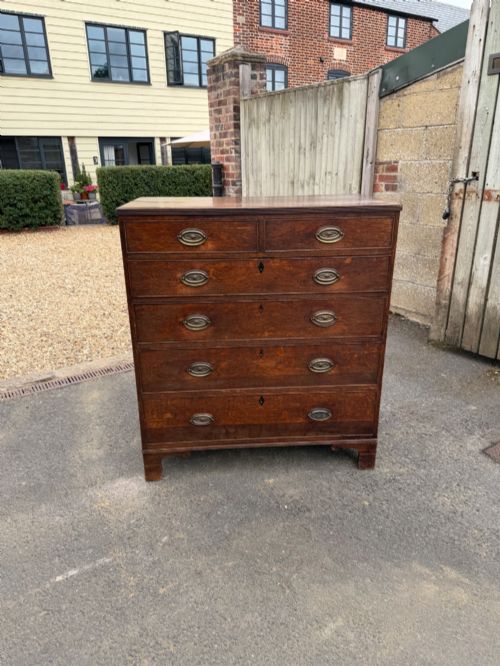
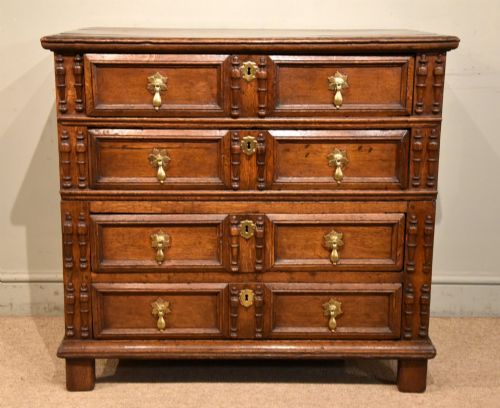
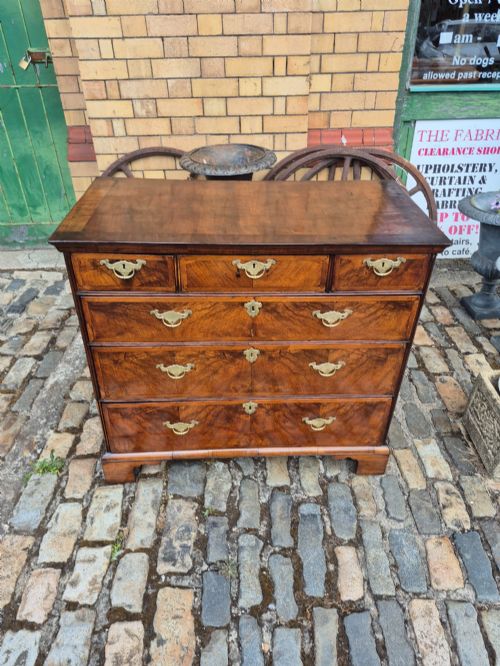
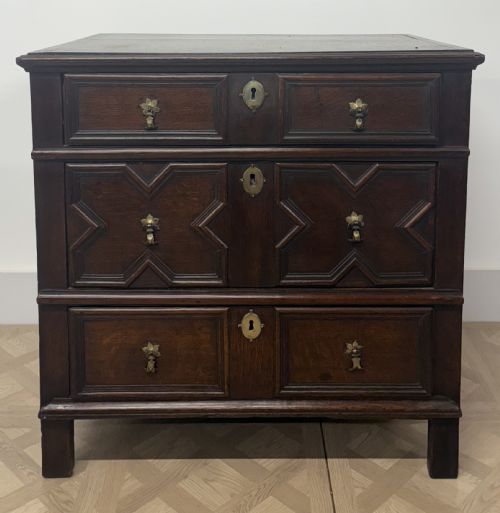




Period Oak Bedroom Chest
A period oak bedroom chest provides sturdy storage with centuries of practical domestic history built into its heavy timber frame.
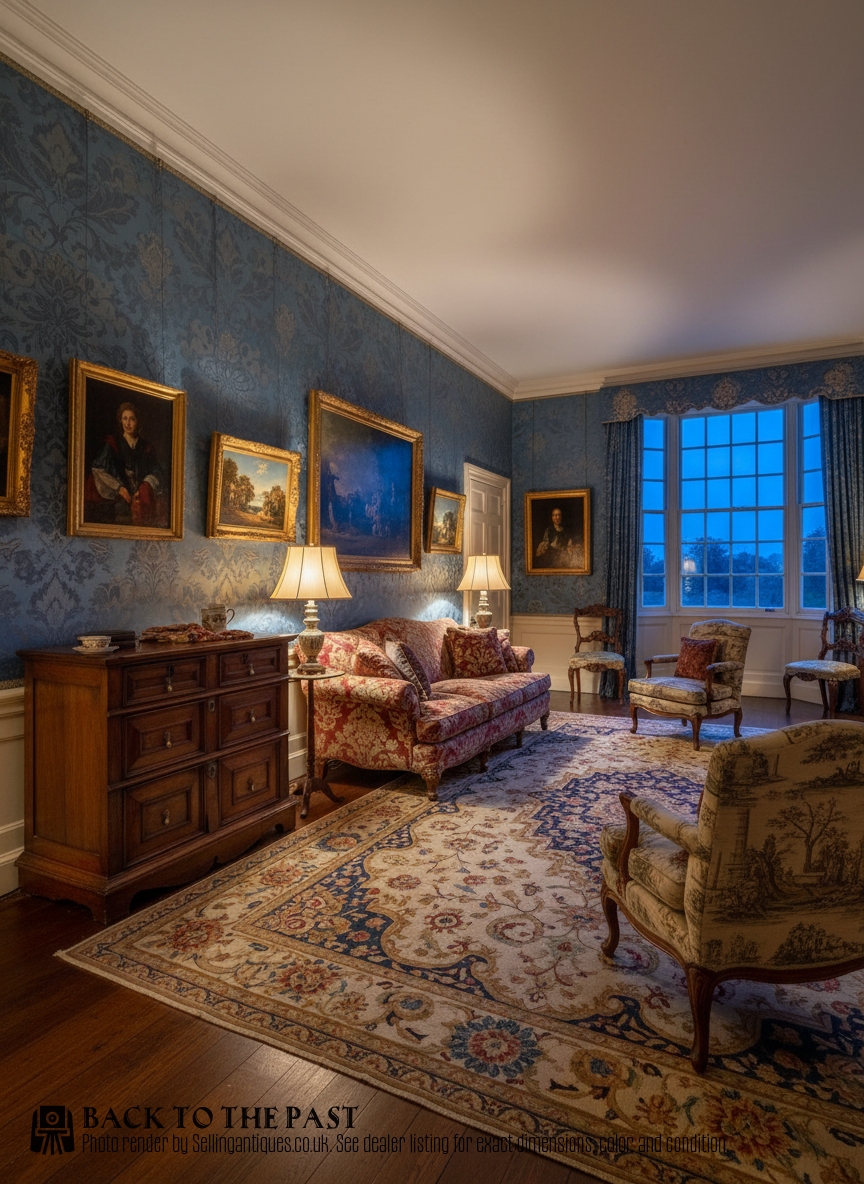
Period Oak Bedroom Chest
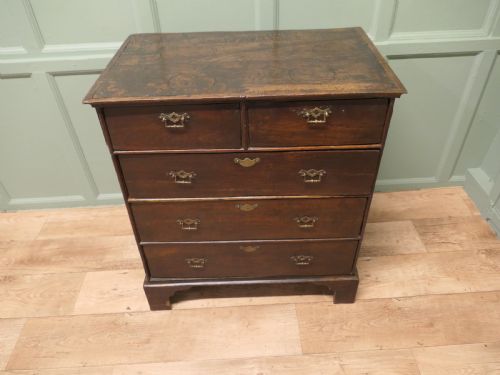
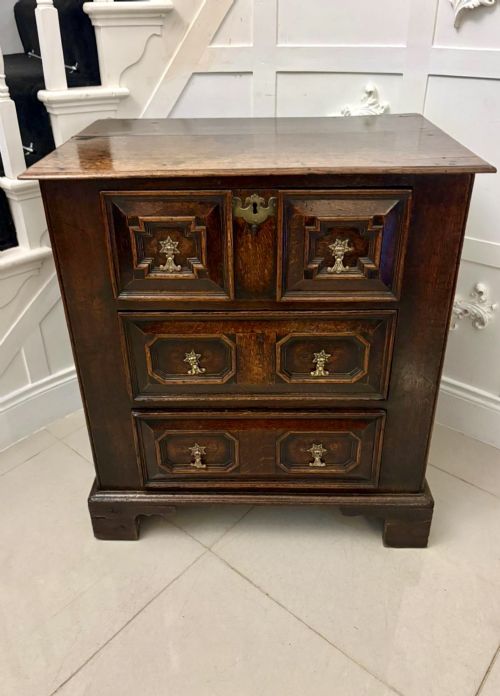
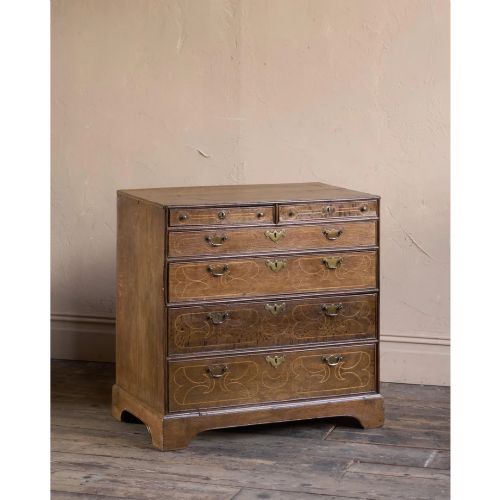
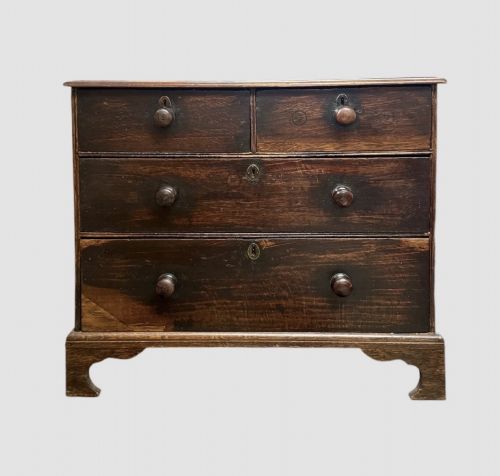
A period oak bedroom chest is a practical storage furniture piece designed for domestic sleeping quarters across the seventeenth and eighteenth centuries. These items take the form of chest of drawers or commode structures, often built with panelled fronts or bracket feet.
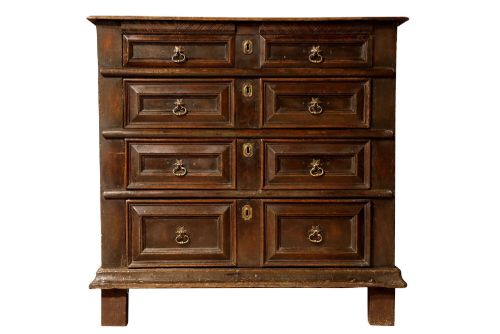
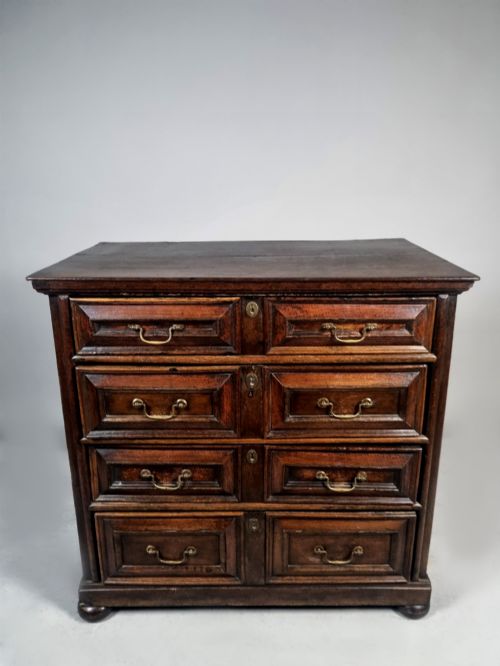
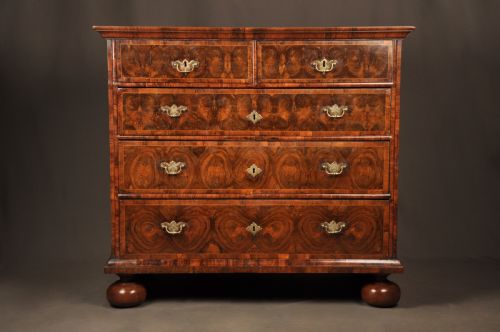
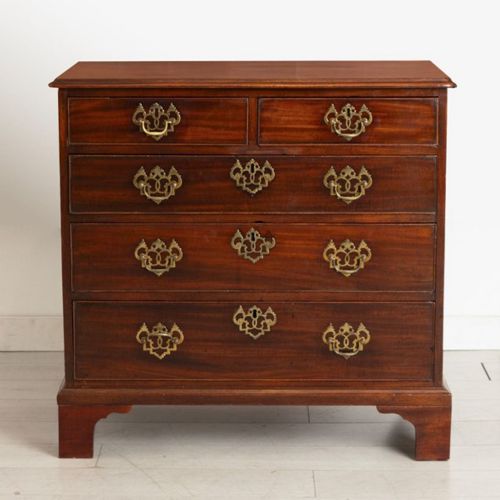
The versions met most frequently on this page date from the Georgian era and the seventeenth century, spanning styles from Jacobean to William and Mary. Pieces range from small bachelor models to larger upright chests, reflecting changing domestic needs over successive centuries.
Makers constructed these sturdy items primarily from native English timber, frequently incorporating secondary woods like mahogany, walnut, or fruitwood inlay. Surviving examples demonstrate the enduring utility of seventeenth and eighteenth-century domestic joinery.
Materials and construction methods
Joiners built these chests predominantly using solid oak, often pairing it with walnut, mahogany, olive, or fruitwood inlay for decorative surface contrast. Structural components incorporated iron, steel, and brass for hinges, locks, and handles.
Craftsmen utilised traditional jointing techniques alongside panelled construction to ensure the heavy timber resisted seasonal movement. Drawer linings were frequently constructed from oak, while exterior surfaces displayed geometric mouldings or cross-banding.
Some seventeenth-century drawers are so tightly fitted they act like bellows, pushing air out through the keyhole when slammed shut.
Distinctions in quality
Quality rests upon the crispness of geometric mouldings, the integrity of the primary timber, and the retention of original hardware such as brass handles and bracket feet. Pieces displaying complex oyster veneer or precise cross-banding reflect higher levels of cabinet-making skill.
The refinement of the drawer construction and the subtlety of the panelled oak framing separate standard utilitarian items from exceptional examples of period joinery.
The Period Oak Bedroom Chest Glossary
- Bracket foot
- A structural support foot shaped like a small bracket, commonly found on eighteenth-century chests. This architectural detail elevates the cabinet off the floor.
- Bachelor's chest
- A small folding-top chest of drawers designed for personal use in domestic chambers. These compact pieces date frequently from the Georgian period.
- Cross-banding
- A decorative border technique where veneer strips are laid perpendicular to the surrounding grain. This adds visual framing to drawer fronts.
- Geometric moulding
- Raised wooden detailing applied in geometric patterns to drawer fronts during the seventeenth century. It creates dramatic shadow play across the oak surface.
- Oyster veneer
- Thin circular slices of branch wood arranged in decorative patterns resembling oyster shells. This technique requires considerable skill to execute on walnut or olive.
Period Oak Bedroom Chest: Frequently Asked Questions
How do I date an oak chest?
Dating relies on observing construction methods, handle types, and stylistic details such as geometric mouldings or bracket feet. Earlier seventeenth-century pieces display heavier panelled oak framing, while later Georgian examples utilise refined veneers and mahogany.
Changes in drawer linings and hardware fixings provide further clues to a piece's age. Examining the timber shrinkage and tool marks inside helps confirm the period of manufacture.
Where were these chests used?
These chests served primarily in domestic sleeping quarters and private chambers for storing garments and linens. Their robust construction made them central items of furniture in country houses and town residences alike.
Smaller variants like bachelor chests functioned as versatile writing and storage surfaces in personal rooms. Over centuries, their role evolved from utilitarian storage into prominent decorative focal points.
What is a bachelor chest?
A bachelor chest is a compact form of chest of drawers featuring a fold-over top or sliding writing surface. These versatile pieces gained popularity during the Georgian era for personal chamber use.
Their smaller proportions made them ideal for writing letters and storing daily garments within domestic bedrooms. They represent a specialised subset of standard bedroom storage.
How do I care for period oak?
Maintaining period oak requires keeping the timber away from direct heat sources and sudden humidity fluctuations. Regular dusting with a dry cloth preserves the natural finish without introducing moisture.
Applying traditional wax polish occasionally helps nourish the historic wood grain and protect the surface. Gentle handling ensures original brasses and joints remain secure over time.