


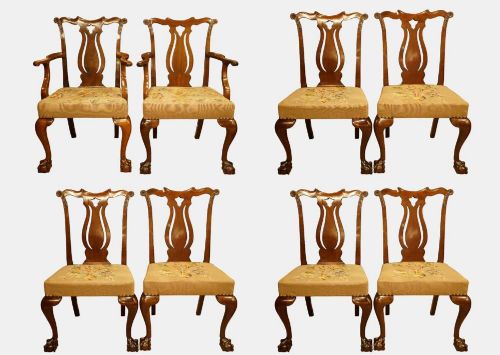


Period Needlepoint Chairs
Period needlepoint chairs are seating pieces upholstered in worked wool and textile that bring texture and historic character to a room.
Period Needlepoint Chairs
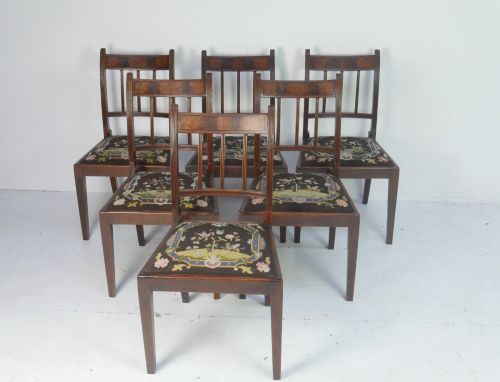
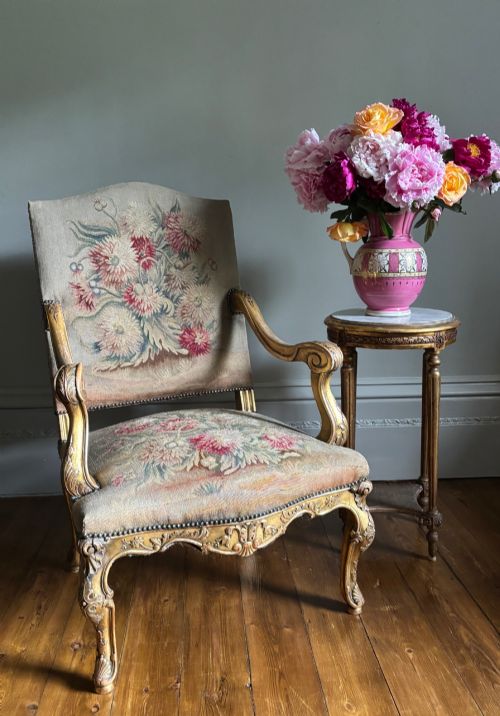
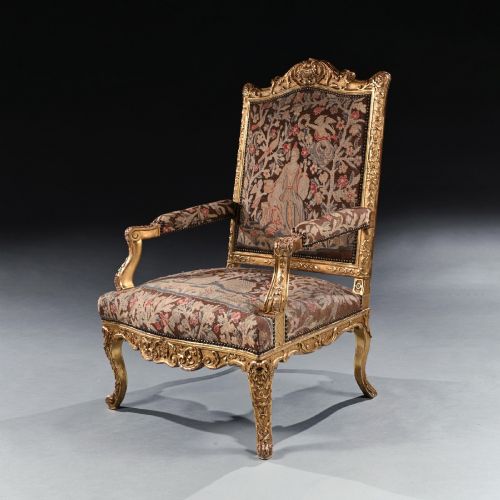
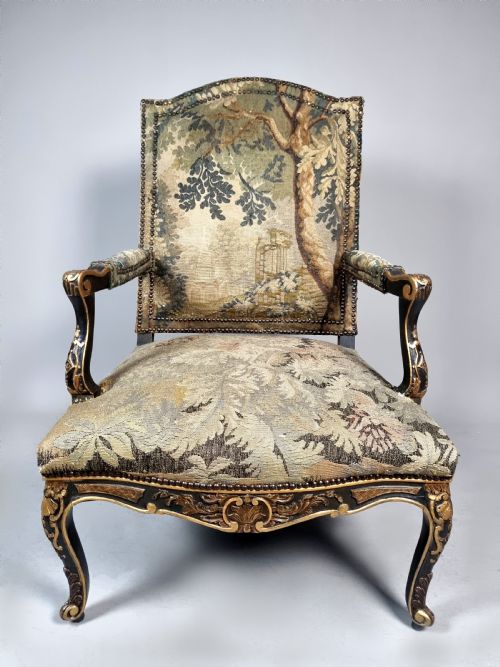
Period needlepoint chairs encompass armchairs, side chairs, and dining chairs originating from eras such as the Georgian, Regency, and Victorian periods. The selection frequently includes walnut, mahogany, and giltwood frames paired with traditional tapestry and wool covers.
Buyers often encounter single chairs, pairs, or larger dining sets spanning the eighteenth and nineteenth centuries. These seating forms range from formal open armchairs to compact side and occasional chairs designed for reception spaces.
The integration of woodwork and textile creates a distinct seating type where the frame and the upholstery share equal historical weight. Surviving examples demonstrate how seating designs evolved across successive English and continental European workshops.
Quality variations
Quality rests in the crispness of the timber carving and the structural integrity of the frame joints. Sustained precision in the joinery separates standard production from finer cabinet work.
The execution and density of the needlepoint tapestry define the visual merit of the piece. Well-preserved textiles with intricate wool work elevate the overall distinction of the chair.
One Master's armchair stands ready to preside over dinner parties long after the committee adjourned.
Charles Tozer
The Period Needlepoint Chairs Glossary
- Needlepoint
- A type of counted thread embroidery stitched onto a stiff open-weave canvas. It forms the durable decorative textile surface seen on these chair seats and backs.
- Giltwood
- Wood that has been coated with thin gold leaf or gilt powder. This finish appears on decorative armchairs from continental and revival styles.
- Drop in seat
- A removable upholstered frame that fits into the wooden seat rails of a chair. It allows the textile covering to be easily accessed or replaced.
- Open armchair
- An armchair without upholstered solid panels on the sides, revealing the wooden arm supports. This form allows for lighter proportions in period seating.
Period Needlepoint Chairs: Frequently Asked Questions
What periods do these chairs cover?
The listings span several centuries, starting from mid-eighteenth century designs through the Regency and Victorian eras.
Later revival pieces from the early twentieth century also appear alongside the primary historical items.
How do I identify a side chair?
Side chairs are built without arms and are designed to sit compactly against walls or around dining tables.
They generally feature wooden frames in mahogany or walnut paired with needlepoint drop-in seats.
Are these chairs suitable for daily use?
Most pieces function well for regular seating provided the wooden joinery and internal support remain stable.
Delicate giltwood or antique tapestry examples benefit from careful placement to preserve their fragile materials.
What wood types are most common?
Mahogany and walnut form the majority of the wooden frames across both English and continental pieces.
Rosewood and giltwood also feature in specific Regency and French style armchairs.