
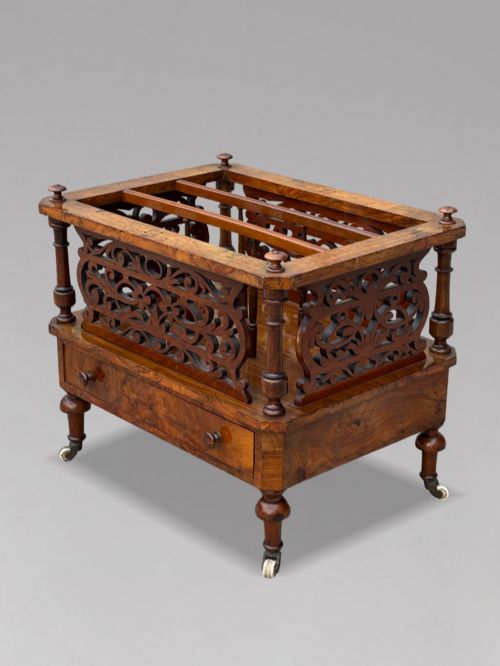
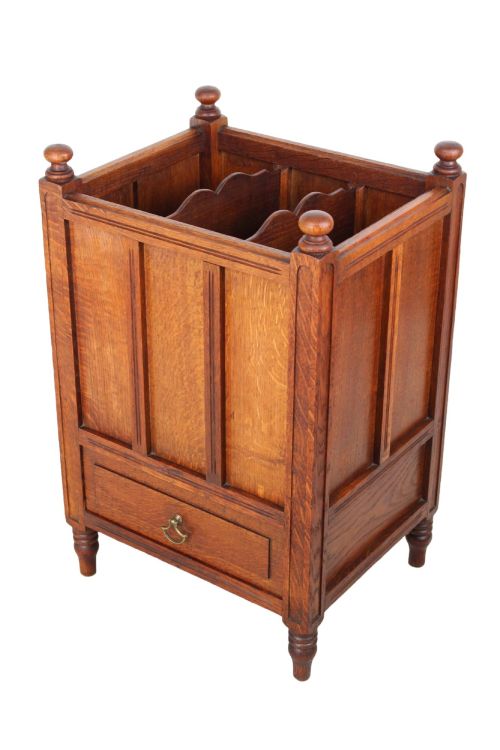
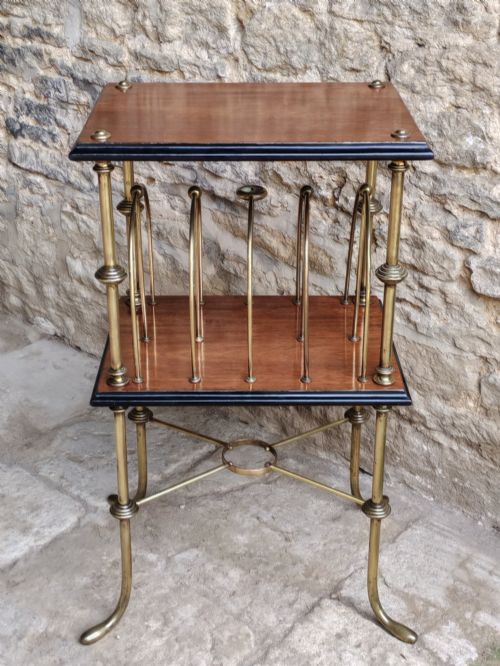
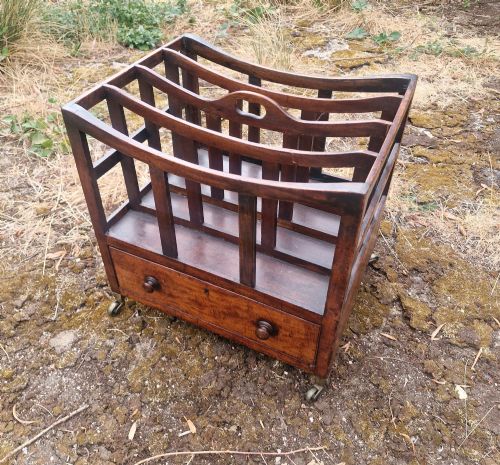


Period Music Stand
A period music stand brings functional elegance to a room, offering adjustable surfaces and clever partitions for sheets and books.
Period Music Stand
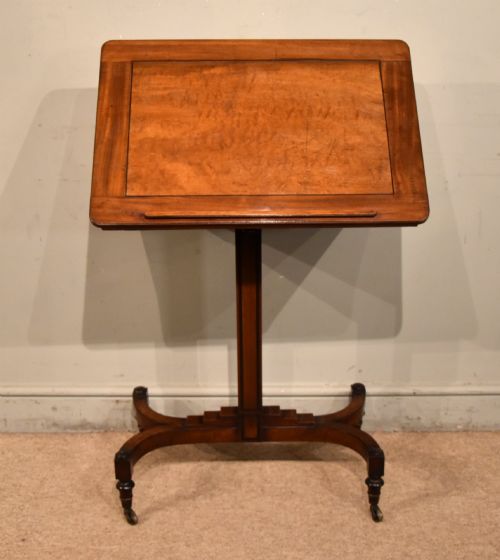
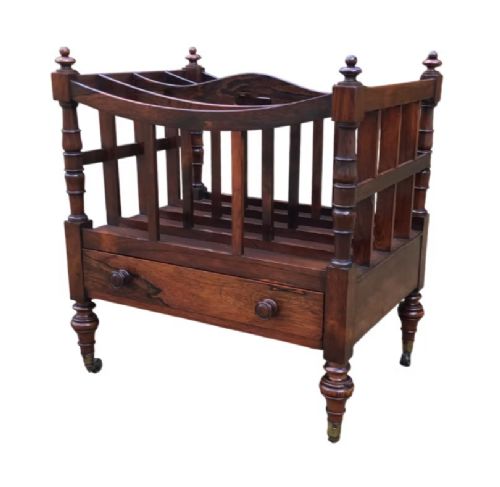
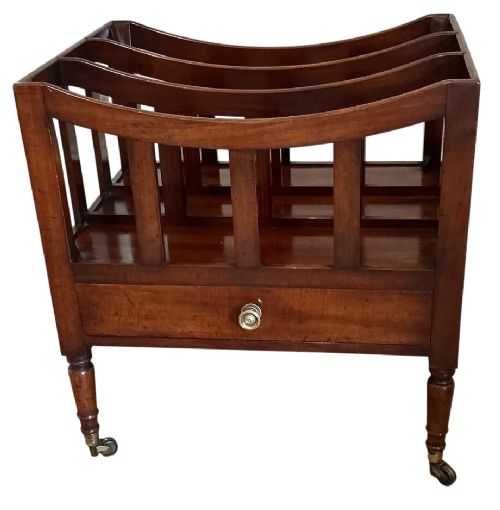
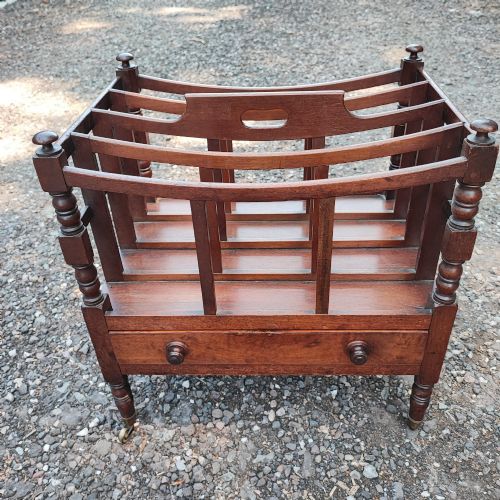
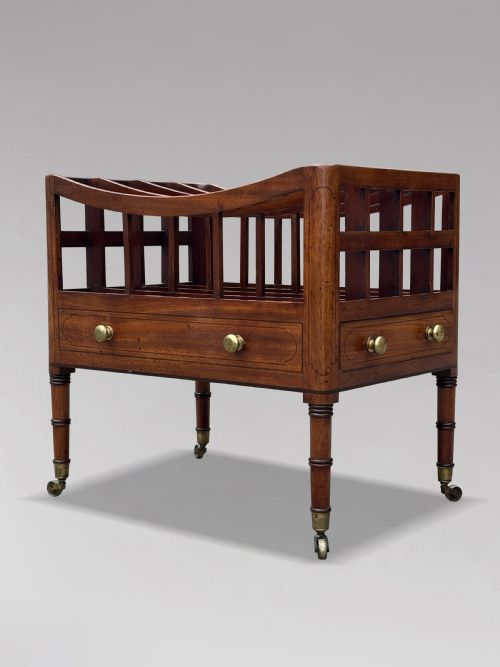
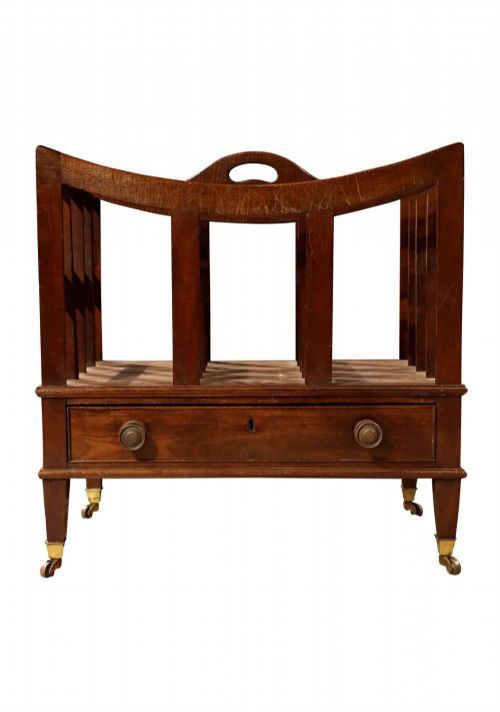
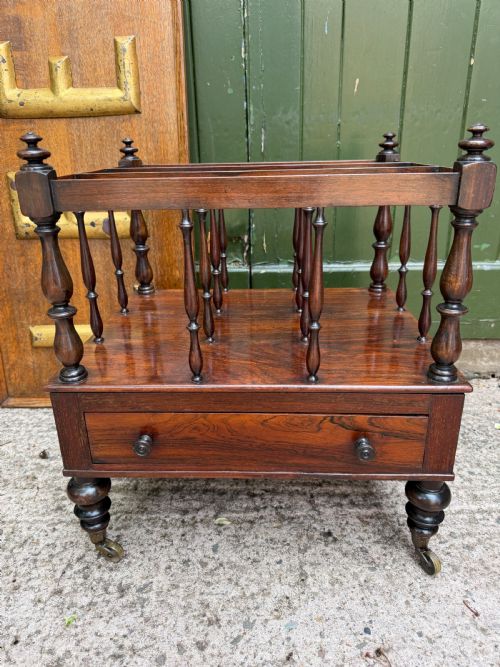
A period music stand encompasses dedicated reading stands, duet music stands, and related canterburys designed for scores and folios. When you search for a period music stand, you will encounter diverse forms ranging from adjustable mahogany music stands to rosewood and walnut canterburys with compartmentalised bases. These pieces span the eighteenth century, the Regency era, and the Victorian period, reflecting evolving domestic musical habits.
The pieces on this page heavily feature Regency and Victorian examples alongside Georgian and Edwardian designs. Many incorporate magazine racks or sheet music cabinets alongside the primary reading surface. Mahogany and rosewood dominate the earlier eras, while oak, walnut, and burr walnut appear frequently in nineteenth-century and later pieces.
Materials and construction
Cabinet makers utilised dense, durable timbers such as mahogany, rosewood, and walnut to construct sturdy frames capable of supporting heavy folios. Brass fittings appear frequently for castors, hinges, and adjustable rise and fall mechanisms. Decorative touches include inlaid brass details and carved elements applied to solid wood and veneered surfaces.
Joinery techniques combined traditional framing with functional hardware to allow smooth adjustment on reading stands and partitioned slots in canterburys. Ceramic components occasionally supplement metal fittings, while applied paint provides alternative decoration on specific specimens.
Some nineteenth-century makers evidently believed musicians required rolling furniture, mounting delicate music stands on tiny brass castors for speedy room navigation.
Assessing quality and execution
Quality reveals itself in the selection of timbers, such as heavily figured rosewood or burr walnut, and the precision of the joinery. Superior examples maintain stability and smooth operation in their adjustable mechanisms, whether rise and fall stems or pivoting desks.
Refinement in carving, the crispness of brass inlay, and balanced proportions distinguish finer workshops from simpler commercial output. The integrity of the partitions and the condition of the original timber finish further separate standard items from exceptional ones.
Gillows
The Period Music Stand Glossary
- Canterbury
- A low stand with partitioned sections for holding sheet music, magazines, or books, often featuring a small drawer below. This form dates back to the late eighteenth century and continued through the Victorian era.
- Duet music stand
- A larger reading stand designed to accommodate two musicians sharing a single score. These often feature adjustable heights and double-sided or widened desks.
- Rise and fall
- A mechanical arrangement allowing the height of a reading desk to be adjusted vertically. It relies on a central stem secured by a thumbscrew or ratchet.
- Etagere
- A set of open shelves for displaying small objects, sometimes combined with canterbury storage in Regency pieces. They utilise tiered platforms supported by slender columns.
- Whatnot
- A piece of furniture consisting of open shelves used for storage or display, frequently intersecting with Canterbury designs during the Regency period.
Period Music Stand: Frequently Asked Questions
What is a canterbury used for?
A canterbury serves to hold sheet music, folios, and newspapers in upright partitions near a piano or seating area. Many incorporate low drawers for smaller accessories.
Originally developed in the late eighteenth century, these stands adapted over time to house magazines and periodicals as domestic habits shifted.
How do adjustable music stands work?
Adjustable music stands utilise rise and fall mechanisms on a central pillar, secured at the desired height by a screw key or pin. Tilting desks rely on ratchets or friction hinges to angle scores toward the reader.
These mechanical elements allowed musicians to use the stands while seated or standing comfortably.
How do I date a music stand?
Dating relies on stylistic markers, such as the slender reeded legs of the Regency period or the heavier carved walnut of Victorian examples. Materials like brass inlay and rosewood veneers also point toward specific decades.
Construction methods and secondary timbers inside drawers provide further clues regarding the era of manufacture.