
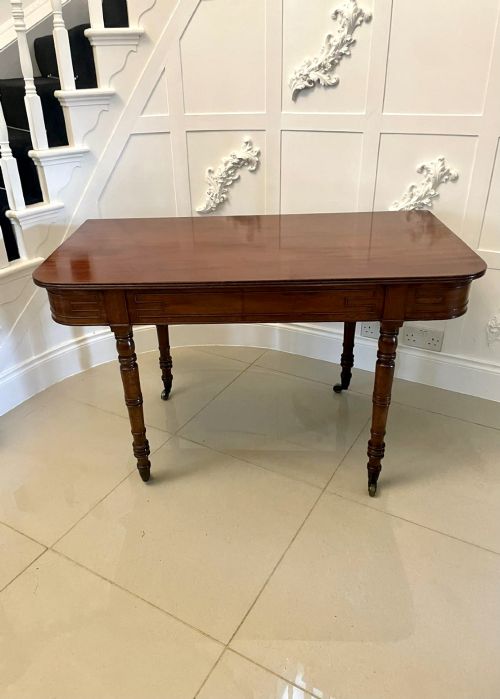
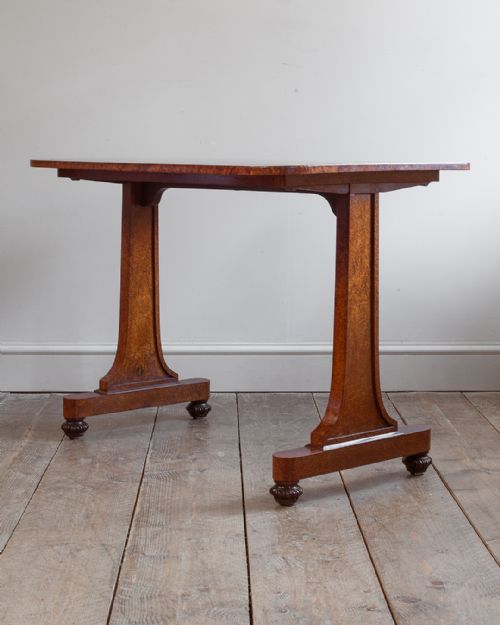
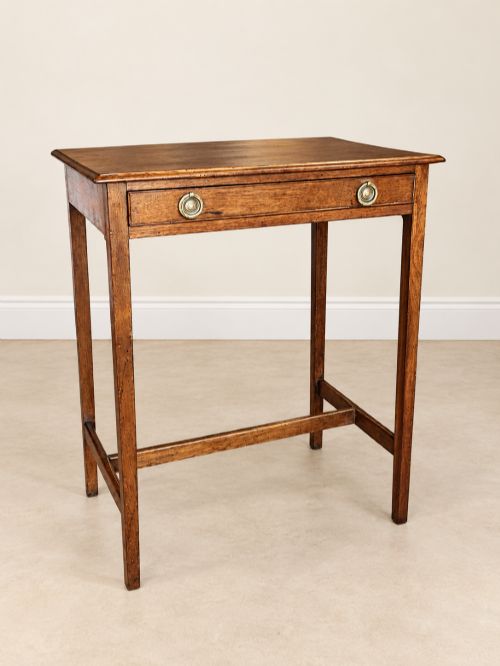
Period Mahogany Desk
A period mahogany desk brings centuries of rich timber and functional design into a room, offering a sturdy workspace built to endure.
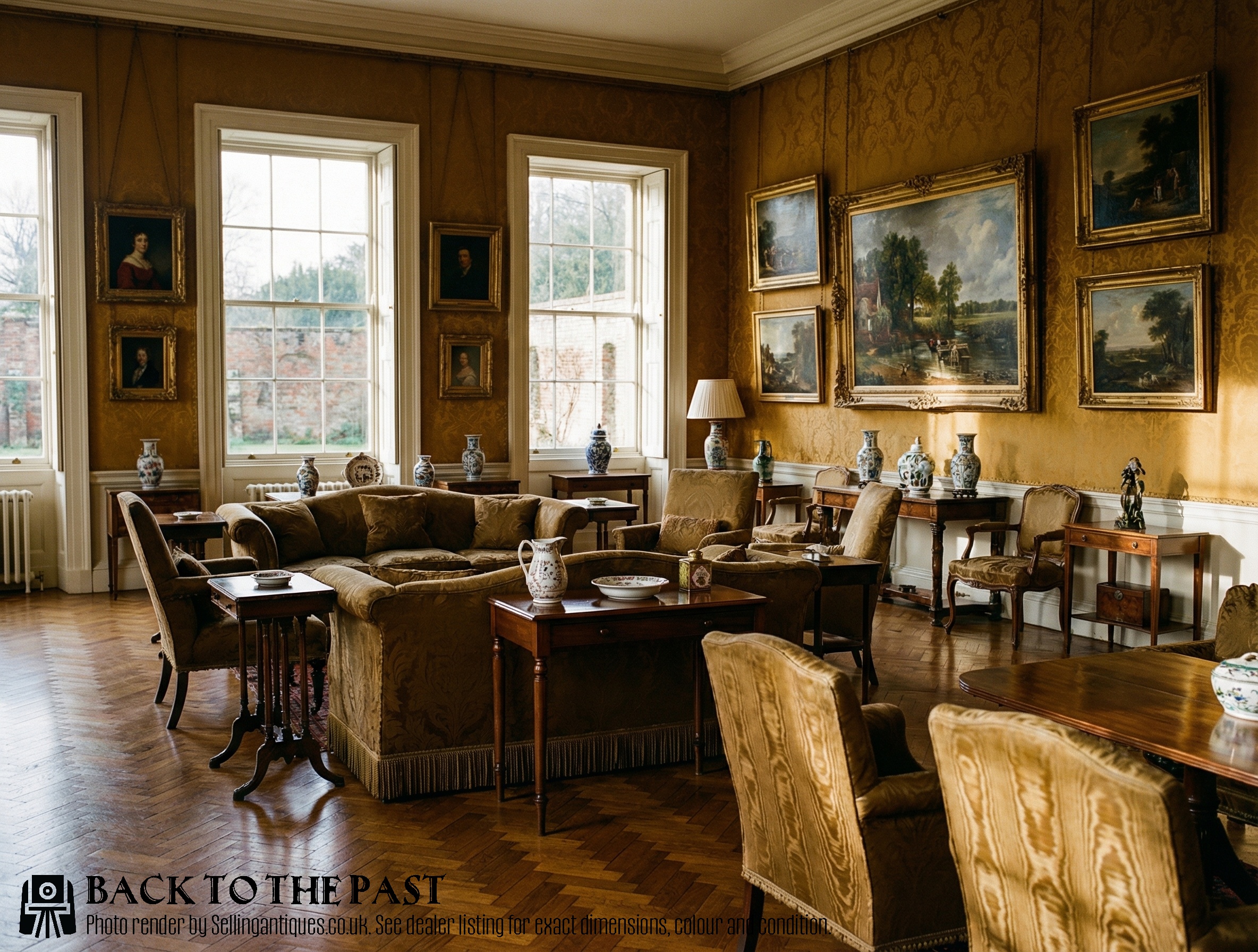
Period Mahogany Desk
A period mahogany desk encompasses freestanding partners desks, pedestal writing tables, kneehole desks, and bureau bookcases spanning the Georgian, Regency, and Victorian eras.
The pieces listed here frequently trace back to the eighteenth and nineteenth centuries, capturing the shift from substantial George III pedestal forms to refined Regency and Victorian writing tables.
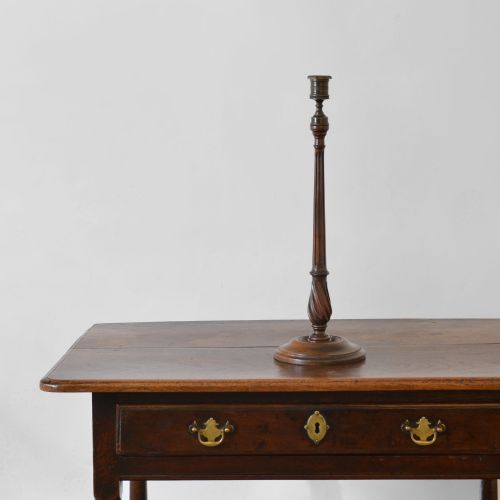
Buyers seeking a period mahogany desk encounter sturdy timber frames, often fitted with inset leather writing surfaces, drawers, and compartments designed for correspondence and accounting.
Materials and construction
Makers utilised dense mahogany timber, selected for its rich grain and stability, often pairing solid primary woods with secondary timbers for drawer linings.
Brass hardware, including drop handles, escutcheons, and locking mechanisms, appears alongside inset panels of tooled leather and velvet on writing surfaces.
Traditional joinery techniques such as dovetailing secure the drawer construction, while finely carved details display the craftsmanship of regional workshops and London cabinet makers.
Listings feature mahogany desks spanning the Georgian, Regency, and Victorian periods, alongside Edwardian revivals.
What separates the best examples
The selection of mahogany timber defines the baseline of quality, with well-figured grain patterns and rich natural patination setting superior desks apart from plain or heavily restored surfaces.
The refinement of carved mouldings, bracket feet, and drawer construction reflects the skill invested by the cabinet maker during the Georgian and Victorian periods.
Original brass hardware, functional locking mechanisms, and intact leather or fabric inserts preserve the integrity and historical value of the piece.
Gillows of Lancaster·Alfred Allen of Birmingham·S & H Jewell of London·James Shoolbred·T. Wilson
The Period Mahogany Desk Glossary
- Partners desk
- A large double-sided desk designed for two people to work opposite each other, featuring drawers and cupboards on both faces.
- Pedestal desk
- A freestanding desk comprising a top surface supported by two separate pedestals containing banks of drawers.
- Kneehole desk
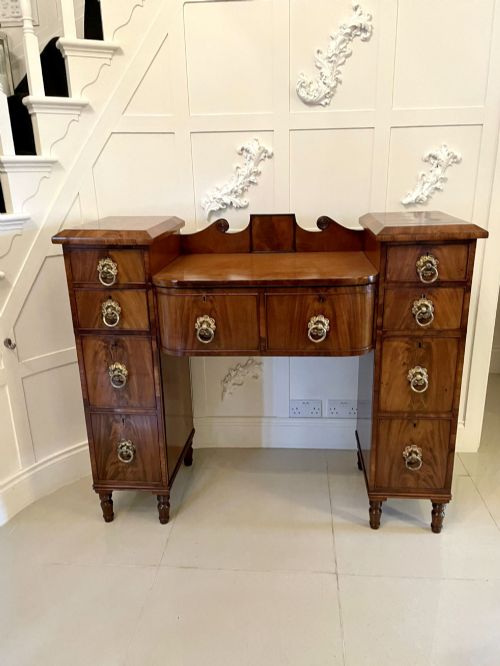
- A compact desk featuring a central recess for the user's knees, flanked by narrow pedestals of drawers.
- Bureau bookcase
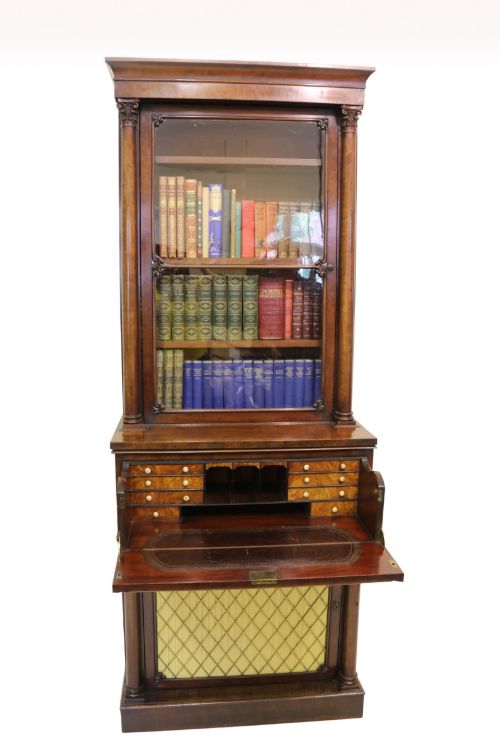
- A writing cabinet combining a sloping fall-front desk section with enclosed shelving above.
- Dovetail
- A traditional wood joint formed by interlocking wedge-shaped fingers, used primarily in drawer construction for maximum strength.
Period Mahogany Desk: Frequently Asked Questions
How do I identify a Georgian desk?
Georgian desks are characterised by solid mahogany construction, restrained classical proportions, and often feature bracket feet or cockbeaded drawer edges. These pieces rely on architectural dignity rather than heavy ornamentation.
Later Victorian interpretations tend to be bulkier and incorporate more eclectic carving styles, whereas George III examples display crisp hand-cut dovetails and understated brass pulls.
What is a partners desk used for?
Originally built for banking halls, studies, and solicitors' offices, partners desks provide workspace on both sides simultaneously. The dual configuration includes matching banks of drawers or cupboards facing outwards in opposite directions.
In a modern home, this form serves as a central room divider and a generous double workspace requiring ample floor space around it.
How should I care for leather desk tops?
Leather inserts require gentle dusting with a dry cloth and occasional treatment with specialist leather balms to prevent drying and cracking. Avoid using harsh chemical cleaners or excess water on the surrounding mahogany timber.
Maintaining a stable room temperature away from direct sunlight preserves both the supple texture of the hide and the rich finish of the wood.
What distinguishes Regency writing tables?
Regency writing tables often feature lighter proportions influenced by classical antiquity, incorporating sabre legs, brass reeding, and lyre-shaped supports. These desks were designed for drawing rooms and libraries during the early nineteenth century.
They typically present cleaner lines than earlier Georgian pieces and frequently employ mahogany veneers over sturdy structural frames.