
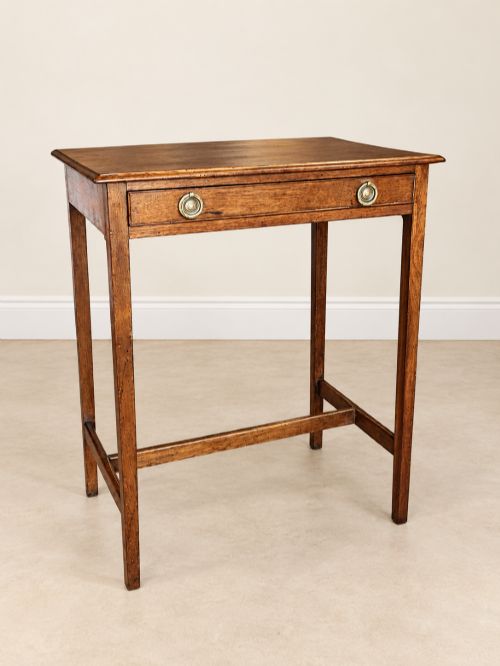
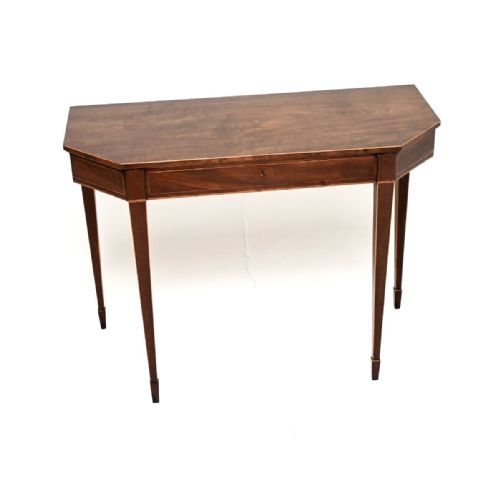
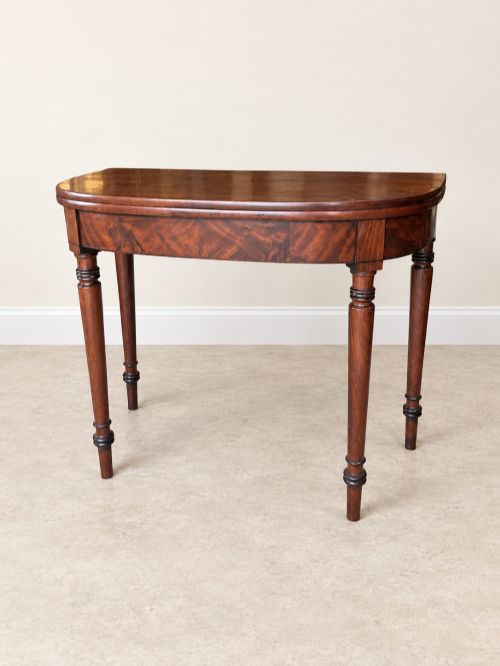
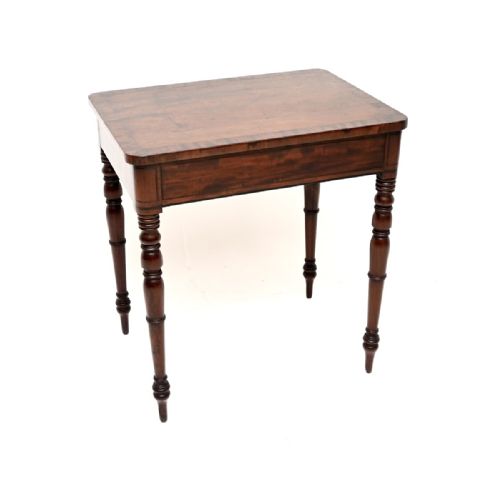

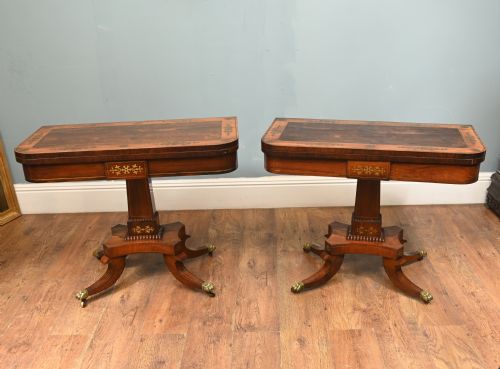


Period Mahogany Console Table
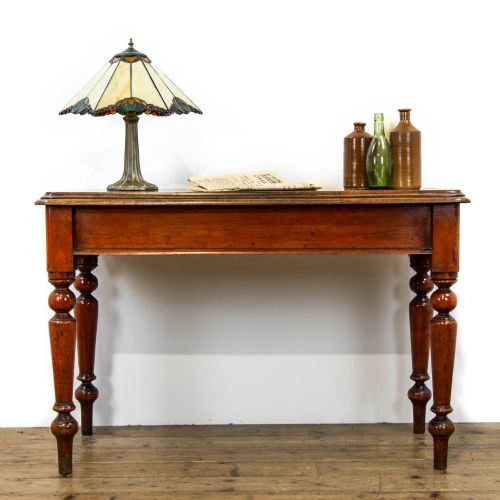
A period mahogany console table brings architectural dignity and rich timber grain to an entrance hall or drawing room.

Period Mahogany Console Table
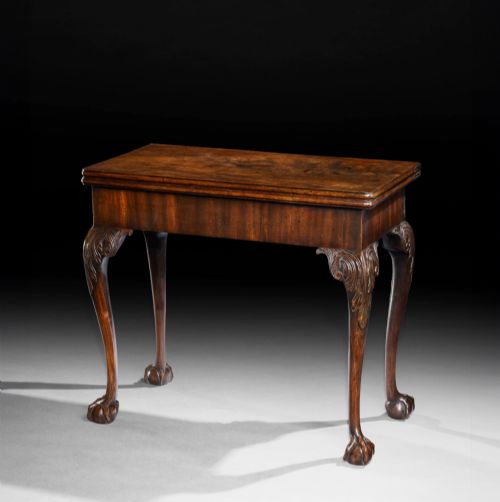
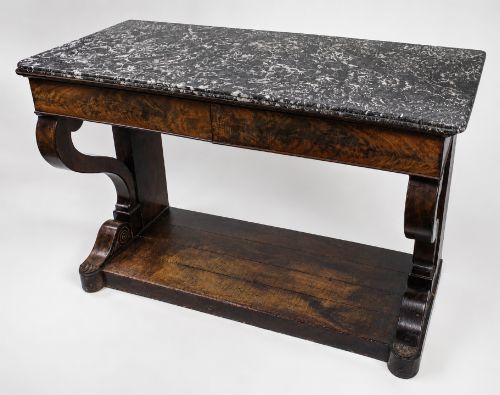
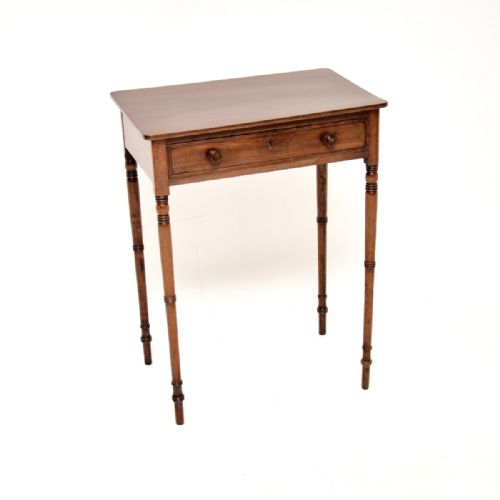
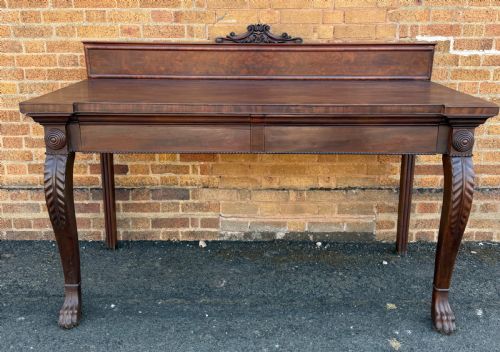
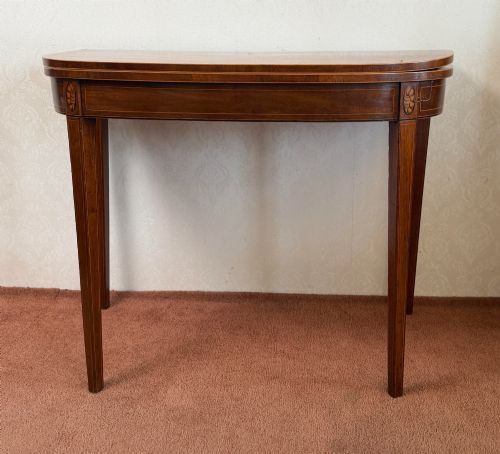
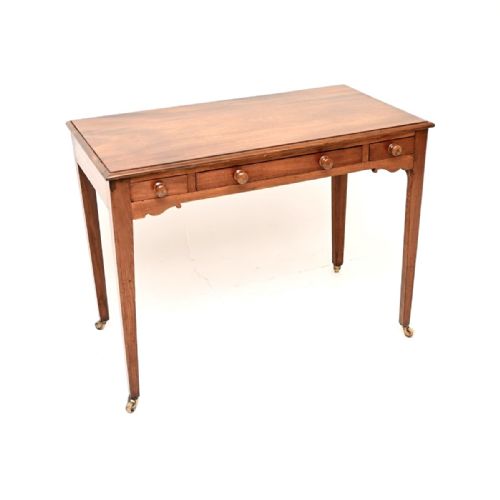
A period mahogany console table represents a specific class of formal furniture designed to stand flat against a wall, frequently incorporating slender legs and substantial timber tops. When exploring a period mahogany console table, buyers encounter diverse iterations spanning the Georgian, Regency, and Victorian eras, often taking the form of demi-lune, rectangular, or serving tables.
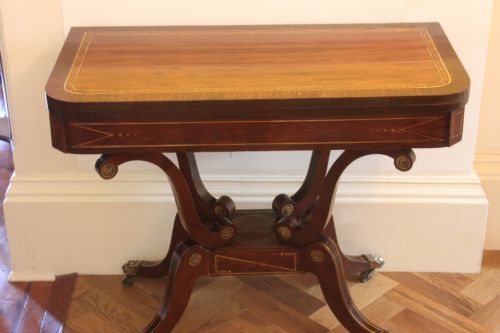
The materials recorded in these examples extend beyond foundational mahogany to embrace marble surfaces, brass inlay, and boxwood stringing, reflecting the decorative priorities of eighteenth and nineteenth-century cabinet makers. Such tables frequently share lineage with side tables, card tables, and serving pieces, demonstrating the fluid terminology historical workshops applied to wall-anchored furniture.
The prevailing examples on this page date predominantly from the Georgian and Regency periods, characterised by rich figuring in the timber and restrained classical proportions. These pieces served functional roles in reception rooms and hallways, providing both a surface for decorative objects and a formal statement of architectural symmetry.
Materials and construction
Cabinet makers relied heavily upon solid mahogany and flame mahogany veneer, selecting boards for deep natural grain patterns and rich warm tones. Workshops frequently enhanced these surfaces with contrasting boxwood stringing, ebony details, and finely cast brass mounts or brass inlay.
Structural integrity depended upon traditional joinery techniques, including dovetailing for drawer construction and tenon joints for the frame. Tables fitted with marble tops utilised recessed wooden beds to support the heavy stone safely without placing undue strain on the mahogany rails.
Some nineteenth-century card tables hide concertina actions designed to trick guests into believing they are simple console tables.
Judging standard and execution
Quality reveals itself in the selection of timber, particularly where cabinet makers chose highly figured flame mahogany veneers matched symmetrically across the top boards. Superior examples display crisp hand-carving on the legs and aprons rather than soft or mechanically cast ornamentation.
The handling of secondary timbers inside drawers and the precision of the brass inlay or ormolu mounts distinguish provincial workshop output from pieces produced by major metropolitan cabinet makers. Patina accumulated through decades of careful polishing also separates well-preserved examples from those stripped of their historical surface.
Giles Grendey·Jean-Joseph Chapuis·Mack Williams and Gibton·Gillows
The Period Mahogany Console Table Glossary
- Console table
- A table designed to stand against a wall, traditionally supported by two front legs and fixed to the wall at the rear by brackets.
- Flame mahogany veneer
- A thin slice of timber cut from the fork of a mahogany tree, yielding a distinctive branching flame pattern.
- Ormolu
- Gilded bronze ornamentation applied to furniture, popular in French Empire and Regency design.
- Demi-lune
- Half-moon shaped, describing tables designed to fit snugly against a flat wall.
- Stringing
- Inlay of a contrasting, narrow strip of light wood such as boxwood set into the mahogany surface.
Period Mahogany Console Table: Frequently Asked Questions
Where should I place a console table?
A console table sits naturally in an entrance hall, narrow corridor, or beneath a drawing-room mirror where floor space is limited. Its shallow depth allows it to provide a decorative surface without obstructing foot traffic.
In dining spaces or living rooms, these tables function effectively as serving surfaces or display areas for lamps and ceramics, anchoring larger wall spaces.
How do I care for antique mahogany?
Maintain antique mahogany by applying a traditional beeswax polish sparingly and buffing gently with a soft cloth to preserve the natural lustre. Avoid placing the timber in direct sunlight or near heat sources to prevent the wood from drying and splitting.
Keep marble tops clean by wiping them with a damp cloth and mild soap, ensuring no acidic liquids linger on the stone surface.
How do I distinguish Regency from Georgian pieces?
Georgian furniture generally displays classical architectural restraint, solid proportions, and rich brown mahogany tones influenced by Chippendale and Sheraton designs. Decoration relies on carved mahogany details, bracket feet, and subtle stringing.
Regency pieces often incorporate bolder classical motifs inspired by French Empire styles, including brass inlay, lion paw feet, ormolu mounts, and lyre-shaped supports.
Did these tables always have marble tops?
Marble tops appeared frequently on French Empire and specific grand English console tables, designed to endure heavy use and provide a contrasting cool surface. Many English examples featured solid mahogany or veneered timber tops instead.
The choice of top depended heavily on regional style preferences and the specific room where the table was intended to stand.