
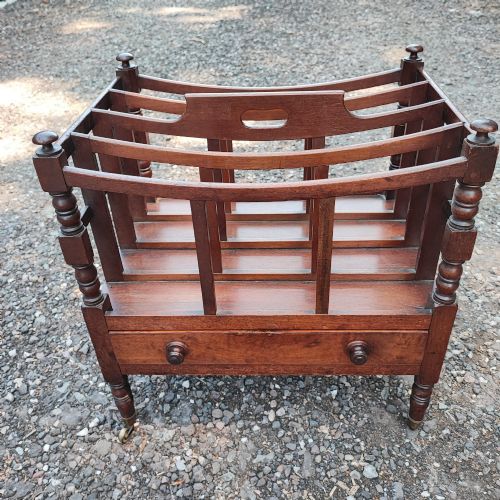
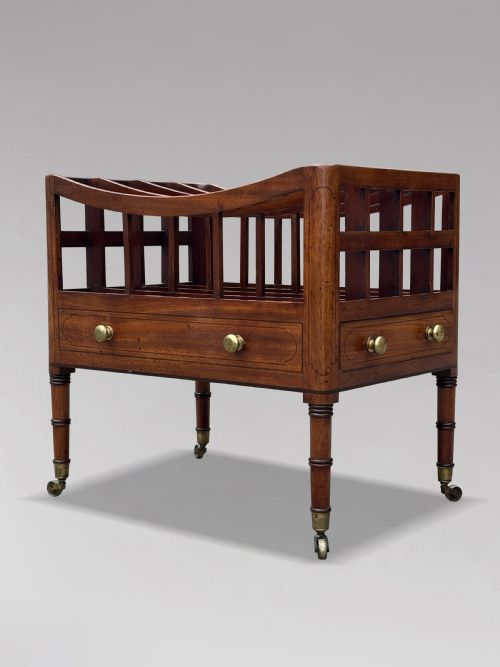
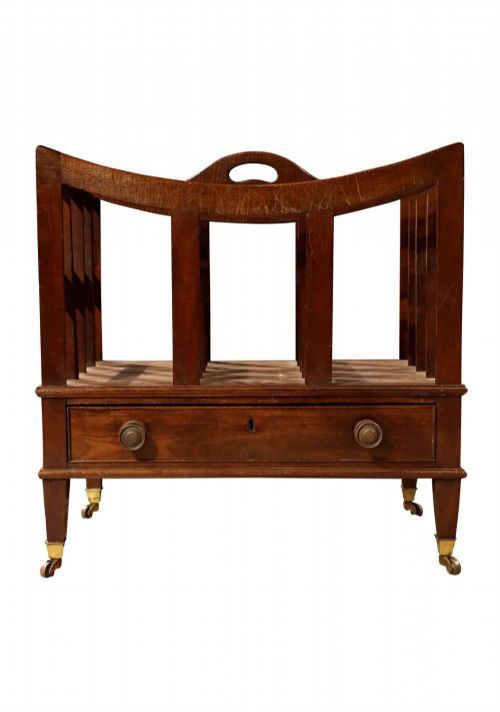


Period Mahogany Canterbury
A period mahogany canterbury is a practical holder for folios, music sheets and journals, prized for keeping papers tidy with genuine period grace.
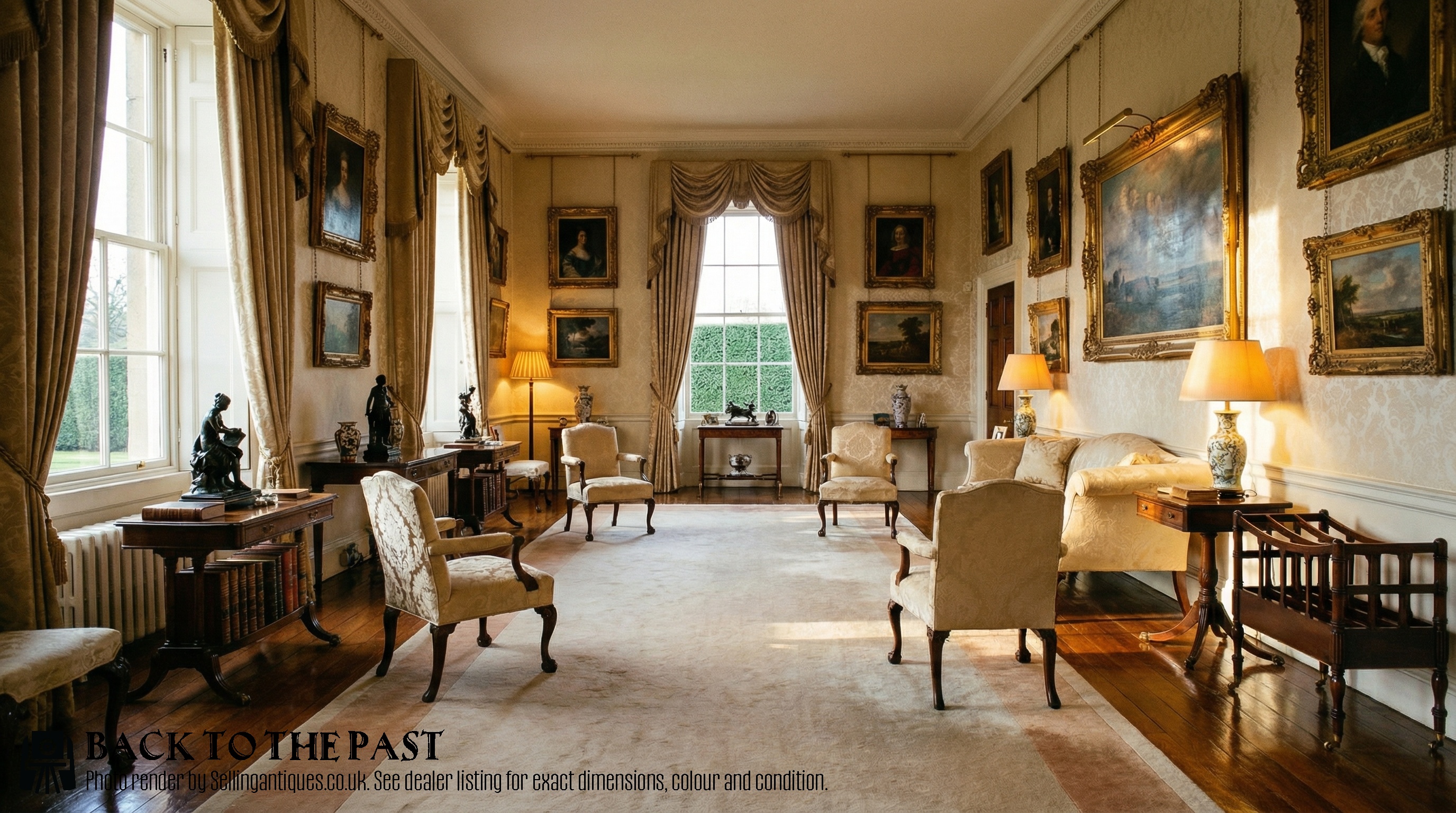
Period Mahogany Canterbury
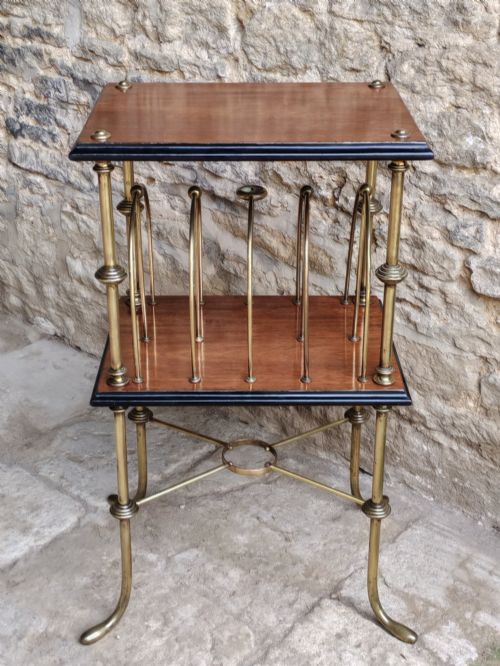
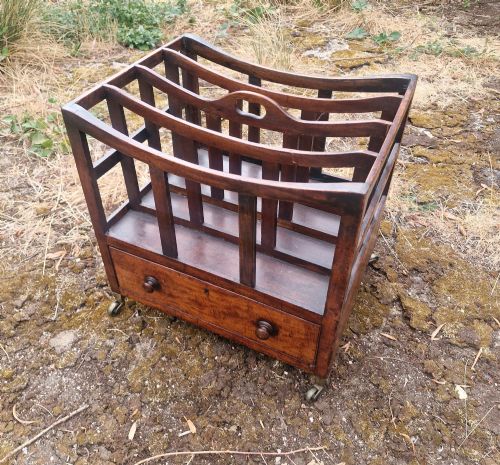
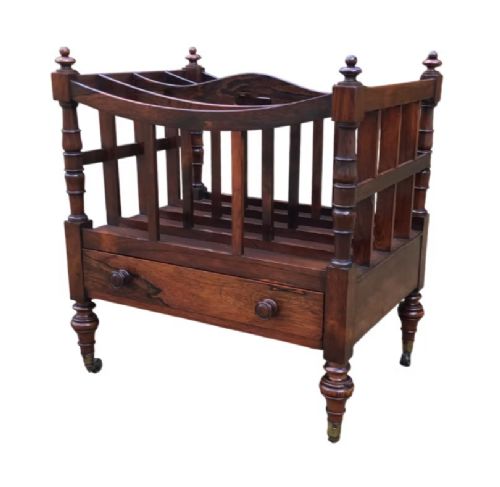
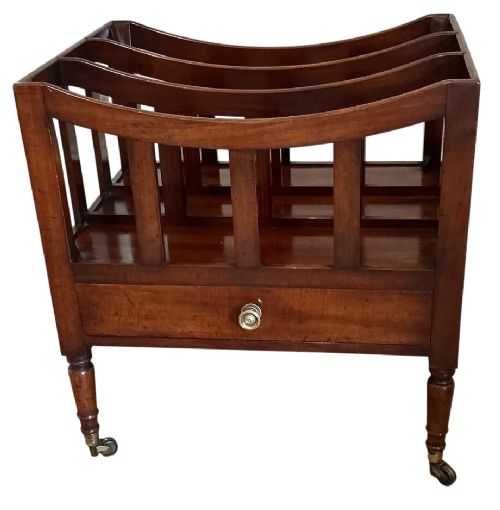
When you search for a period mahogany canterbury, you look at pieces designed to hold sheet music, books and newspapers within partitioned sections, often raised on short legs with castors. The most common examples you meet on this page belong to the Regency and George III periods, displaying boat-shaped bodies or slatted divisions.
Beyond the standard music stands and magazine racks, makers also shaped these pieces into occasional tables with lower tiers and small drawers. These variants reflect how drawing rooms evolved from holding bound scores to accommodating general reading material over the course of the nineteenth century.
How they were made
Cabinet makers worked primarily in solid mahogany and flame mahogany veneer, selecting timbers with rich grain patterns for the main frames and partitions. They frequently incorporated brass details, such as castors and handles, to assist movement across heavy carpets.
Finer workshops added satinwood inlay to borders and panels, creating subtle contrast against the dark body of the wood. Slatted divisions and turned uprights were joined using traditional cabinet-making methods to support the weight of stacked folios.
Some nineteenth-century musicians clearly dropped their scores often enough to warrant a dedicated stand right beside the piano stool.
What varies in quality
The distinction between ordinary and superior pieces rests on the choice of timber and the crispness of the turning on the uprights. Flame mahogany veneer with strong figuring elevates a piece above plain stock, just as finely cast brass details show greater care from the workshop.
Proportion and structural restraint define the better examples, where slatted divisions remain balanced and sturdy rather than heavy or clumsy. The integration of a discreet lower drawer or delicate inlay demonstrates a higher tier of craftsmanship.
The Period Mahogany Canterbury Glossary
- Boat-shaped
- A curved hull-like form common in Regency designs, where the sides sweep upward to contain the papers.
- Canterbury
- A low stand with vertical divisions, originally used for holding loose music sheets and folios before becoming a general magazine rack.
- Flame mahogany veneer
- A thin slice of timber cut from the branch junction, showing a flickering flame pattern across the surface.
- Satinwood inlay
- A pale exotic wood inserted into contrasting dark timber to form geometric or linear decorative borders.
- Three-tier
- A tall configuration featuring stacked shelves or compartments, offering additional storage space below the main rack.
Period Mahogany Canterbury: Frequently Asked Questions
What did they hold originally?
These stands were built to hold loose music sheets, bound scores and folios near the pianoforte in Georgian and Regency drawing rooms.
Over later decades, owners repurposed them to store newspapers, weekly journals and periodicals as home reading habits changed.
How do I spot a Regency piece?
Regency examples often display boat-shaped outlines, sabre legs, turned uprights and brass castors designed for easy movement across the floor.
They also lean toward crisp architectural lines and occasional satinwood stringing rather than the heavier carvings found later.
Can I use one for magazines today?
Their partitioned divisions suit modern weekly magazines, daily newspapers and writing pads just as well as historical sheet music.
Placing one beside an armchair keeps everyday reading material tidy without cluttering table surfaces.
How do George III pieces differ?
George III pieces tend to feature straight slatted sides, square or turned legs, and occasionally a small drawer fitted beneath the rack.
They date from the late eighteenth century and present a more austere, architectural character than later Regency variants.