
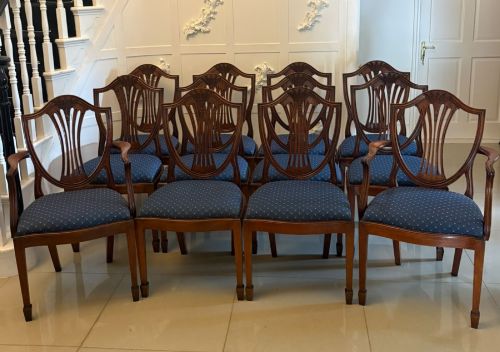
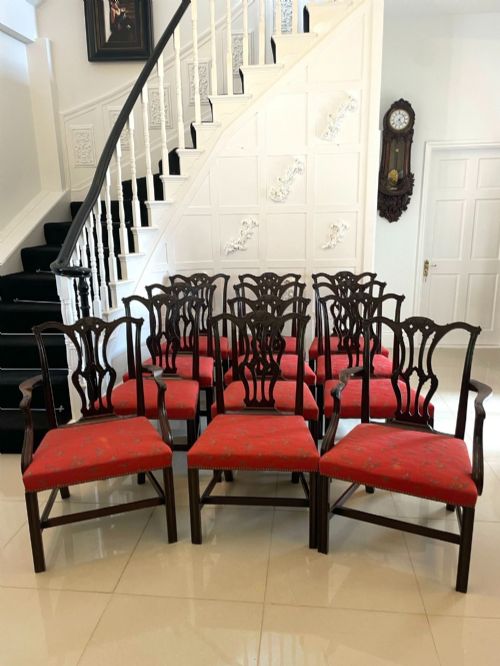
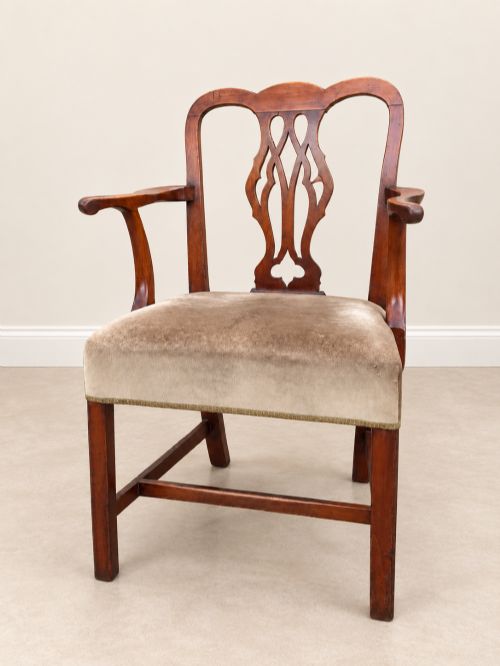
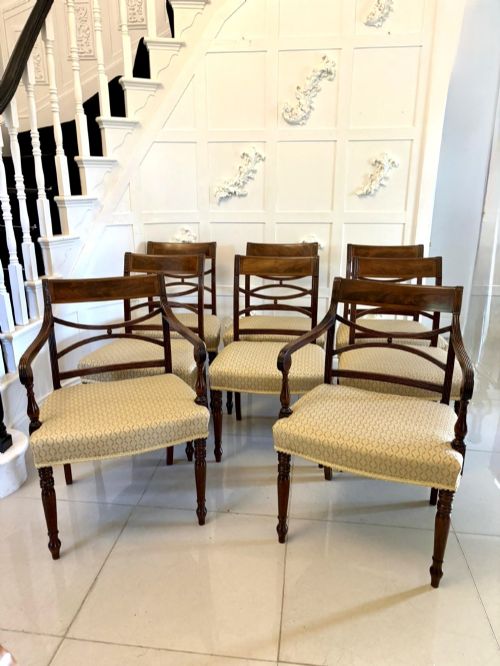
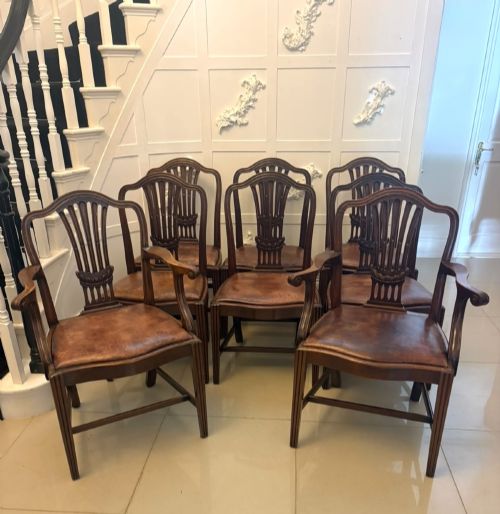
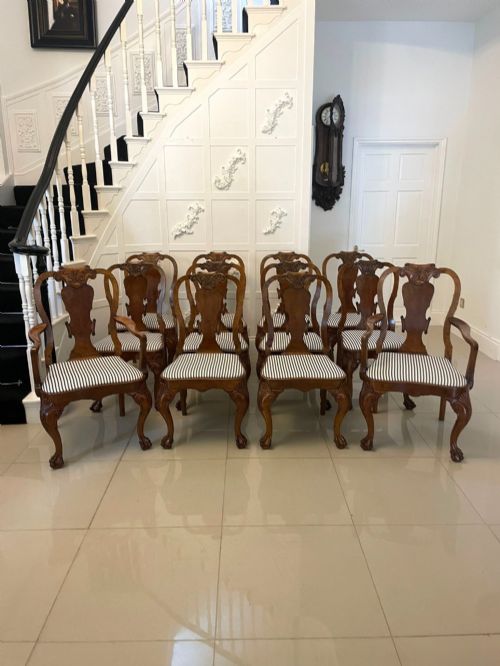
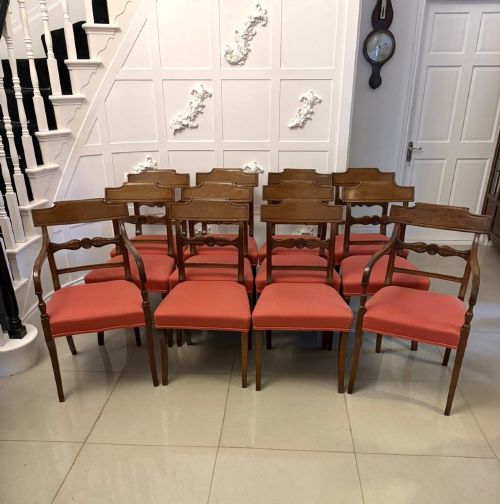
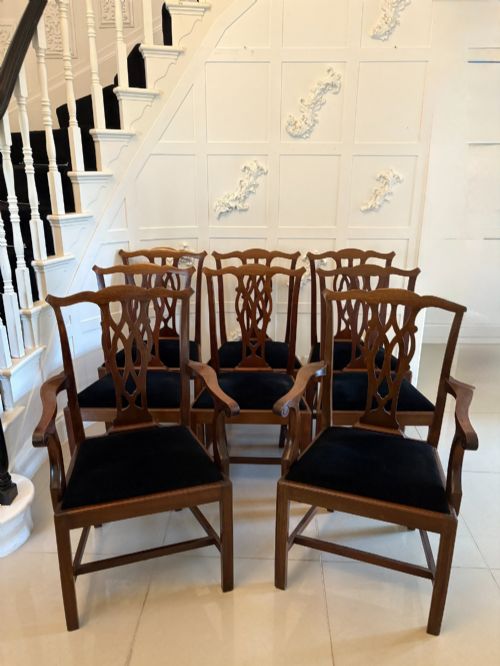
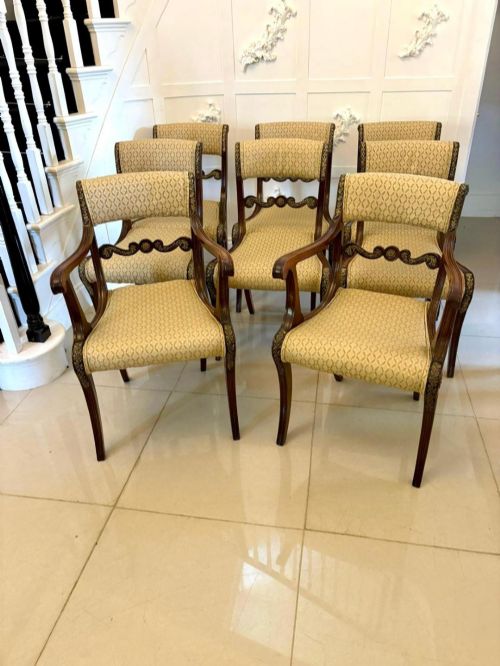
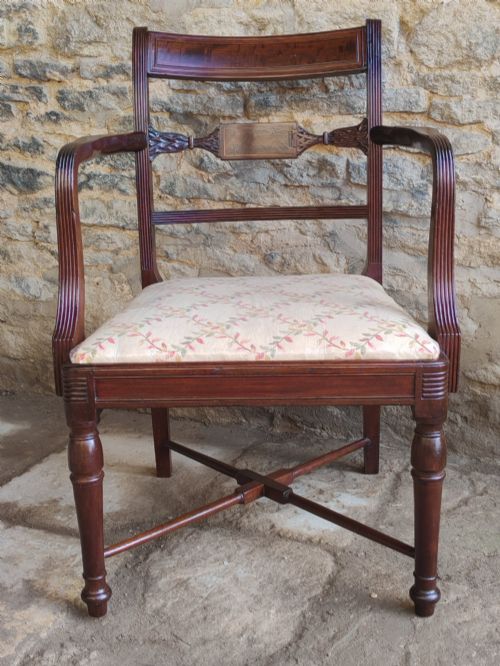

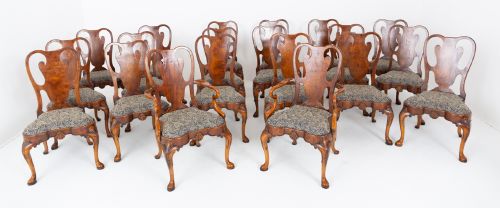
Period Dining Carver
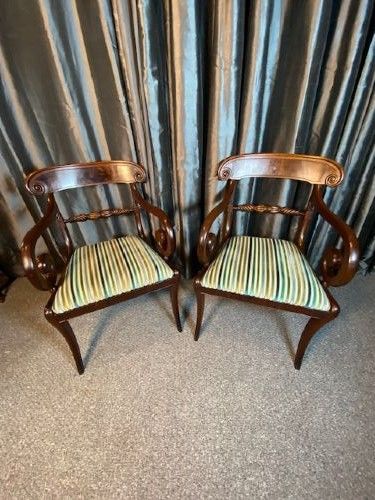
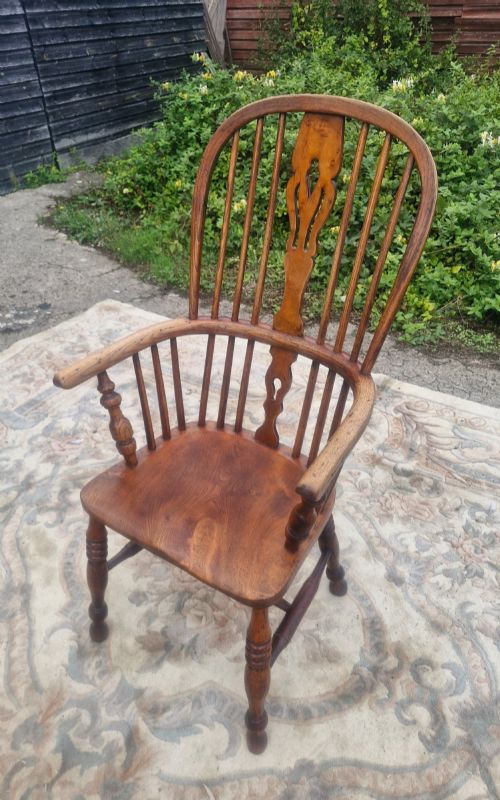
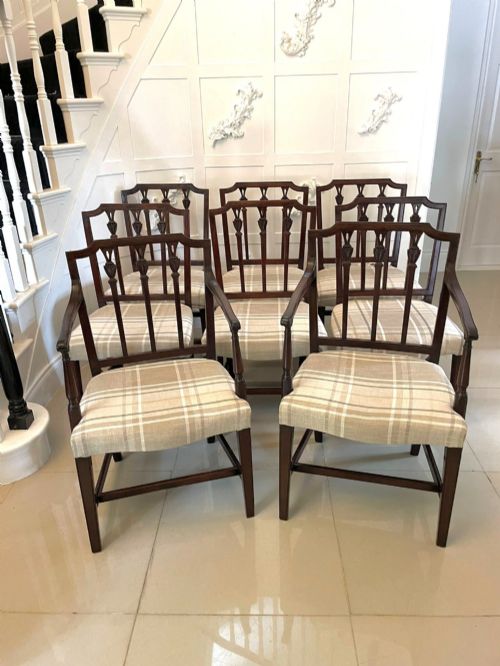
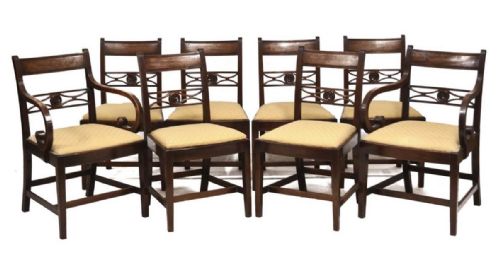
These period dining carvers bring substantial arm support and formal presence to the head of a table.
Materials and construction
Cabinetmakers constructed these frames predominantly using dense, stable timbers like mahogany and walnut, supplemented by local hardwoods such as elm. Timber selection depended on structural strength, particularly for slender members like ladder backs and shield backs.
Joinery relied on pegged mortise and tenon joints to withstand the daily strain placed on dining seating. Seat frames frequently accommodated drop-in pads upholstered in fabric, leather, or cane panels woven directly into the wood.
Indicators of standard
The distinction between ordinary and superior examples lies in the crispness of carved details, such as acanthus leaves, reeding, and paterae. Master craftsmen executed these motifs with sharp undercutting and balanced symmetry rather than soft, rounded profiles.
Structural integrity also separates the grades, visible in the retention of original timber blocking beneath the seat rails. Chairs that maintain their initial proportions without excessive timber shrinkage or replacement parts command greater regard.
Several sets include precisely six singles and two carvers, suggesting eight people sat down to dinner with absolute mathematical symmetry.
Alfred Allen of Birmingham·Maple and Co
The Period Dining Carver Glossary
- Carver
- An armchair designed to match a set of single dining chairs, traditionally placed at the head of the dining table.
- Shield back
- A chair back shaped like a heraldic shield, popularised by eighteenth-century designers such as Hepplewhite.
- Scroll arm
- An armrest curving outward and downward in a tight circular scroll, frequently seen on Regency examples.
- Drop-in seat
- A removable wooden frame padded and covered in fabric that drops into a rebate inside the chair seat rails.
Period Dining Carver: Frequently Asked Questions
How do I spot a true period carver?
Examine the timber colour, grain depth, and construction joints beneath the seat frame to verify age. Period pieces display hand-cut joinery and natural patina consistent with centuries of use.
Check for consistency in design details when matching a carver to existing single chairs from the same era.
Were carvers sold with single chairs?
Dining sets historically included one or two armchairs alongside a larger number of armless single chairs for the dining table. The carvers accommodated the host and hostess.
Many surviving pieces on the market represent the scattered remnants of these larger dining suites.
What woods were used for carvers?
Mahogany served as the predominant timber for fine dining seating throughout the Georgian and Regency periods. Walnut and elm also appear frequently in regional English and Scottish pieces.
Secondary timbers like beech or pine often form internal seat rails and corner blocks hidden from view.
How should I care for cane seats?
Cane panels require occasional light dampening with a sponge to maintain moisture and prevent the natural material from becoming brittle. Avoid placing them near direct heat sources.
Protect the woven surface with a well-padded cushion if the chair receives heavy daily seating.