


Period Carved Oak Chairs
Period carved oak chairs span centuries of heavy joinery, offering robust seating from the seventeenth century onward.
Period Carved Oak Chairs
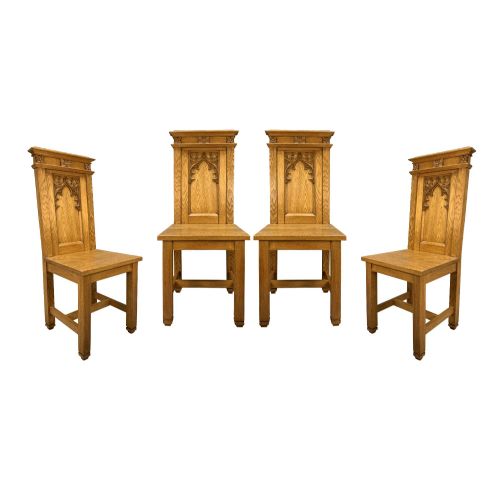
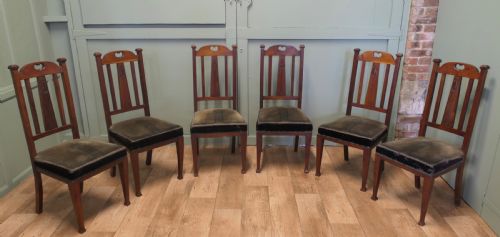
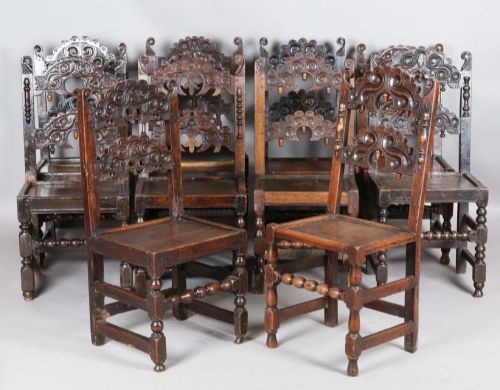
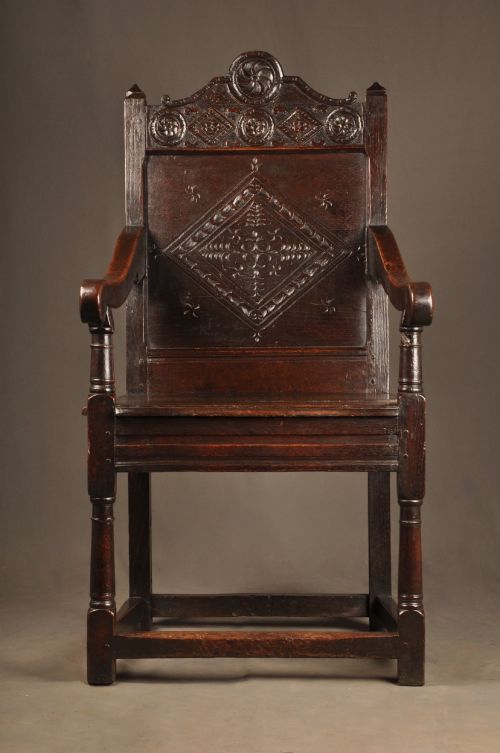
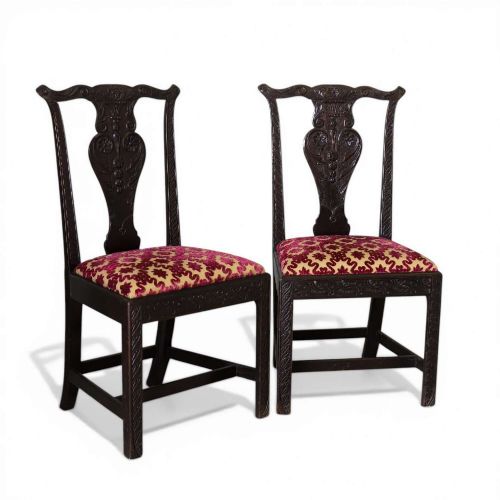
When a buyer searches for period carved oak chairs, they encounter substantial timber seating ranging from early wainscot armchairs to later dining sets. These pieces include side chairs, hall chairs, and highchairs originating across English, Welsh, Scottish, and Irish regions.
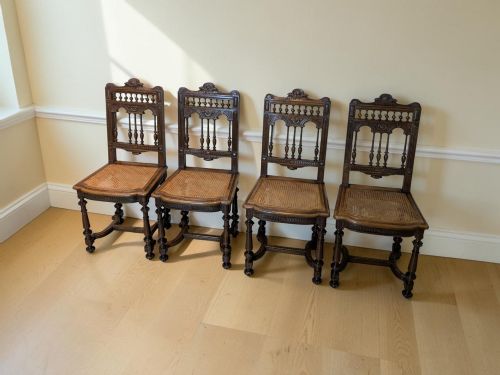
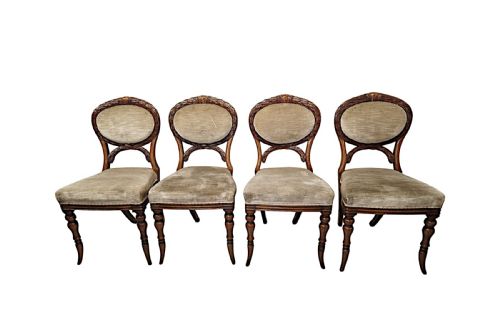
The most common examples meeting this description include seventeenth-century joined oak items and nineteenth-century revivals featuring carved details. Regional variations such as Lancashire and Yorkshire wainscot types appear frequently alongside matched sets from the Victorian and Edwardian eras.
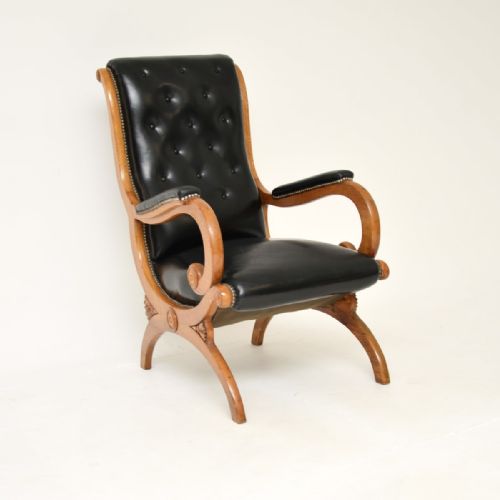
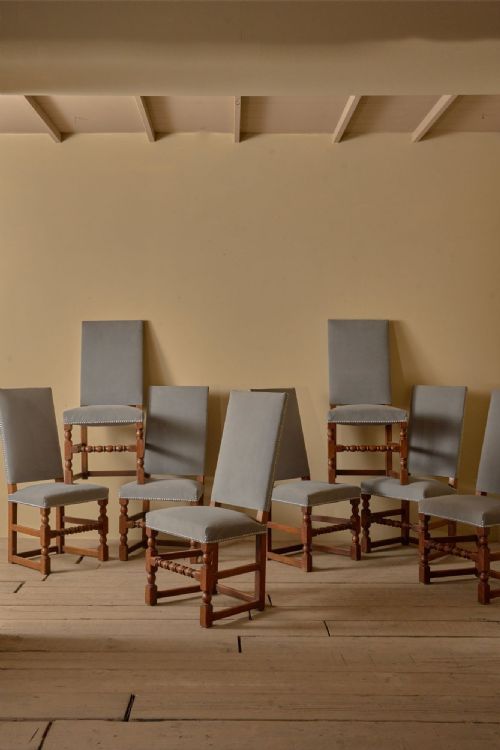
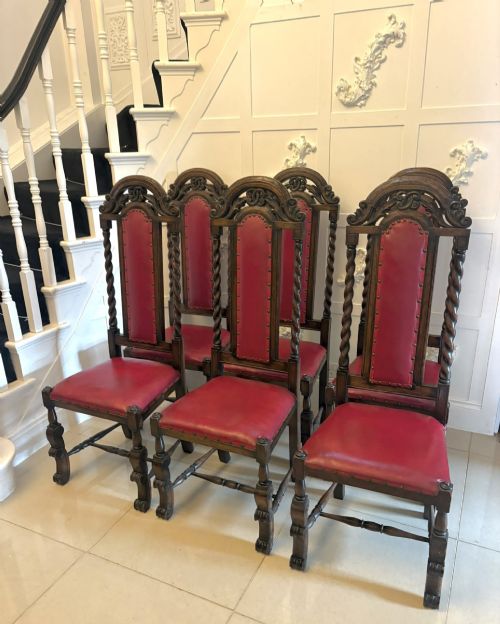
Forms span sturdy back stools, open armchairs, and sets built for dining rooms or halls. Timber surfaces display the natural grain of English and solid oak, occasionally paired with upholstery in velvet, leather, fabric, or cane.
Quality and Character
Depth of carving and clarity in regional motifs separate standard examples from finer works of early joinery. Crisp execution on wainscot crests and panel backs demonstrates superior craftsmanship.
The condition of the timber grain, surface warmth, and integrity of joined framing dictate the overall stature of a piece. Uniformity across matched dining sets preserves their architectural proportion.
Period Carved Oak Chairs Retail Price Guide 2026
Typical asking prices for period carved oak chairs among the pieces listed under this phrase on Sellingantiques today, from the lower quarter to the upper quarter. They describe what is for sale here now, not the wider market.
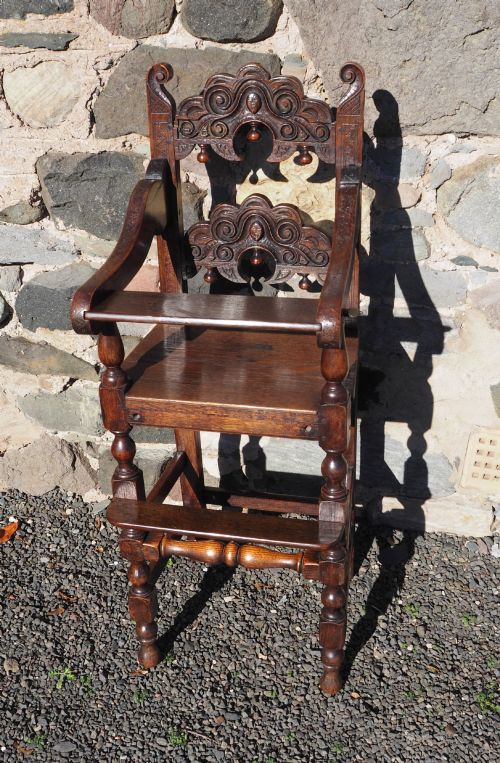
A tiny child's highchair survives from sixteen eighty-eight, initialled R.D. for a very small historic sitter.
Strahan of Dublin
The Period Carved Oak Chairs Glossary
- Wainscot chair
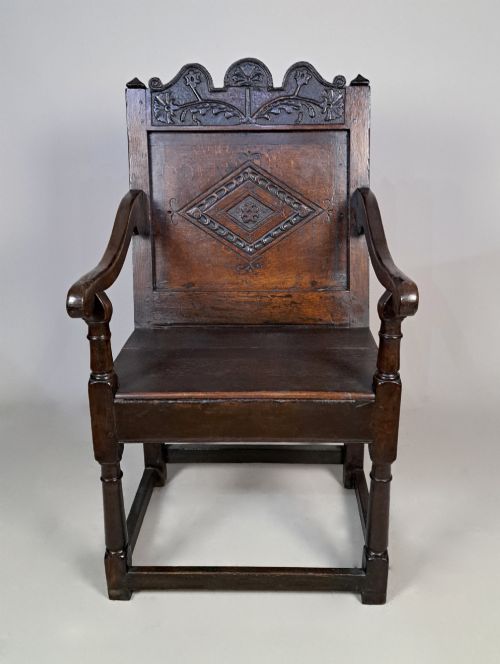
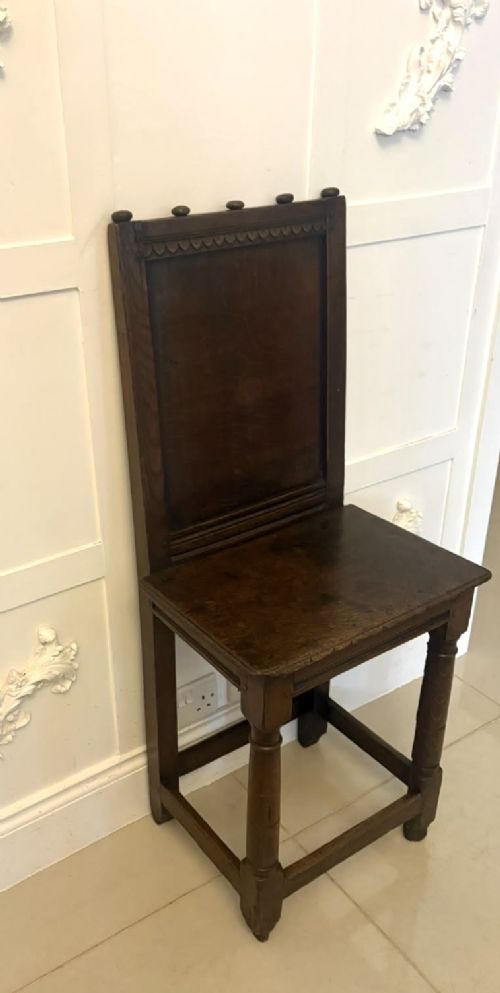
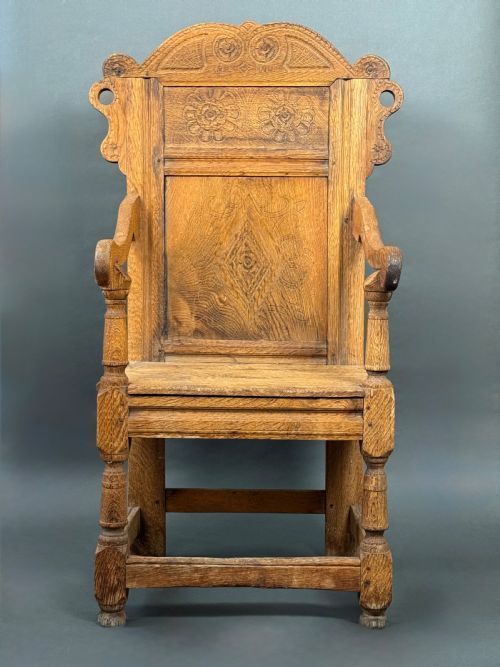
- A heavy wooden armchair with a solid panelled back, popular in the seventeenth century. These sturdy seats often feature carved crest rails and box stretchers.
- Back stool
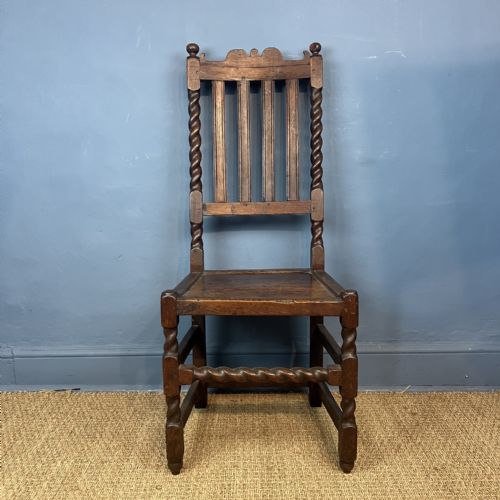
- An early form of chair without arms, serving as a precursor to the modern dining chair. They rely on joined oak frames for stability.
- Barley twist
- A spiral turning technique applied to furniture legs and stretchers. This decorative form appears prominently on nineteenth-century revival dining sets.
- Joined oak
- Furniture constructed using mortise and tenon joints secured with wooden pegs rather than metal nails. This method defines seventeenth-century cabinet making.
- Derbyshire chair
- A regional style of oak chair characterised by open carved back rails and turned supports. They emerged during the seventeenth century in the North of England.
Period Carved Oak Chairs: Frequently Asked Questions
How do I identify a seventeenth century wainscot chair?
Seventeenth century wainscot chairs are distinguished by solid panelled wooden backs, heavy armrests, and joined oak construction secured with wooden pegs. They often display regional carved motifs on the top crest rail.
These armchairs were principal seats of status in early households, typically positioned by the hearth or at the head of a refectory table.
How should I care for historic oak furniture?
Historic oak requires stable indoor humidity and protection from direct sunlight to prevent timber splitting. Gentle application of traditional wax helps maintain the surface finish.
Avoid placing these chairs near modern heat sources, which can dry out the solid oak and weaken traditional joined framing.
Are nineteenth century revival chairs authentic antiques?
Nineteenth century revival pieces replicate earlier seventeenth-century styles, utilising period machinery and Victorian interpretations of Jacobean design. They represent distinct periods of nineteenth-century craftsmanship.
These chairs offer durable dining solutions while reflecting the Victorian and Edwardian fascination with historic English woodwork.