
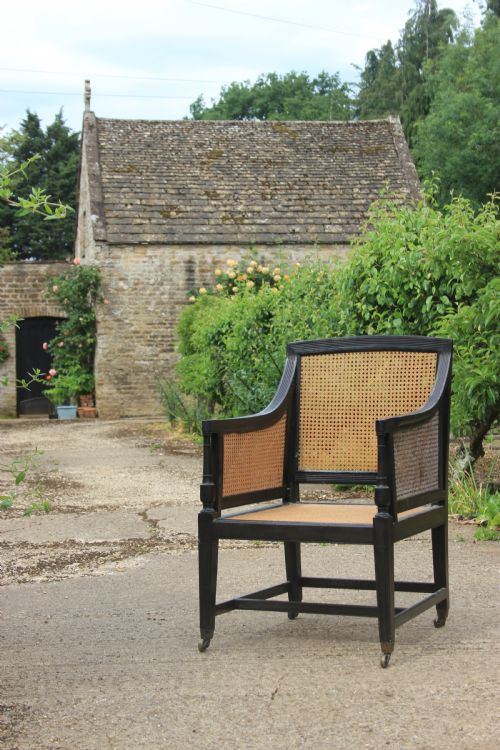


Period Cane Seating
Period cane seating brings lightness and dexterity to interiors through woven mesh panels held inside timber frames.
Period Cane Seating
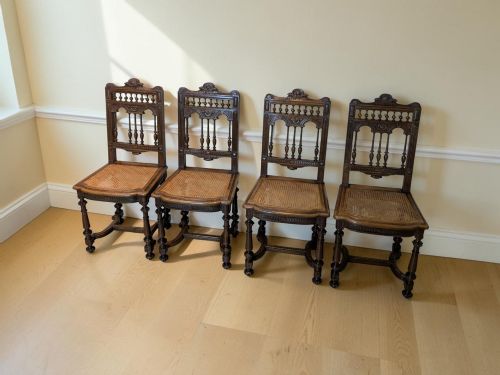
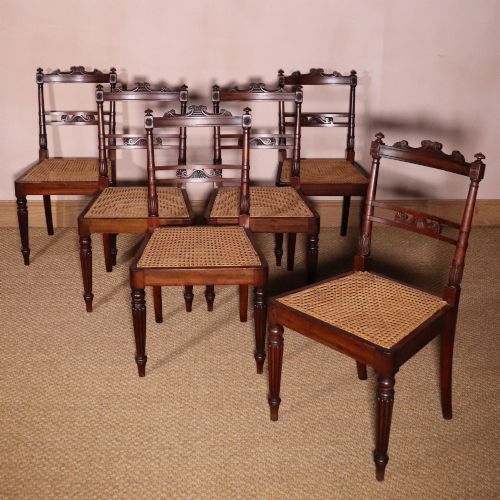
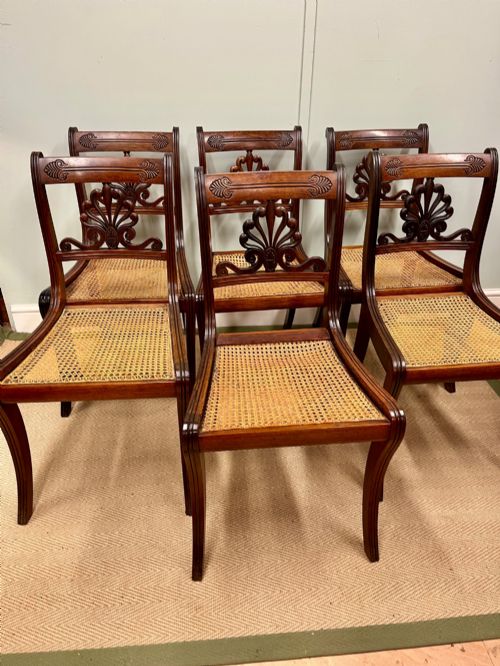
Period cane seating encompasses dining chairs, library armchairs, bergères, and childs high chairs designed with woven cane panels to seat backs and bases. You meet Regency designs most frequently here, alongside 18th century walnut and oak examples and later Victorian revivals.
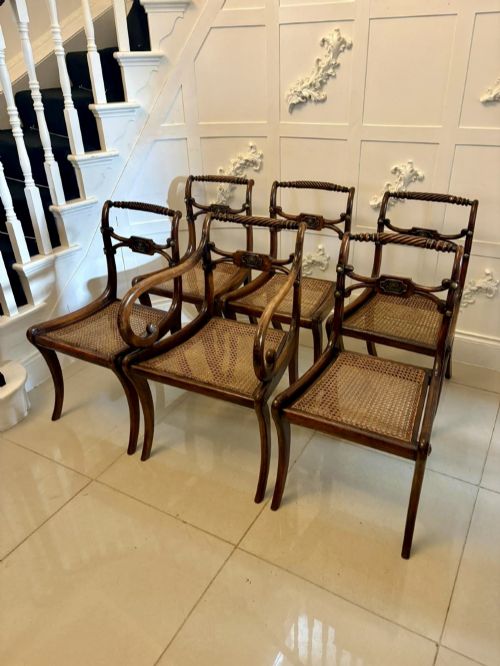
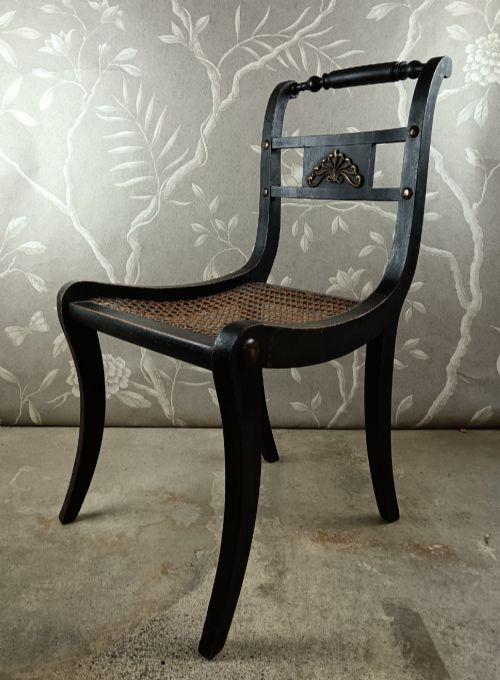
Forms range from simulated rosewood rope twist chairs and ebonised sabre leg side chairs to large library armchairs and painted elbow chairs. Makers utilised rich timbers and decorative finishes including giltwood, japanning, and paint to elevate the seating.
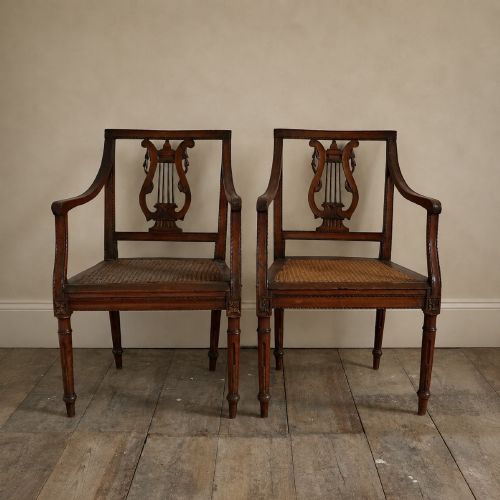
The inventory includes matched sets of dining chairs alongside pairs of library armchairs and individual occasional pieces. Each piece relies on the tensile strength of natural woven plant material stretched across rigid wooden carcases.
Materials and construction
Frames are constructed from dense hardwoods such as mahogany, walnut, oak, and ebony, shaped into saber legs, lyre backs, and scrolled arms. These timbers provide the structural rigidity required to maintain tension on the woven seating panels.
Panels utilise split rattan cane threaded through pre-drilled holes along the seat rails or back frames in traditional multi-strand patterns. Joinery relies on traditional pegging and mortise and tenon joints to withstand the continuous pull of the woven mesh.
Several miniature armchairs and high chairs survive here, proving that Georgian and Regency toddlers sat with just as much dignity as their parents.
Assessing quality
Quality rests upon the proportion of the frame, the crispness of carved details such as rope twists and sabre legs, and the fineness of the cane weave. Generous proportions and well-drawn lines distinguish superior library bergères and dining armchairs from standard production.
The integrity of the original timber surface, whether polished mahogany, ebonised wood, or painted and decorated finishes, governs the character of the piece. Subtle details like original paintwork or retained ebonising elevate an item above later restorations.
The Period Cane Seating Glossary
- Bergère
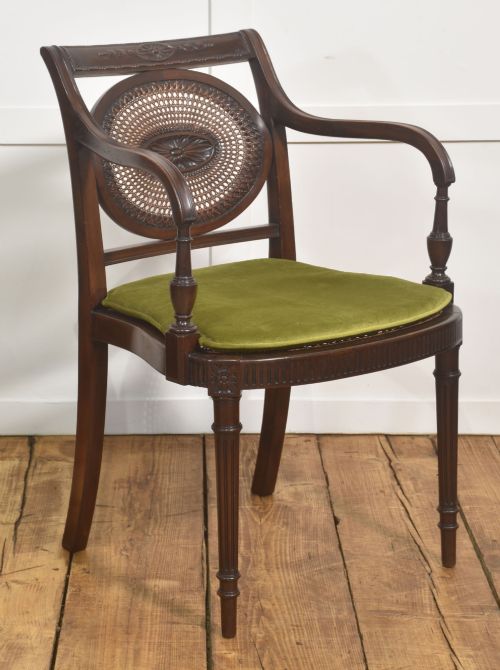
- An enclosed upholstered armchair with cane or upholstered sides and back. These deep seats often include drop-in cushions covered in velvet or fabric.
- Sabre leg
- A concave curving leg that tapers toward the foot, typical of Regency furniture design. This form provides both stability and a sense of forward momentum.
- Japanning
- A European imitation of East Asian lacquering applied to wooden furniture. This technique involves layered varnishes and painted decorations on a dark ground.
- Carohean style
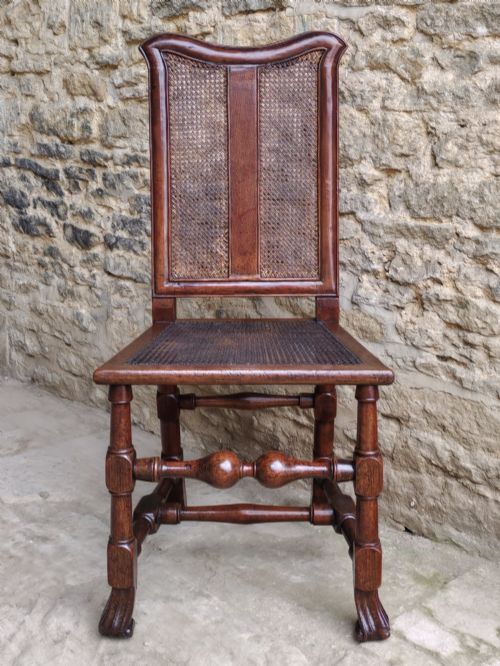
- A late 17th-century aesthetic characterised by rich carved woodwork, high backs, and scrolled motifs. Examples often employ walnut or oak with open framework.
- Rope twist
- A carved decorative moulding resembling a twisted rope found on chair stiles and rails. This detail adds textural movement to mahogany and simulated rosewood frames.
Period Cane Seating: Frequently Asked Questions
How do I care for antique cane?
Keep cane seating away from direct heat sources and strong sunlight to prevent the natural fibres from becoming brittle and snapping.
Lightly wipe the cane with a damp sponge occasionally to maintain moisture in the rattan strands.
What is a library bergere?
A library bergere is a spacious, deeply proportioned armchair designed for reading rooms with enclosed cane sides and back panels.
These comfortable seats frequently appear in mahogany or painted finishes and often accommodate loose cushions.
Are these chairs suitable for daily dining?
Many of these chairs originate as dining sets intended for regular daily use around a table.
Properly tensioned cane mesh provides a resilient and supportive surface that distributes weight evenly across the frame.
How do I spot a Regency cane chair?
Regency cane chairs typically exhibit classical influences with sabre legs, simulated rosewood finishes, or ebonised wood frames.
They date from the early 19th century and often feature lighter, more refined proportions than their heavy Georgian predecessors.