



Period Cane Armchair
These period cane armchairs combine timber frames with woven seating, offering historical seating that brings texture and elegance to any room.
Period Cane Armchair
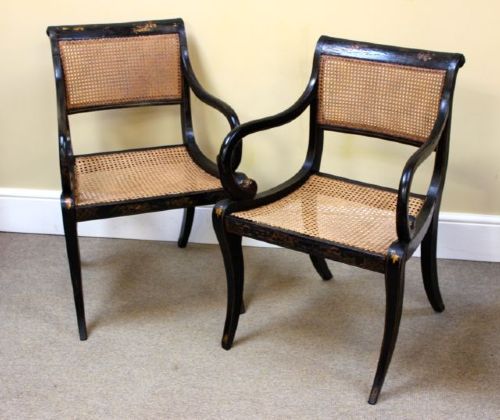
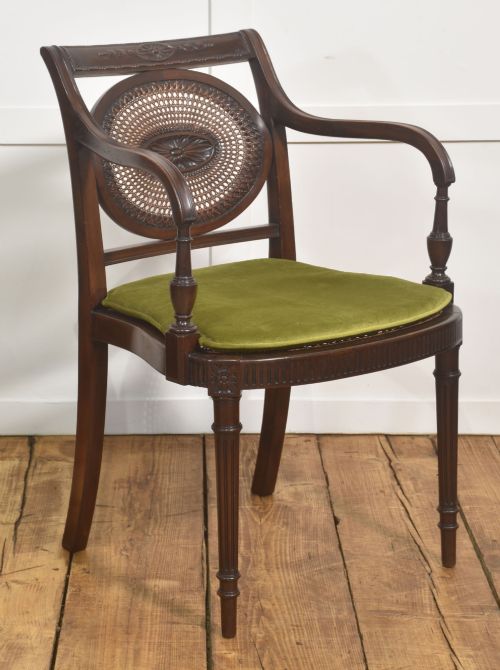
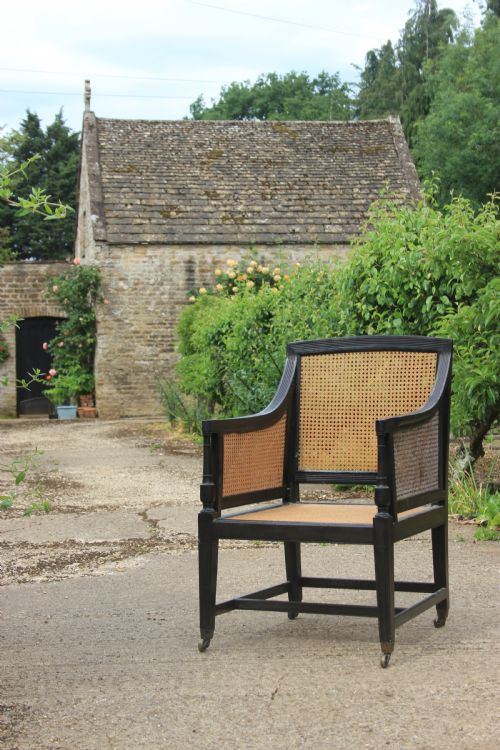
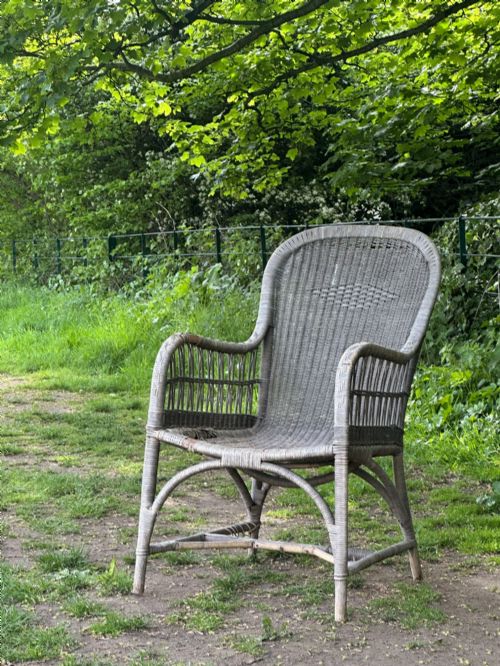
A period cane armchair is a seating form featuring a timber frame and woven cane work on the seat, back, or both. These pieces span several centuries, with Regency examples appearing most frequently alongside pieces from the seventeenth, eighteenth, and nineteenth centuries.
The inventory includes library armchairs, bergères, and dining armchairs executed in materials such as mahogany, walnut, ebony, and painted woods. Styles range from Carolean and William IV to Sheraton Revival and Arts and Crafts.
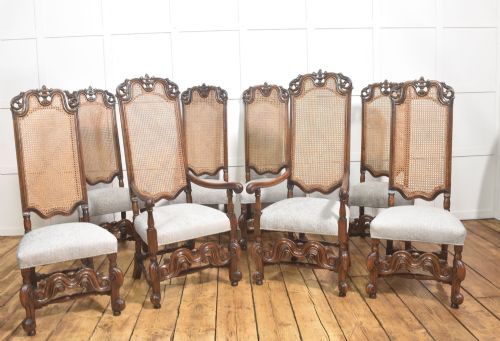
Buyers encounter single chairs, pairs, and larger dining sets designed for both formal reception rooms and everyday library use.
How they were made
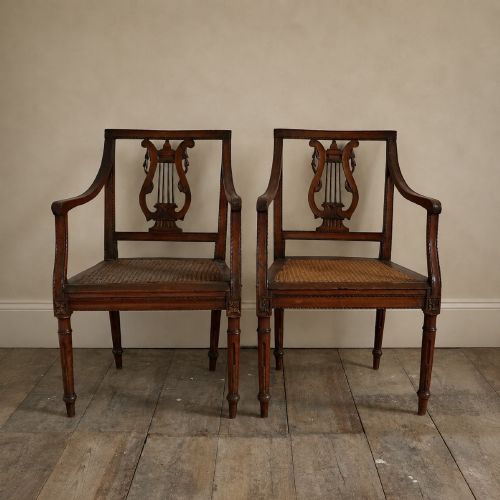
Frames rely on cabinet timbers including mahogany, walnut, and ebony, alongside painted or ebonised softwoods and hardwoods. Artisans shaped these woods into structural forms such as lyre backs and generous library bergères.
The seating incorporates handwoven cane panels, sometimes complemented by leather or velvet upholstery. Brass mounts and decorative paintwork occasionally finish the design.
An unusually small child's chair in mahogany proves that Regency toddlers sat with just as much dignity as their parents.
What varies in quality
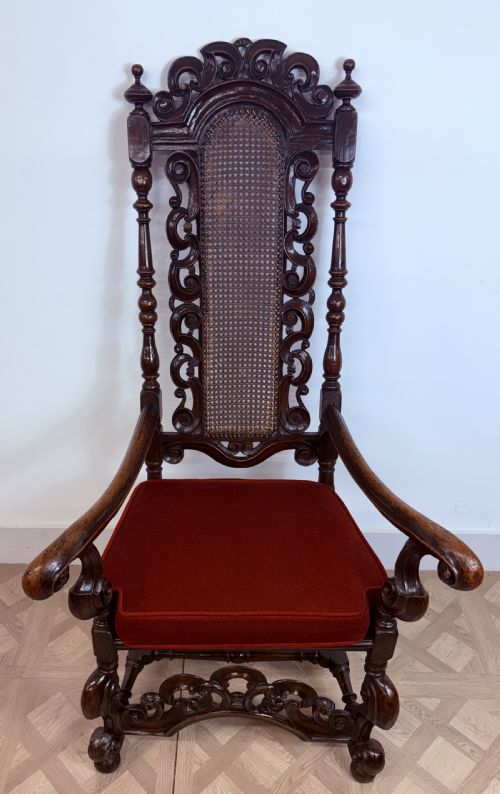
Quality rests in the handling of the timber frame, from the crispness of carved details on Carolean high-backs to the generous proportions of Regency bergères. Well-drawn frames display balanced lines and thoughtful joinery.
The execution of the cane work itself marks the distinction between standard production and finer pieces. Handwoven cane integrated cleanly into the wooden rails demonstrates superior craftsmanship.
Dryad of Leicester·Gillows
The Period Cane Armchair Glossary
- Bergère
- An enclosed upholstered armchair, often featuring cane panels to the sides and back alongside a loose seat cushion. These deep seats appeared frequently during the Regency period.
- Cane
- Strips of rattan plant woven into open mesh patterns to form resilient seats and backs. This material provides lightweight structural support.
- Ebonised
- Wood treated with a dark finish to imitate expensive ebony timber. This technique appears on several Regency frames.
- Lyre Back
- A chair back shaped in the form of an ancient Greek lyre instrument. This motif characterises specific Regency mahogany models.
- Carolean
- The restoration style of the late seventeenth century featuring ornate carved woodwork. High-back dining chairs often reflect this aesthetic.
Period Cane Armchair: Frequently Asked Questions
How do I care for cane seats?
Keep woven cane panels hydrated by wiping them occasionally with a damp cloth to prevent the natural fibres from becoming brittle over time.
Avoid placing these armchairs near direct heat sources or in overly dry environments, which can cause the cane to snap.
Are these chairs comfortable for daily use?
Bergère models offer deep, enclosed proportions designed for relaxing, while library and dining armchairs provide firmer support.
Many period bergères include loose seat cushions that enhance the sitting experience for daily use.
How can I date a cane armchair?
Examine the timber species, frame silhouette, and structural joinery to align the piece with documented periods like the Regency or William IV.
Stylistic markers such as lyre backs or painted decorations offer further clues to the decade of manufacture.
Where should I place a bergere in my home?
Regency bergères work well in studies, libraries, or living rooms where their generous proportions serve as a focal point.
Pair them with complementary timber tables or position them near bookshelves to reflect their original period context.