




Colonial Cane Seating
Colonial cane seating encompasses British colonial, Anglo-Indian, and Indo-Portuguese chairs and benches woven with plant fibre for climate comfort.
Colonial Cane Seating
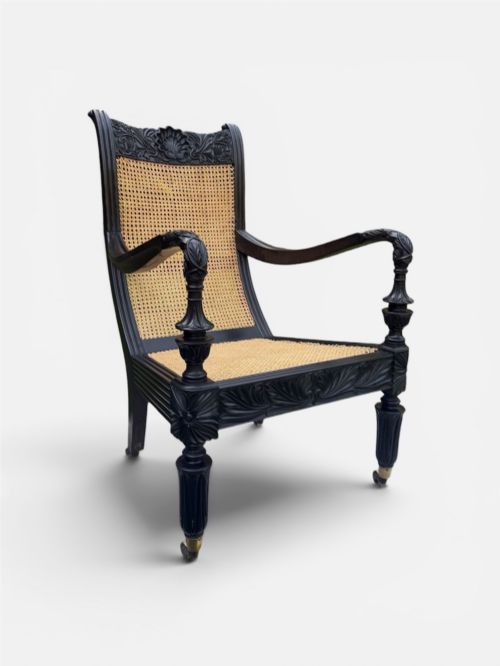
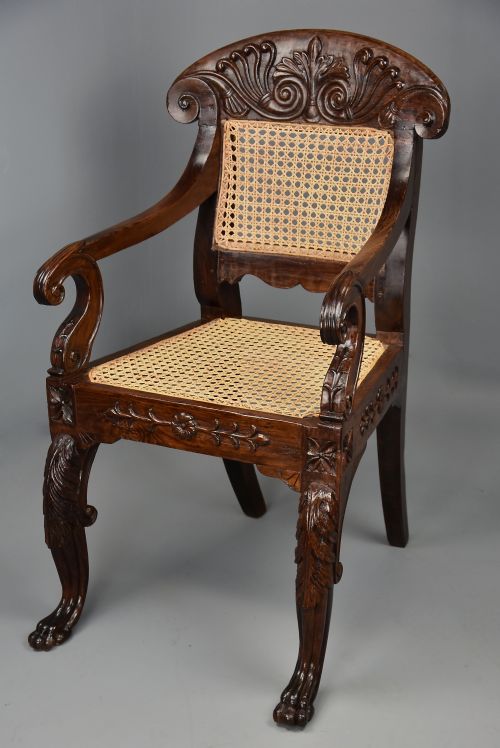
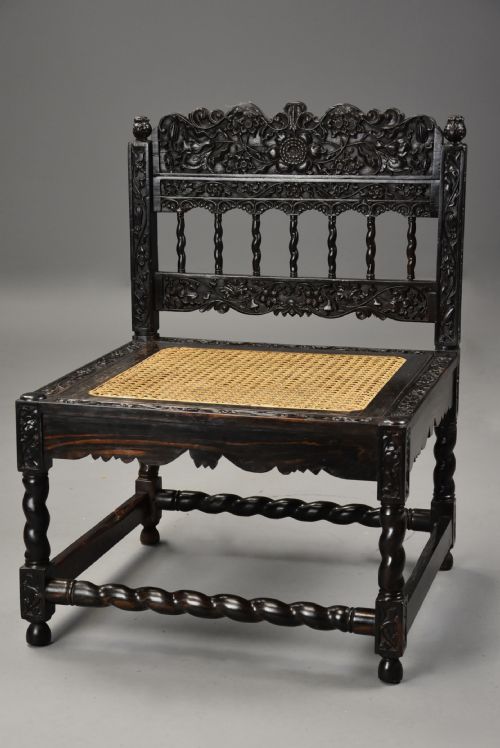
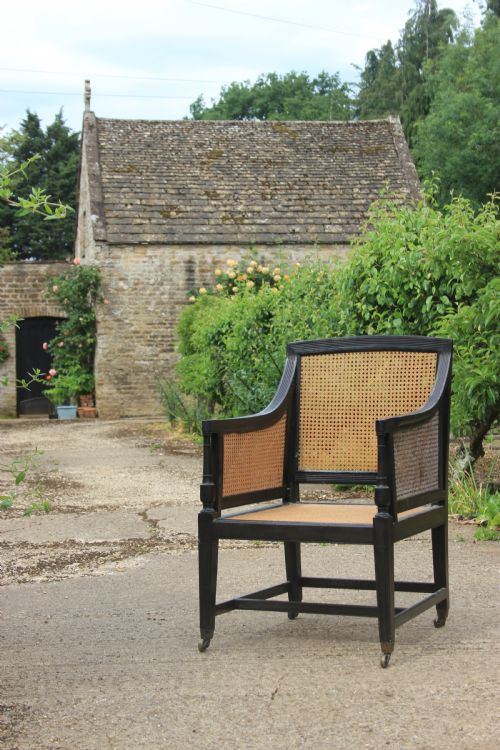
Colonial cane seating brings together armchairs, side chairs, dining chairs, hall chairs, chaise longues, benches, and reclining plantation chairs made in tropical British outposts. When you search for colonial cane seating, you encounter furniture designed to handle warm climates through woven cane panels.
The pieces on this page span the seventeenth century to the twentieth century, with nineteenth-century examples appearing most frequently. Styles range from Regency and Victorian to Art Deco and Anglo-Indian.
Forms include folding chairs from Burma alongside solid ebony, padouk, teak, rosewood, and satinwood armchairs and benches from Ceylon and the Coromandel Coast.
How they were made
Craftsmen built these chairs from dense tropical hardwoods such as ebony, padouk, teak, rosewood, and satinwood, often embellishing the frames with intricate carving. These timbers provided the structural stability required for intricate pierced work and heavy use.
Panels of woven cane form the seats and backs, allowing air circulation in hot climates. Secondary materials like brass fittings and occasional upholstery appear alongside the primary woodwork.
Colonial Cane Seating Retail Price Guide 2026
Typical asking prices for colonial cane seating among the pieces listed under this phrase on Sellingantiques today, from the lower quarter to the upper quarter. They describe what is for sale here now, not the wider market.
The listings here feature materials such as cane, ebony, brass, teak, rosewood, padouk, satinwood, and upholstery.
What varies in quality
The depth and crispness of the hand-carving distinguish finer pieces from simpler workshop output. Dense tropical hardwoods like solid ebony or padouk denote higher status than secondary timbers.
Proportion and the integration of English stylistic influences with regional craftsmanship dictate the visual success of each chair or bench.
The Colonial Cane Seating Glossary
- Cane
- Plant material woven into open mesh panels for seats and backs. This technique provides ventilation suited to tropical environments.
- Padouk
- A heavy tropical hardwood valued for its rich reddish-brown colour and durability. Makers utilised it for intricate carved furniture.
- Ebony
- A dense black hardwood prized for solid construction and fine detail carving. It appears frequently in seventeenth and nineteenth-century pieces.
- Reclining plantation chair
- An armchair equipped with adjustable or extended arms designed for lounging. These chairs often incorporate caned seating and folding mechanisms.
Colonial Cane Seating: Frequently Asked Questions
What is colonial cane seating?
Colonial cane seating includes chairs, benches, and loungers produced in regions under British influence, utilising woven cane for ventilation.
These pieces combine local timber traditions with European furniture forms from various periods.
How do I care for cane seats?
Keep cane panels lightly moisturized to prevent them from drying out and snapping under pressure.
Avoid placing these chairs near direct heat sources or in overly dry indoor environments.
What woods were used?
Carpenters utilised dense tropical timbers including solid ebony, teak, padouk, rosewood, and satinwood.
These heavy woods supported elaborate carved decoration while withstanding humid conditions.