





Black Caned Armchair
A black caned armchair brings dark timber and woven seats together into a seat that looks sharp in any room.
Black Caned Armchair
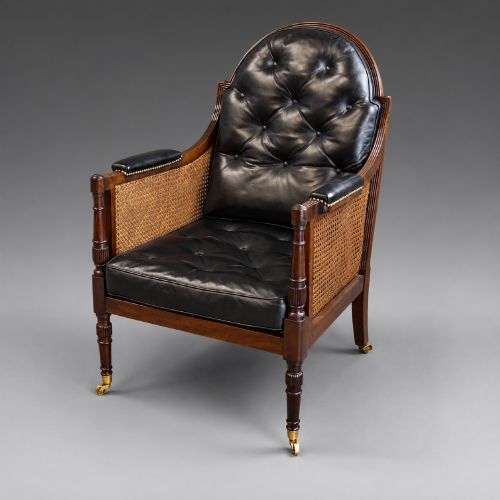
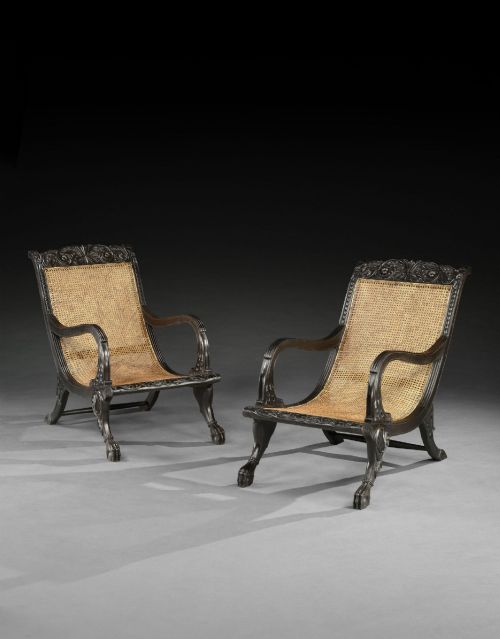
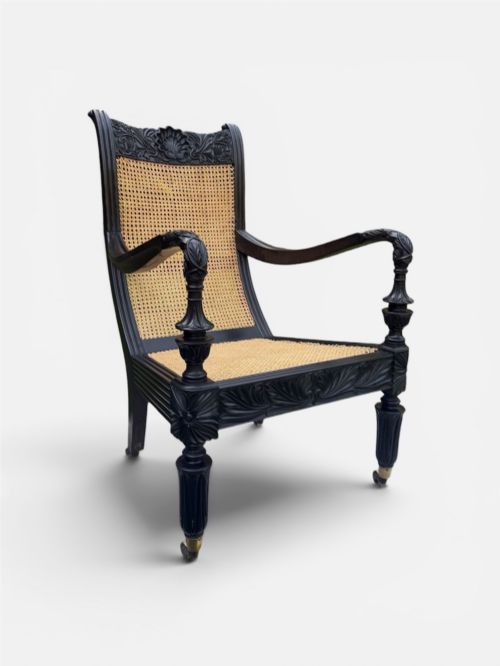
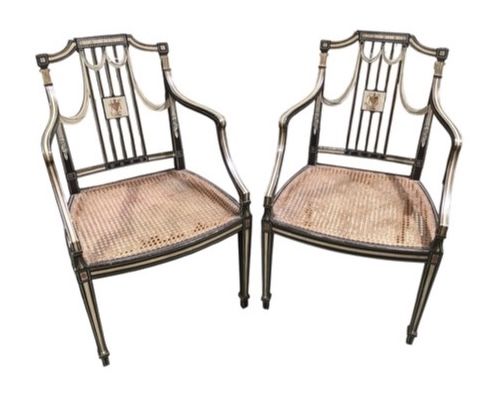
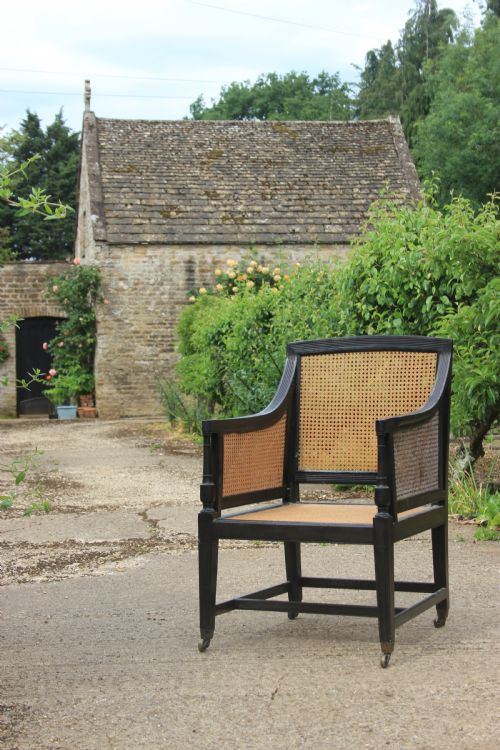
A black caned armchair spans formal library seats and exotic imported seating from the nineteenth century onward. You encounter Regency ebonised models alongside Ceylonese solid ebony versions and later revival pieces.
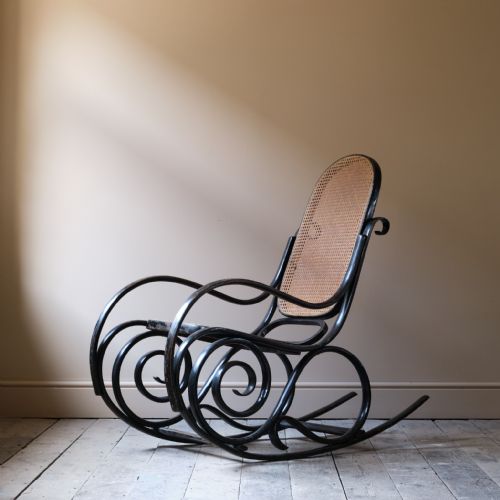
The form relies on a wooden frame finished in dark paint, lacquer, or natural ebony, paired with a woven cane seat or back panel. Makers also utilised bentwood and faux bamboo to shape the frames across different workshops.
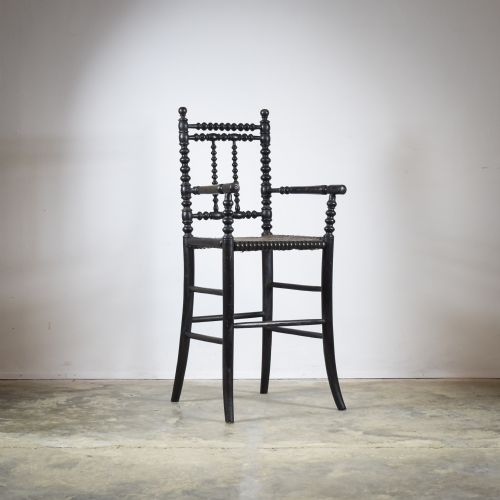
Most examples date from the nineteenth century or the early twentieth century, drawing on Regency, Anglo-Indian, and Chinoiserie styles. Dining chairs, rocking chairs, and high chairs also appear alongside standard armchairs.
How they were made
Cabinetmakers shaped the frames from beech, ebony, or other hardwoods, often turning the timber on a lathe for bobbin details or steaming it for bentwood curves. Artisans applied black paint, lacquer, or gold leaf to achieve a dark, polished finish.
Caners wove natural rattan cane tightly through holes drilled in the frame to create a resilient, breathable seat or back. Brass mounts and gilt highlights occasionally decorated the joints and borders of higher-status pieces.
Black Caned Armchair Retail Price Guide 2026
Typical asking prices for black caned armchair among the pieces listed under this phrase on Sellingantiques today, from the lower quarter to the upper quarter. They describe what is for sale here now, not the wider market.
A tiny child's chair sits amongst the heavy library armchairs, proving that even toddlers required strict Regency posture.
What varies in quality
The choice of primary wood dictates much of the stature, ranging from locally turned beech finished with ebonised paint to dense, solid Ceylonese ebony carved with deep detail. Natural materials like solid ebony command greater weight and presence than painted softwood frames.
The tightness and regularity of the cane work distinguish standard production from superior craftsmanship. Finer pieces display precise joinery and sophisticated decorative schemes such as Chinoiserie lacquer or gilt detailing.
Gillows·Thonet
The Black Caned Armchair Glossary
- Ebonised
- Wood finished with a dark stain or paint to imitate ebony. This treatment became popular during the Regency and Victorian periods.
- Caning
- The practice of weaving rattan strips into a mesh pattern for chair seats and backs. It provides a flexible yet durable support.
- Bentwood
- Wood heated with steam and bent into curved shapes. This technique defines many rocking chairs and nineteenth-century seating.
- Japanned
- European work mimicking East Asian lacquer finishes. It typically employs layered varnish and painted decoration on a dark ground.
Black Caned Armchair: Frequently Asked Questions
How do I care for a cane seat?
Keep cane panels lightly humidified with a damp cloth occasionally to prevent the natural fibres from drying out and snapping.
Avoid placing these chairs directly next to intense heat sources or radiators that will cause the rattan to become brittle over time.
Are these chairs comfortable to sit in?
The woven cane panels offer a slight spring that moulds to the body, making them surprisingly comfortable for prolonged sitting.
Many owners add a loose linen or silk squab cushion to the seat for extra softness while keeping the timber frame visible.
How do I distinguish Regency from later revival styles?
Authentic Regency examples display precise hand-carved details and mature timber patination consistent with the early nineteenth century.
Revival pieces from the twentieth century often utilise machine-turned components and standardised joinery methods that lack early wear.
Where should I place this armchair?
A dark ebonised frame works well as a striking contrast against pale walls in a hallway, bedroom, or drawing room.
Their open cane backs maintain visual space in smaller rooms without blocking light or making the floor plan feel crowded.