

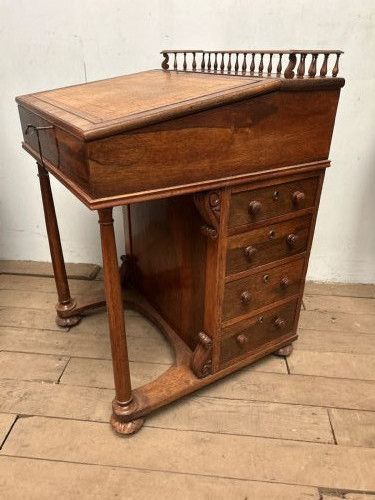
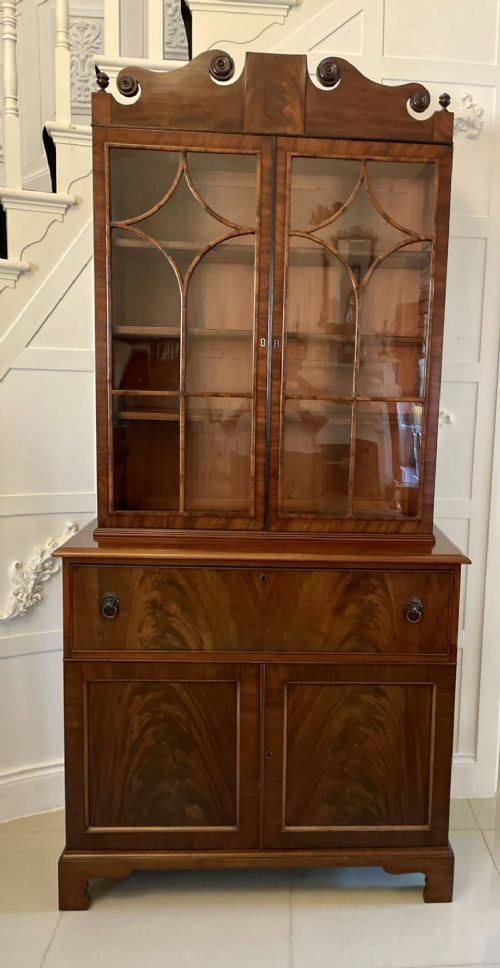
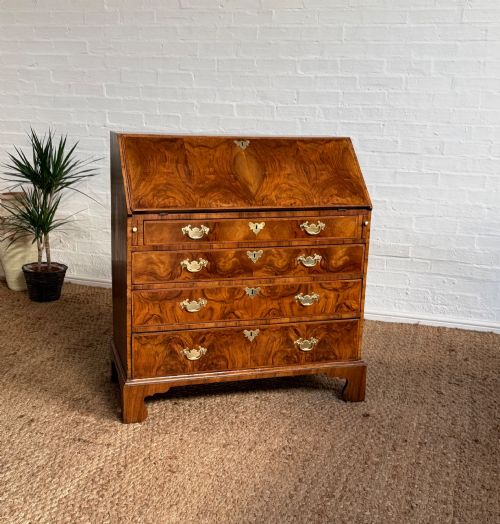
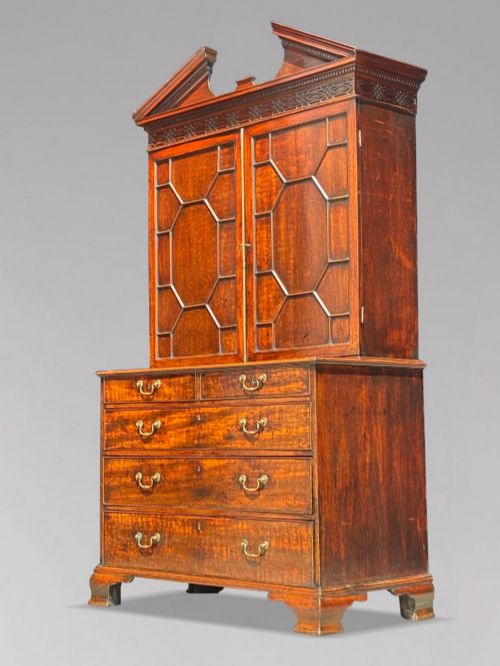


Period Bureau Cabinet
A period bureau cabinet combines a practical writing desk with enclosed storage, offering workspace and architectural presence.
Period Bureau Cabinet
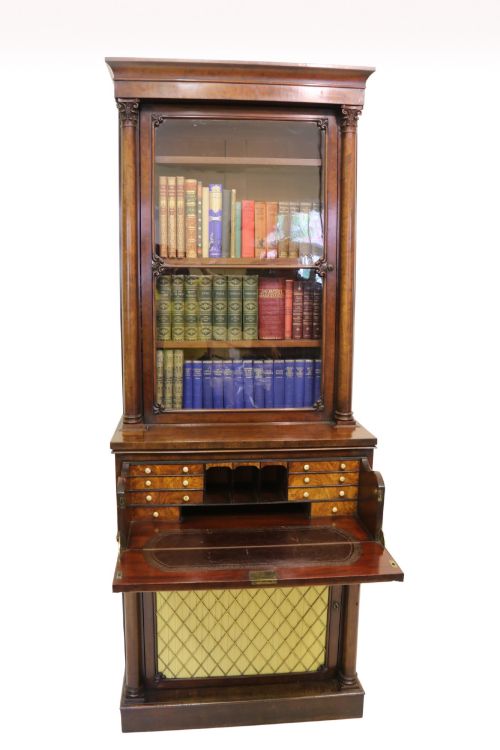
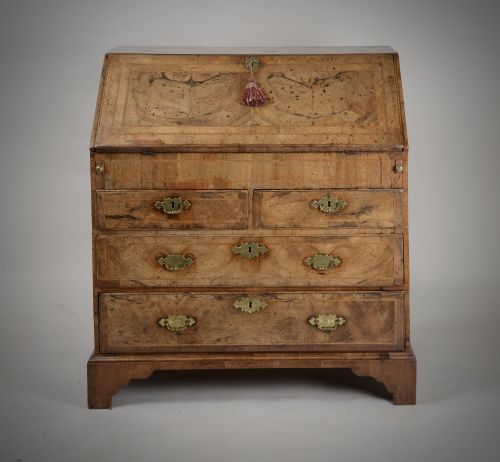
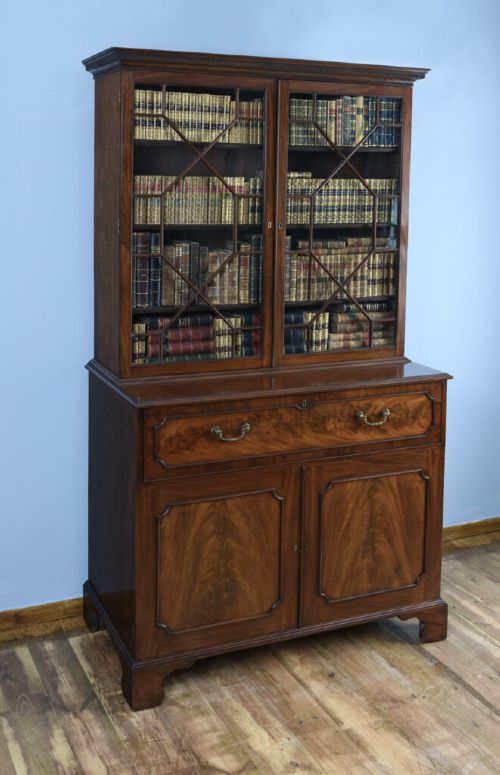
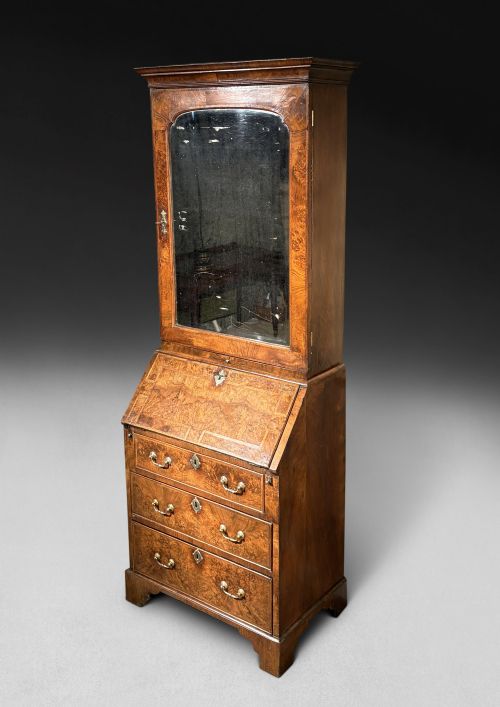
A period bureau cabinet brings together a sloping writing flap or pull-out secretaire drawer with upper shelving and lower drawers or cupboards. These pieces bridge the gap between private correspondence and public display in domestic interiors.
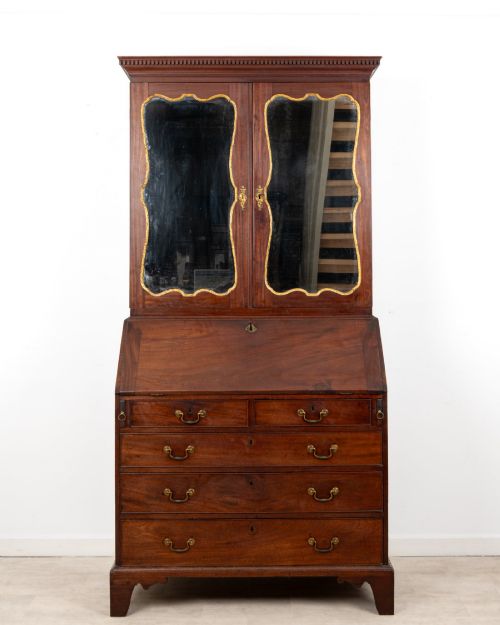
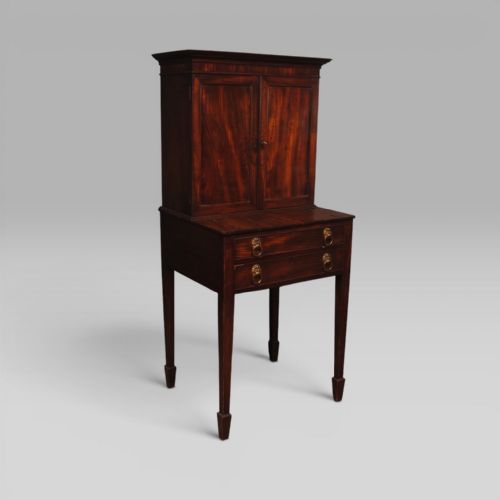
The selections span the seventeenth, eighteenth, and nineteenth centuries, taking forms such as walnut escritoires, mahogany secretaire bookcases, and satinwood writing cabinets. Georgian and Regency iterations appear frequently alongside earlier walnut designs.
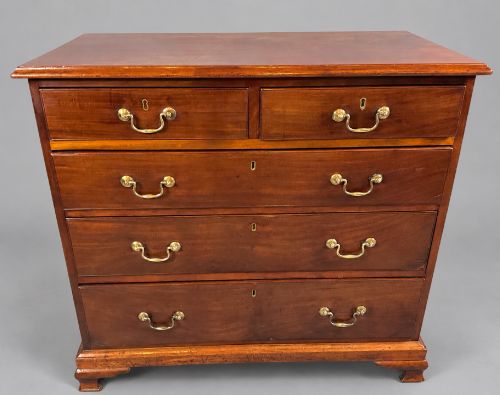
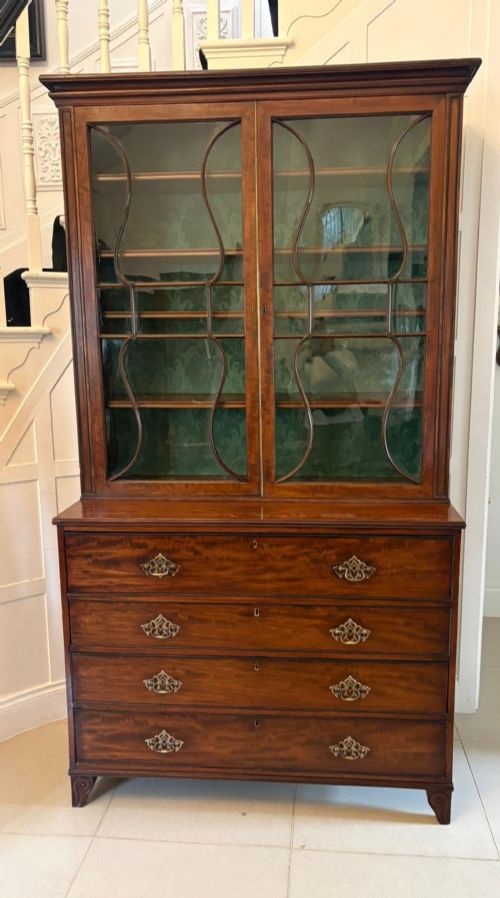
Makers utilised timber grains like burr walnut and figured mahogany, often mounting glazed doors above fitted desk interiors containing pigeonholes and small drawers.
How they were made
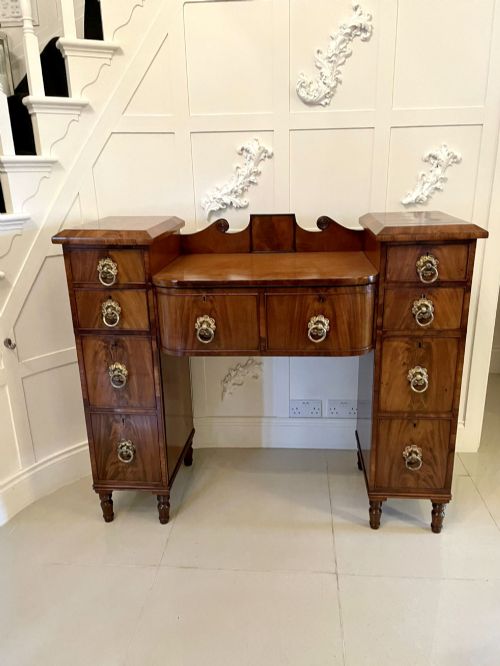
Cabinetmakers constructed carcass frames in solid oak or pine, applying veneers of figured mahogany, burr walnut, and satinwood to external surfaces. Crossbanding and stringing define the drawer fronts and fall fronts.
Brass hardware including drop handles, escutcheons, and hinges secure the doors and drawers. Glass panes in upper bookcase sections sit within wooden astragals.
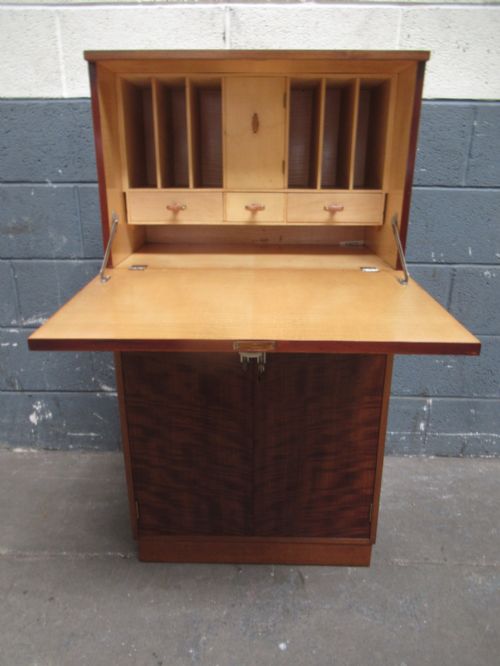
Fitted interiors incorporate secret compartments, sliding wells, and pigeonholes constructed with dovetail joints.
Period Bureau Cabinet Retail Price Guide 2026
Typical asking prices for period bureau cabinet among the pieces listed under this phrase on Sellingantiques today, from the lower quarter to the upper quarter. They describe what is for sale here now, not the wider market.
Many pieces contain tiny secret compartments hidden behind removable pigeonhole blocks for stashing love letters and small valuables.
What varies in quality
The selection of timber grain dictates much of the visual impact, with symmetrical burr walnut or heavily figured mahogany distinguishing superior examples from plain ones. Matching veneers across drawer fronts and fall flaps demonstrate technical mastery.
Interior architecture varies from simple shelving to complex nests of pigeonholes with prospect doors and concealed drawers. The complexity and execution of these internal fittings separate standard production from exceptional cabinetwork.
Originality of surface finish and hardware preserves the historic character of the piece, whereas extensive timber replacement alters the balance of the object.
Gillows of Lancaster·Thomas Chippendale
The Period Bureau Cabinet Glossary
- Escritoire
- A writing cabinet with a fall-front flap concealing drawers and pigeonholes, originating in the late seventeenth century. This form precedes the standard bureau bookcase.
- Secretaire
- A desk drawer or compartment designed with a pull-out writing surface rather than a sloping front. It often conceals fitted compartments inside a larger chest or bookcase.
- Astragal
- A small wooden moulding used to divide panes of glass within a cabinet door. These define the geometric patterns of upper bookcase sections.
- Davenport
- A compact writing desk featuring a sloping top above a pedestal of drawers. It gained popularity during the Regency period.
- Bonheur du jour
- A light ladies writing table with an enclosed cabinet or shelving superstructure upon the top. These appear in satinwood during the eighteenth and nineteenth centuries.
Period Bureau Cabinet: Frequently Asked Questions
How do I use a bureau cabinet?
Lower the sloping flap or pull out the secretaire drawer to reveal the writing surface, pigeonholes, and small internal compartments. The upper glazed doors provide display space for books or ceramics.
Store stationery within the internal drawers and keep the writing surface clear when not in use to protect the leather or wood writing insert.
How do I tell walnut pieces from mahogany?
Walnut pieces generally date from the seventeenth and early eighteenth centuries, displaying rich brown tones with swirling burr figures. Mahogany predominates from the mid-eighteenth century onward with a straighter, redder grain.
Examine the secondary woods inside the drawers, such as oak in early pieces and pine in later ones, to confirm the period.
Where should I place a bureau cabinet?
Position the cabinet against a sturdy interior wall away from direct sunlight and heat sources to prevent timber shrinkage and veneer lifting. Ensure adequate floor space for the fall front to open fully.
Allow enough clearance in front of the piece to pull out a chair or use the writing surface comfortably.