



Pediment Crest Mirror
Pediment crest mirror designs bring architectural presence to a room, offering grand crests and classical proportions that instantly elevate a simple wall.
Pediment Crest Mirror
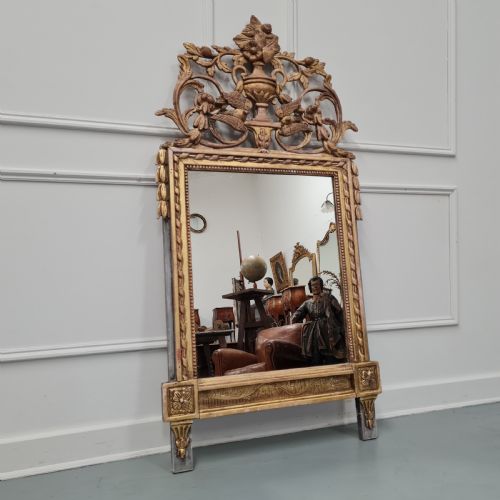
The forms range from substantial overmantel mirrors to smaller wall mirrors, pier mirrors, and cushion mirrors. Many examples incorporate carved wooden crests, architectural mouldings, and decorative frames finished in giltwood, walnut, mahogany, or paint.
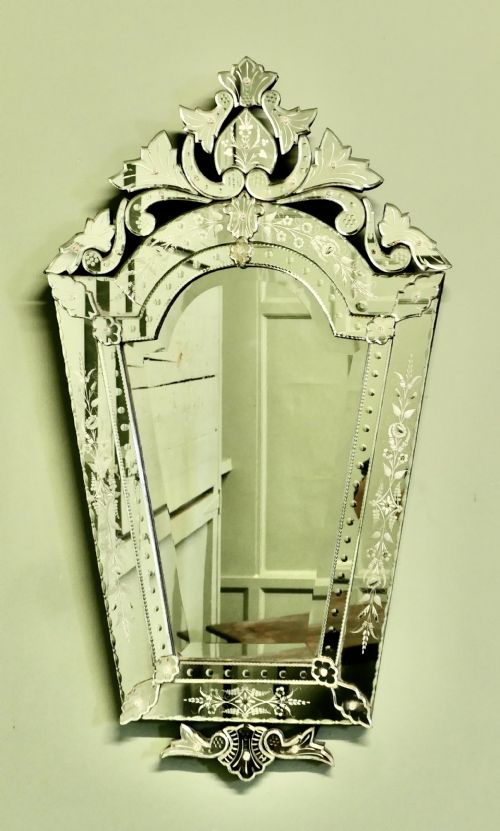
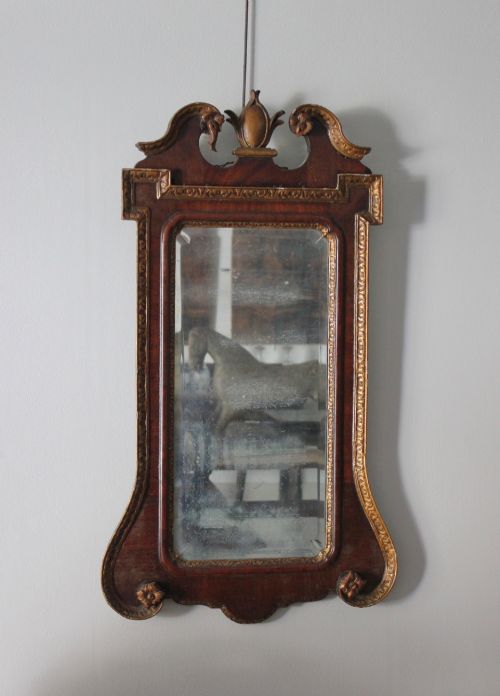
Earlier versions include mid-eighteenth-century English mirrors and George II walnut designs featuring original glass plates and parcel-gilt details. Later nineteenth-century revivals and twentieth-century French or Venetian variations continue the tradition of decorative upper crests and masks.
Materials and construction
Wood serves as the primary structural foundation for these frames, utilising timbers such as mahogany, walnut, and general hardwoods. Artisans shaped these woods into precise architectural profiles to support the upper crests.
Giltwood and gesso applications provide the metallic finish seen on many period pieces, utilising gold leaf laid over prepared plaster grounds. Other finishes include ebonised wood, metal mounts, hand-painted surfaces, and cut glass components.
Some mirrors feature hidden mask crests peering down from the apex, watching over the room with silent theatricality.
Judging quality and craftsmanship
The fineness of the carved architectural details on the upper pediment distinguishes exceptional work from simpler production. Crisp execution in the woodcarving or gesso ornamentation shows the hand of a skilled maker.
The presence of original mirror glass adds historical integrity and visual depth to older pieces. Frame construction, the retention of original gilding, and period finishing materials further define the tier of the object.
William Kent
The Pediment Crest Mirror Glossary
- Pediment
- An architectural element placed at the top of the mirror frame, often triangular, segmental, or broken in design.
- Giltwood
- Timber that has been coated with a thin layer of gold leaf, frequently built up over a gesso base.
- Parcel-gilt
- A decorative treatment where only specific portions of a wooden or painted frame are highlighted with gold leaf.
- Overmantel
- A large wall mirror specifically designed to hang above a fireplace mantel.
- Pier mirror
- A tall, narrow mirror traditionally hung on the wall space between two windows.
Pediment Crest Mirror: Frequently Asked Questions
Where should I hang a pediment crest mirror?
These mirrors suit spaces with sufficient vertical clearance to showcase the architectural apex. Placing one above a mantelpiece or console table allows the crest to act as a focal point in a room.
Ensure the wall anchor securely supports the weight of the frame, particularly for larger nineteenth-century overmantel versions or heavily gilded pieces.
How do I identify a Georgian pediment mirror?
Georgian examples often feature rich timbers like walnut or mahogany, combined with parcel-gilt details and classical architectural proportions. Look for construction methods appropriate to the eighteenth century, such as traditional joinery and hand-cut plates.
Revival pieces from later centuries mimic these forms, so examine the backing boards, wood ageing, and gilding technique to determine the precise period.
What is a parcel-gilt frame?
Parcel-gilt refers to a technique where selective parts of the mirror frame are gilded while the underlying wood grain or paint remains visible. This creates a subtle contrast between the warm timber and the bright gold leaf.
Master craftsmen used this method during the Georgian period to accentuate carved mouldings without completely covering the quality walnut or mahogany beneath.
How do I care for antique mirror glass?
Clean antique mirror glass gently with a soft microfibre cloth and a minimal amount of neutral cleaner, avoiding harsh chemicals that might seep behind the plate. Take care not to let moisture pool at the edges of the frame where the silvering meets the wood.
Original glass often shows foxing or minor age spots, which are natural characteristics of old mirrors and should be preserved rather than polished away.