

Pedestal Urn Planters
These pedestal urn planters bring classical garden ornament and raised botanical display into interior rooms and outdoor spaces alike.
Pedestal Urn Planters
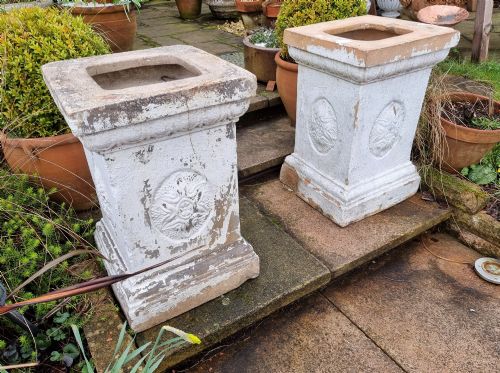
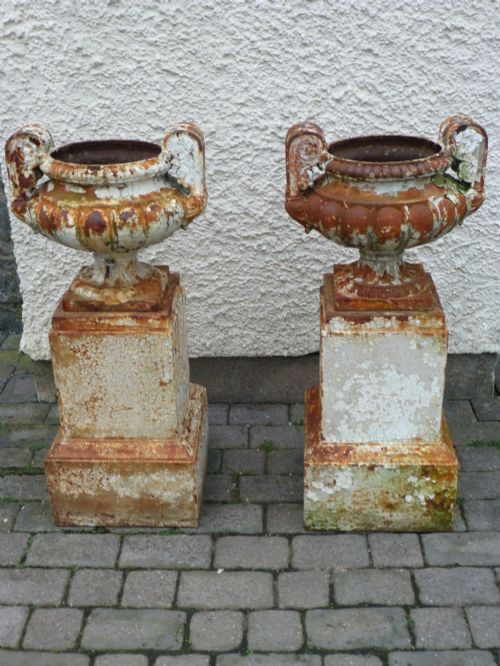
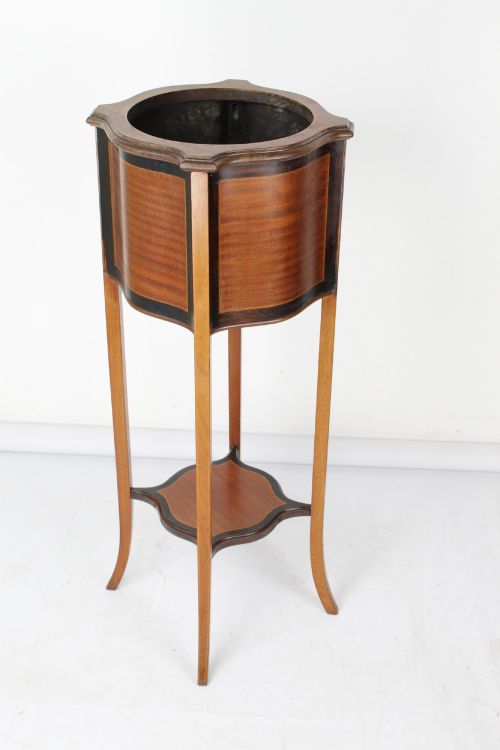
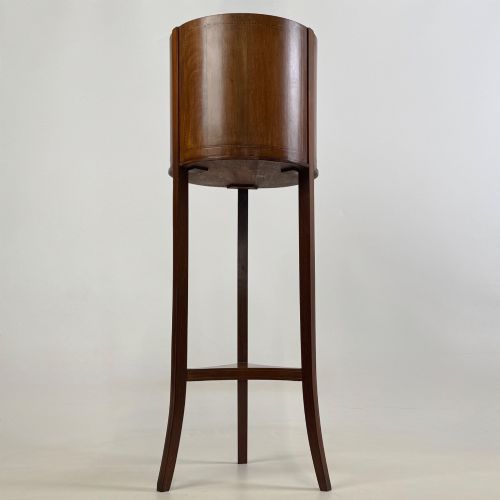
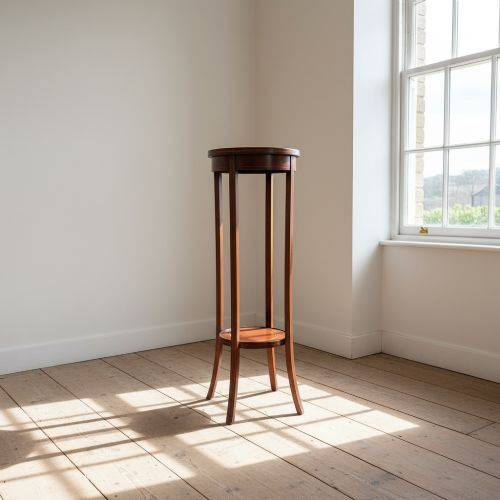
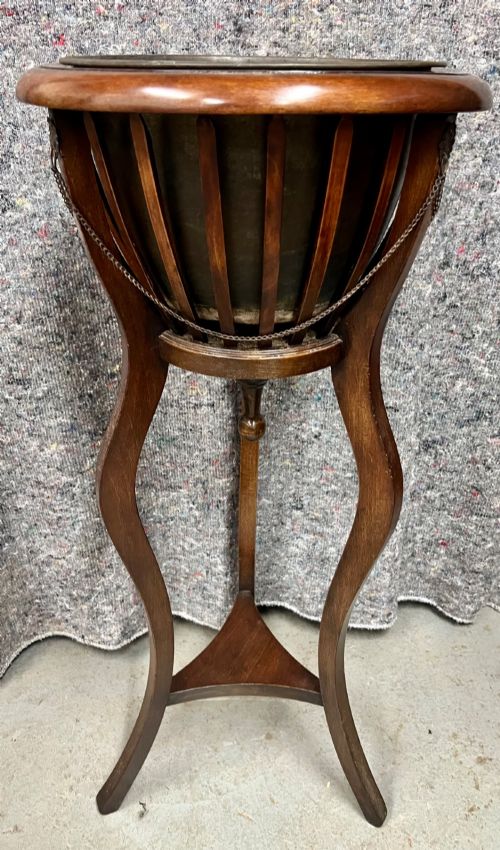
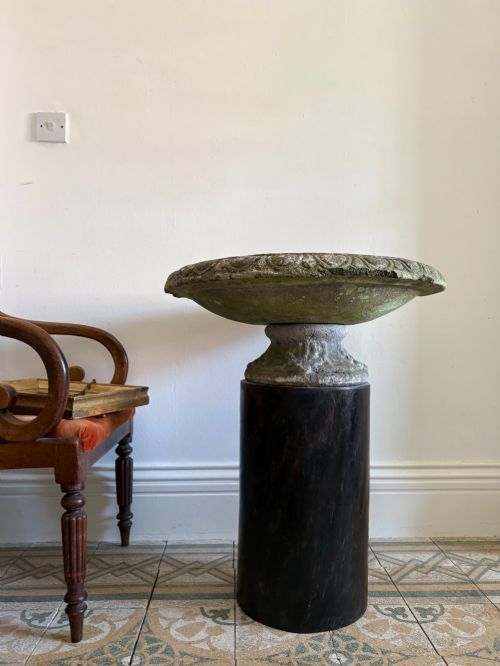
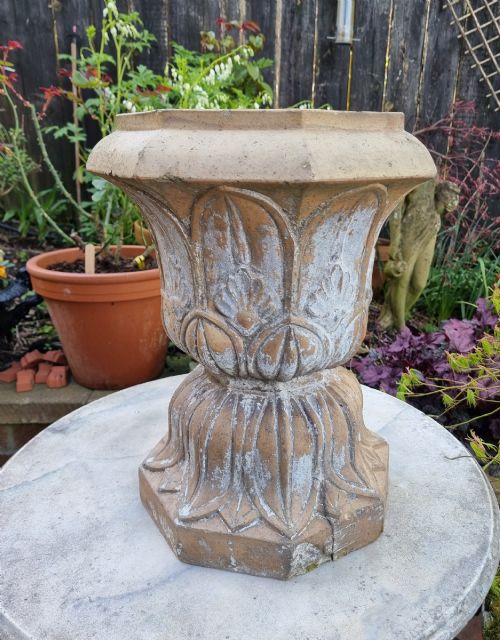
Pedestal urn planters combine elevated mounting stands with vessel forms designed to display plants, flowers, and greenery. The selection ranges from robust outdoor garden installations to refined interior plant stands and jardiniere tables.
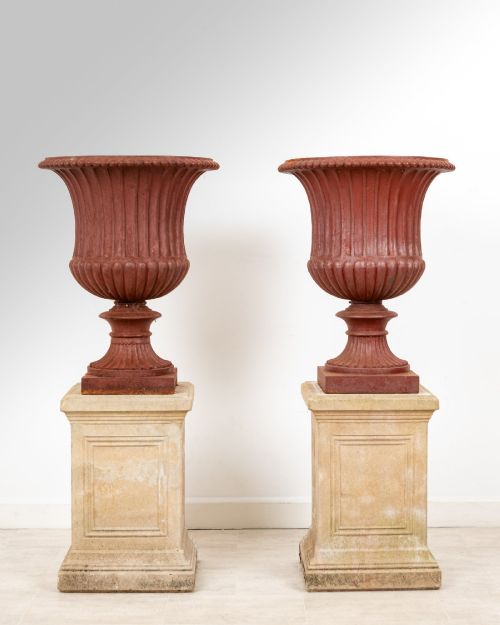
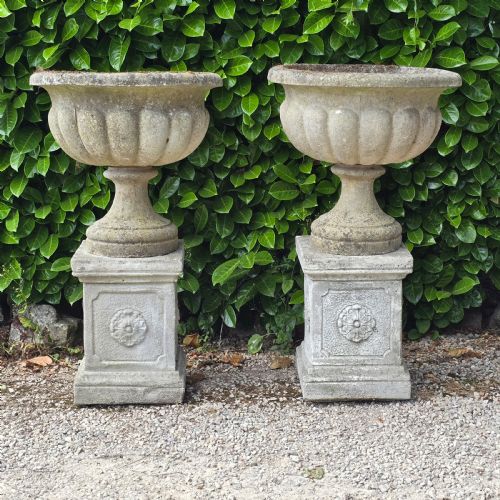
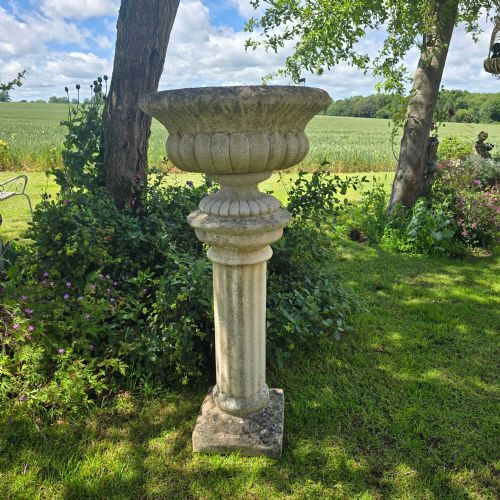
Examples span the nineteenth and twentieth centuries, taking shape through Victorian, Edwardian, and Regency periods. Forms encompass traditional campana garden urns on stone plinths, tall mahogany plant stands, and decorative indoor ceramic jardiniere vessels.
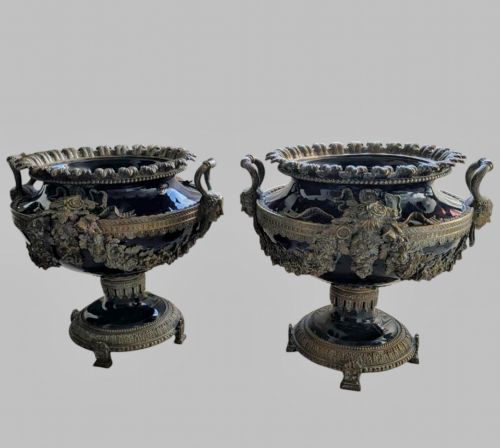
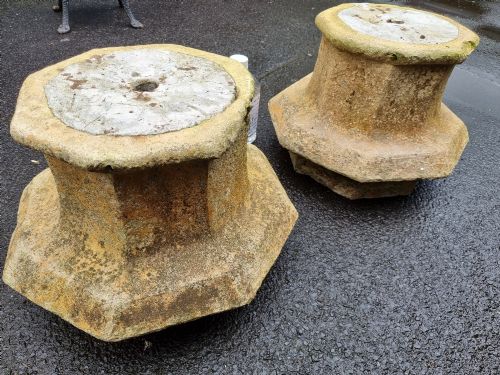
Makers and foundries from Scotland to Italy contribute distinct regional interpretations to the inventory. Buyers encounter weathered composite stone, classical cast iron, and inlaid cabinet timbers among the diverse architectural configurations.
How they were made
Foundries cast heavy metals like iron and brass using traditional moulding techniques, creating crisp campana profiles and embossed decorative motifs. Stone versions utilise cast stone, terracotta, and composite materials shaped for exterior resilience.
Cabinetmakers constructed indoor stands from dense timbers including mahogany and walnut, frequently incorporating intricate marquetry inlay, turned columns, and marble inserts. Ceramic pieces combine thrown or moulded clay bodies with colourful majolica glazes or blue ceramic finishes.
Listings feature materials spanning cast iron, mahogany, terracotta, and brass across Victorian, Edwardian, and Regency periods.
What varies in quality
The degree of sculptural definition in cast metal and carved wood dictates visual success. Finer pieces display sharp acanthus leaf detailing, well-balanced proportions between urn and plinth, and confident handling of classical motifs.
Material integrity and surface patination separate standard items from distinguished examples. Weathered outdoor stone and iron acquire authentic age-related textures, whilst indoor mahogany stands rely on precise joinery and refined timber figure.
Dunfermline Clay Company·Falkirk Carron foundry·Coalbrookdale·Andrew Handyside·Royal Doulton
The Pedestal Urn Planters Glossary
- Campana urn
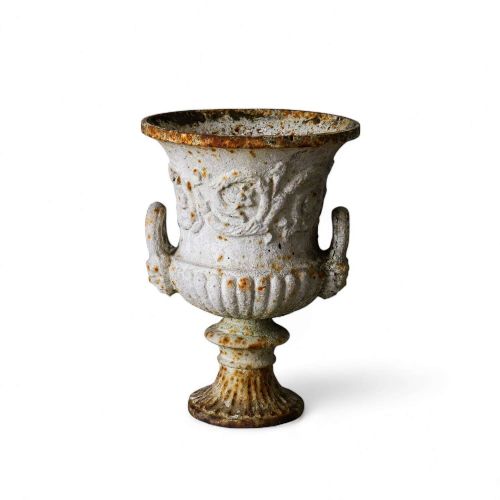
- A bell-shaped garden vessel with an everted rim, sweeping body, and circular foot. This classical form appears frequently in cast iron and terracotta.
- Jardiniere
- An ornamental pot or stand designed to hold a plant or floral arrangement. Indoor versions often feature ceramic bodies or brass liners.
- Plinth
- A heavy rectangular or square base block supporting an urn or pedestal. It provides essential stability and architectural elevation.
- Tazza
- A shallow cup or basin on a pedestal foot, used historically for display. Marble and bronze examples reflect Grand Tour influences.
- Teestoof
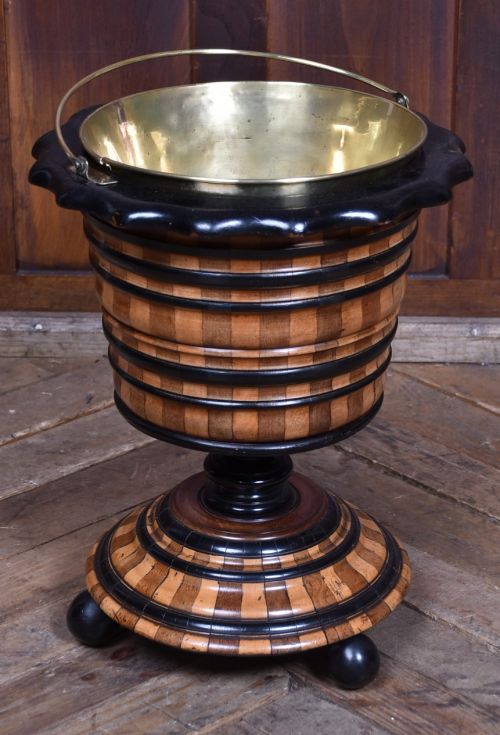
- A traditional Dutch warming vessel incorporating a brass liner. These domestic pieces double as decorative planters and interior stands.
Pedestal Urn Planters: Frequently Asked Questions
Can iron urns stay outside all winter?
Cast iron and stone garden pieces tolerate exterior conditions well, provided drainage holes remain clear of debris.
Severe frost can occasionally affect ceramic or composite materials if moisture becomes trapped within porous surfaces.
How do I protect indoor wood stands?
Polished mahogany and walnut plant stands require waterproof liners inside the plant container to prevent water rings.
Regular waxing preserves the timber surface against accidental splashes from watering routine maintenance.
How do I date a cast iron planter?
Foundry marks, registration numbers, and structural weight help establish the production era of iron gardenware.
Victorian and Regency examples typically exhibit deep surface patination and hand-finished casting seams.