

Weathered Metal Planters
Weathered metal planters bring aged character to a garden, offering enduring forms shaped by time and elements.
Weathered Metal Planters
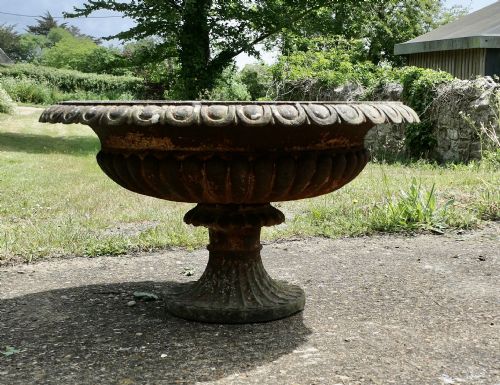
When you search for weathered metal planters, you find robust garden vessels designed to hold plants while displaying the marks of age. The selection here leans heavily towards cast iron urns, copper pots, and zinc tubs.
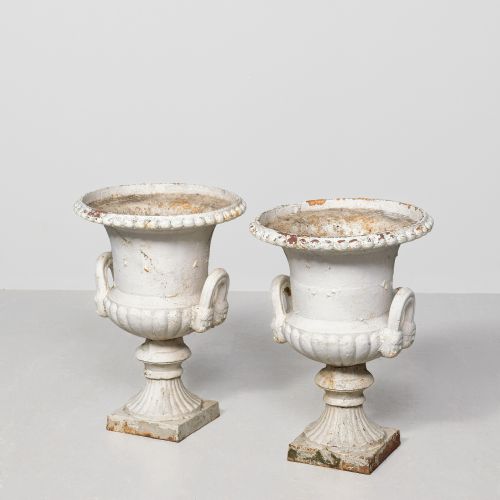
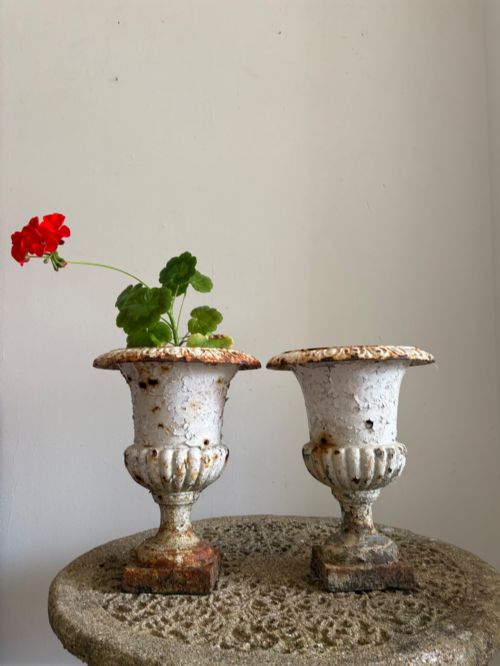
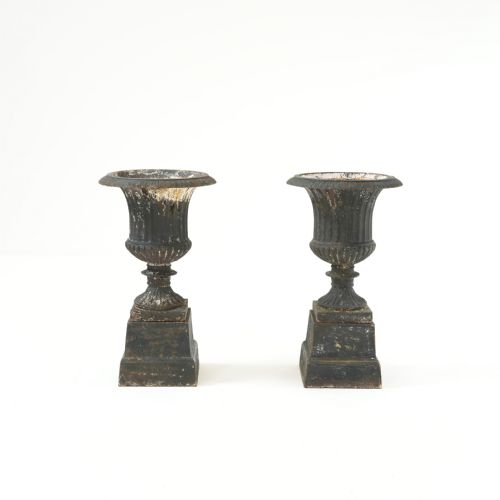
Most examples hail from the nineteenth century, encompassing Victorian classical styles alongside rustic French country pieces. These items range from campana urns on plinths to riveted copper buckets and zinc dolly tubs.
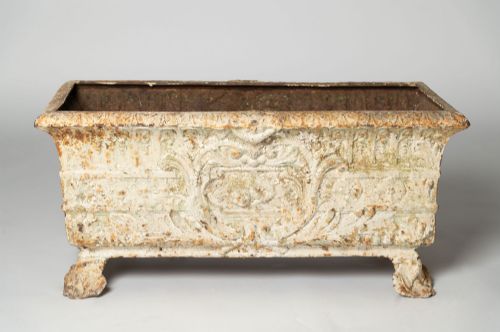
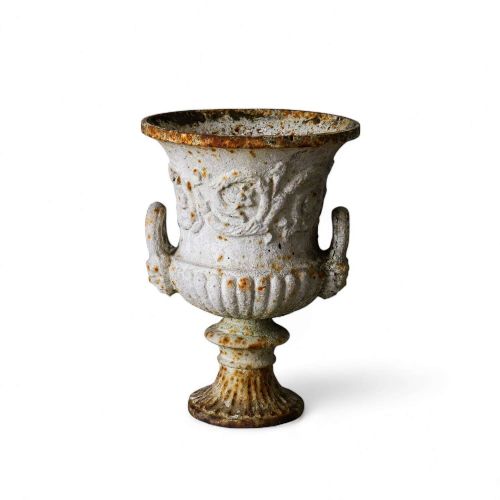
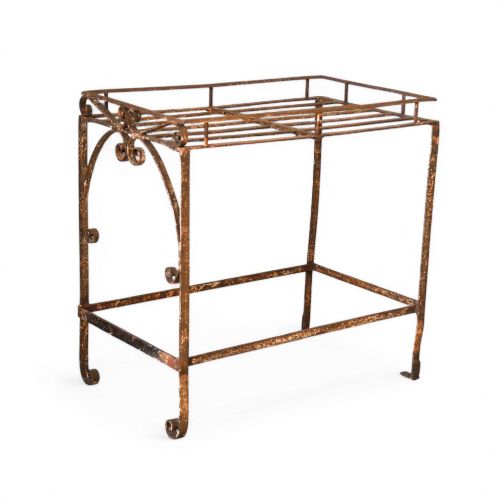
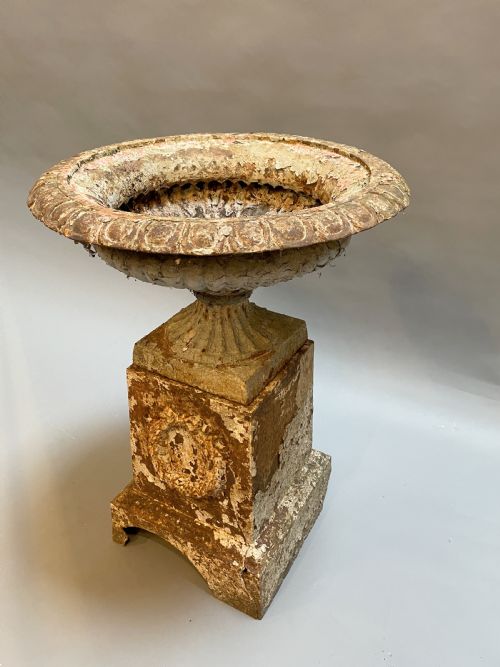
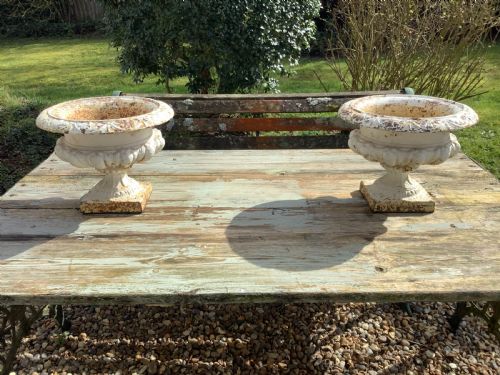
Buyers encounter garden ornaments shaped by decades outdoors, acquiring natural patinas and surface wear. The forms include classical tazza urns, plant stands, and estate-made wrought iron racks.
Materials and construction methods
Foundry work defines the cast iron pieces, poured into moulds to create fluted surfaces, campana profiles, and classical ornament. Artisans also utilised wrought iron, shaping strapwork and structural details by hand.
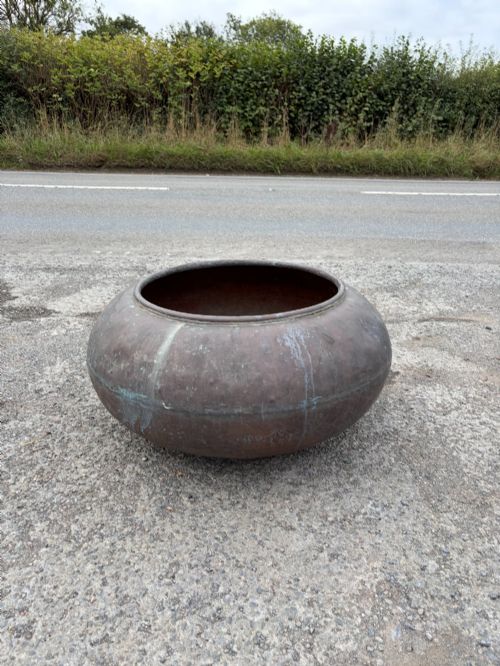
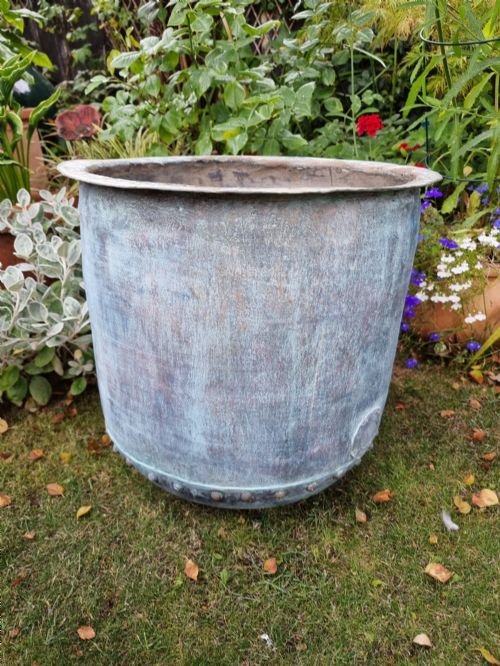
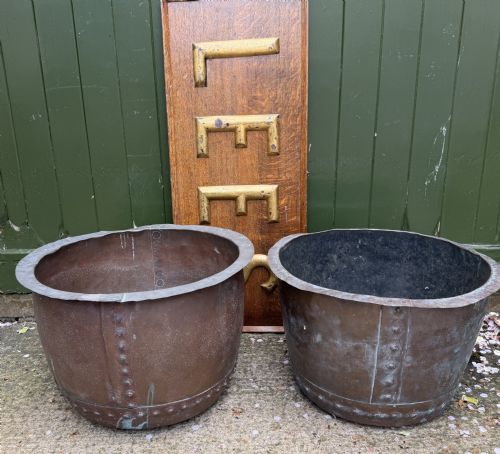
Copper items often feature riveted seams, joining sheet metal to form deep display pots, boilers, and log bins. Zinc vessels provide lighter alternatives, shaped into tubs and planters suited for utilitarian or garden use.
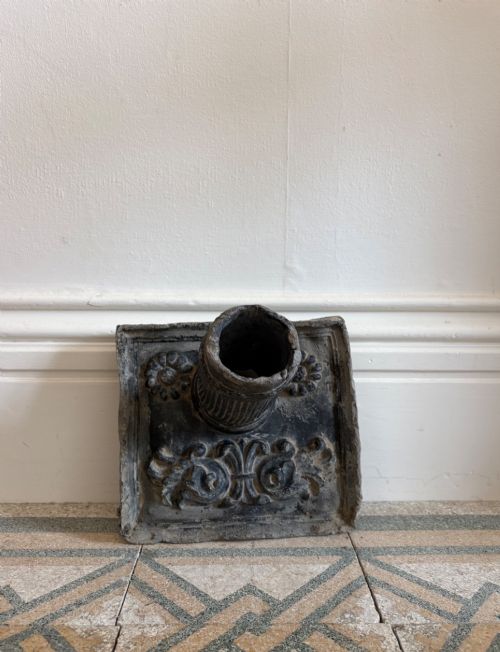
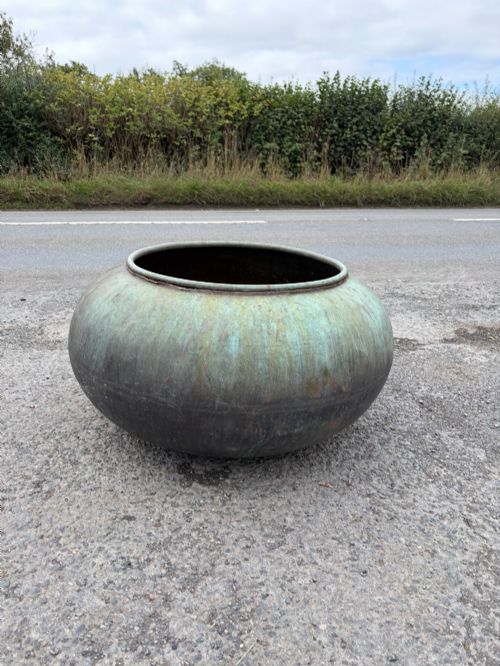
Surface treatments involve layers of paint that weather over time, alongside natural oxidation processes. Copper and lead develop distinctive verdigris surfaces and patinas through prolonged exposure to the weather.
Assessing quality and character
Quality rests in the crispness of the casting and the balance of the proportions, particularly on campana urns and classical forms. Better pieces retain clear decorative details and heavy, stable walls that withstand the elements.
The nature of the surface patination distinguishes superior examples, where age creates a harmonious verdigris or weathered paint skin rather than structural compromise. Maker attribution, such as work originating from established foundries, elevates certain items.
Integrity of construction matters greatly, particularly where riveted copper joints or wrought iron strapwork meet the body of the vessel. Original plinths and matching pairs carry greater weight than assembled components.
Andrew Handyside
The Weathered Metal Planters Glossary
- Campana
- A bell-shaped garden urn profile popular in classical and Victorian design. These vessels typically sit on a pedestal base.
- Verdigris
- A green patina formed naturally on copper, brass, or bronze through atmospheric oxidation. It is prized by collectors for its visual depth.
- Tazza
- A shallow bowl or urn elevated on a stem and foot. This classical form often appears in cast iron within nineteenth-century gardens.
- Strapwork
- Ornamental work composed of flat, interlaced metal bands. Wrought iron planters frequently utilise this technique for structural framing.
- Dolly tub
- A deep cylindrical metal tub originally used for laundering clothes. Gardeners repurpose these zinc vessels as planters.
Weathered Metal Planters: Frequently Asked Questions
How do I care for a cast iron urn?
Cast iron garden vessels require minimal maintenance beyond ensuring drainage holes remain clear during winter months. Protecting them from severe frost water-expansion prevents cracking.
Applying a suitable protective wax or paint finish helps preserve the existing weathered surface and slows further corrosion over the years.
Can copper planters stay outside all year?
Copper handles outdoor conditions exceptionally well, developing a protective verdigris layer that shields the underlying metal from deep damage. These pots withstand rain and snow without losing their structural integrity.
Ensure that the base allows water to escape freely so that trapped moisture does not strain the riveted seams during freezing weather.
How do I identify a Victorian iron urn?
Victorian cast iron planters often display classical revival motifs such as fluting, egg-and-dart borders, or bold campana profiles. The weight is typically substantial, reflecting heavy nineteenth-century foundry standards.
Look for evidence of old paint layers beneath the rust and weathering, which commonly indicate genuine period age rather than modern reproduction.
What is the difference between zinc and iron?
Zinc vessels, such as dolly tubs, offer a lighter weight and a muted grey metallic finish that responds well to industrial or rustic garden settings. They resist heavy rust in the manner iron does.
Cast and wrought iron pieces provide greater heft and architectural presence, often featuring ornate classical detailing suited to formal garden layouts.