

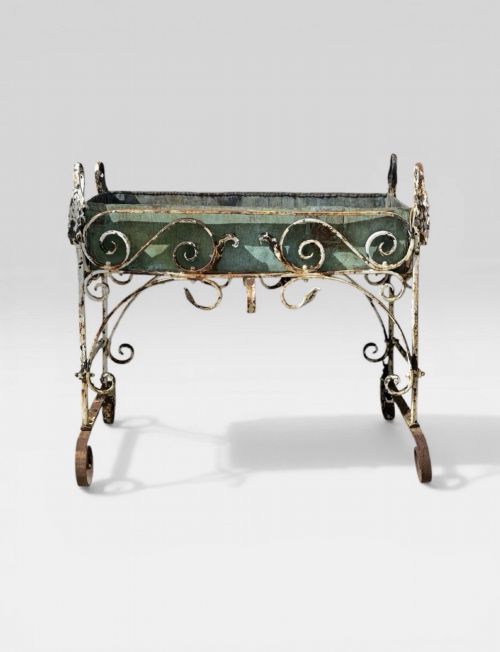


Antique Zinc Planter
An antique zinc planter brings robust utility and understated texture to a garden, combining industrial metal with domestic history.
Antique Zinc Planter
When searching for an antique zinc planter, buyers encounter a mix of utilitarian vessels repurposed for the garden and dedicated horticultural containers. The listings span the nineteenth century through to the early twentieth century, taking forms such as wash tubs, troughs, and garden planters.
Most examples originate from domestic or industrial contexts, including galvanised metal tubs and dolly tubs adapted for contemporary planting. Alongside these, refined pieces appear, such as Chinese troughs with zinc linings and French metal planters designed for decorative patio use.
How they were made
Construction relies heavily on durable metals like zinc, galvanised steel, and galvanised metal, chosen for their weather resistance and structural longevity. Artisans combined these utilitarian sheets with iron handles, brass bands, and sometimes wooden cabinetry such as mahogany or oak for lined jardinieres.
Techniques range from heavy riveting and hand-soldering on industrial tubs to fine cabinetry work on indoor plant stands and cellarettes. The integration of metal linings protected wooden frames from moisture, allowing functional vessels to double as indoor display pieces.
Antique Zinc Planter Retail Price Guide 2026
Typical asking prices for zinc planter among the pieces listed under this phrase on Sellingantiques today, from the lower quarter to the upper quarter. They describe what is for sale here now, not the wider market.
Before holding geraniums, your planter might have spent its youth scrubbing laundry or chilling claret at a Victorian dinner party.
What varies in quality
Quality rests in the integrity of the metalwork, the tightness of seams, and the retention of original surface patination. Industrial vessels with honest signs of wear demonstrate greater character than overly restored or cleaned counterparts.
Proportion and material combination distinguish simpler utilitarian items from finer decorative pieces. A well-balanced form with original brass bindings or wrought iron mounts elevates a piece beyond standard yard utility.
The Antique Zinc Planter Glossary
- Zinc
- A bluish-white metal prized for its resistance to corrosion, forming the primary body or protective lining of these planters.
- Galvanised metal
- Steel or iron coated with a protective layer of zinc to prevent rusting, common in nineteenth-century utility tubs.
- Jardiniere
- An ornamental pot or stand for flowers and plants, often incorporating fine wood and metal linings.
- Cellarette
- A lockable container formerly used for holding bottles of wine, frequently repurposed with metal linings for horticultural use.
- Dolly tub
- A cylindrical vessel traditionally used for washing laundry, now frequently adapted as a deep garden planter.
Antique Zinc Planter: Frequently Asked Questions
Are these planters suitable for outdoor use?
Most of these metal and galvanised vessels were built for demanding utility tasks and withstand outdoor weather conditions well.
Over time, exposure to soil and moisture deepens the natural patina of the metal without compromising the structural integrity of the container.
How do I date a galvanised planter?
Dating relies on manufacturing techniques, such as hand-riveted seams and the gauge of the metal, alongside stylistic clues from associated wooden elements.
Earlier nineteenth-century pieces often display heavier construction methods compared to standard twentieth-century production.
Can I use these planters indoors?
Many pieces, particularly lined troughs and mahogany jardinieres, were designed specifically for interior display in nineteenth-century homes.
For industrial tubs used indoors, checking for drainage holes and adding a protective saucer safeguards household surfaces.
What causes the grey surface texture?
The distinctive grey surface results from the oxidation of zinc and the weathering of galvanised coatings over decades of exposure.
This natural weathering process creates a stable protective layer that collectors value for its authentic aesthetic appeal.