
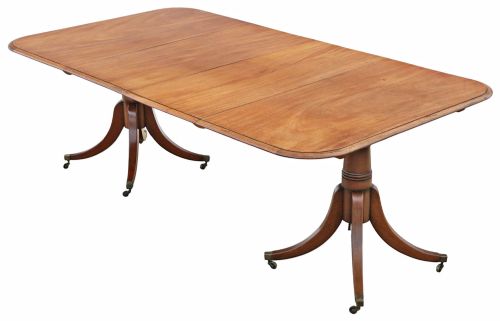
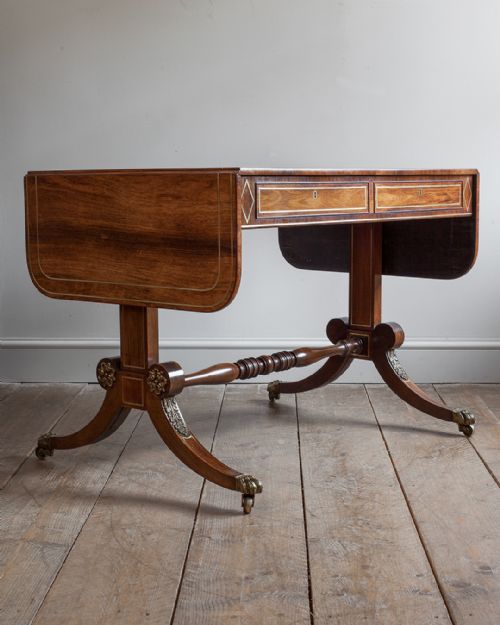

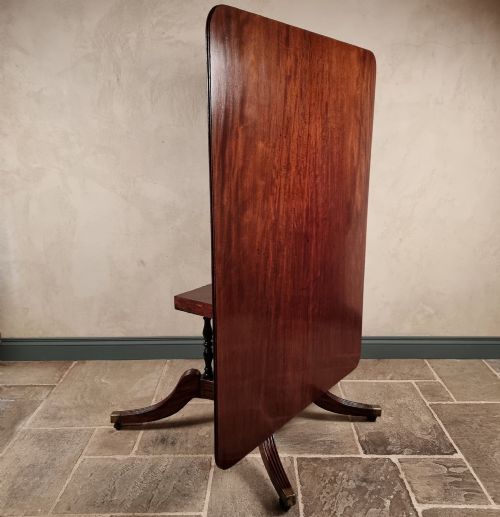
Pedestal Table with Leaf
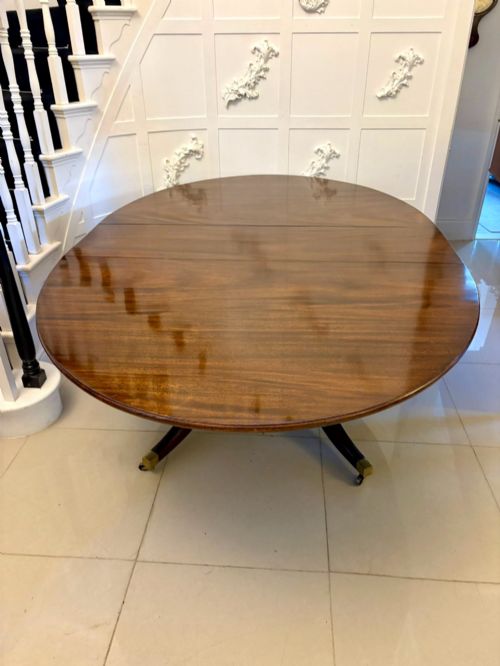
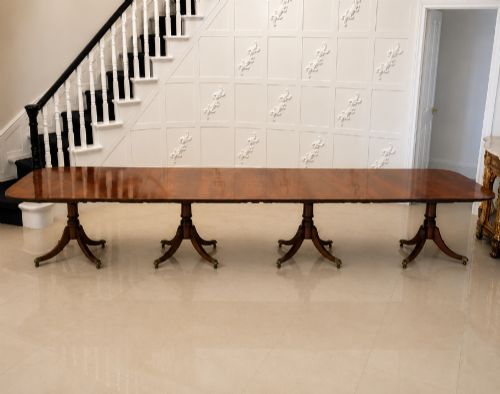
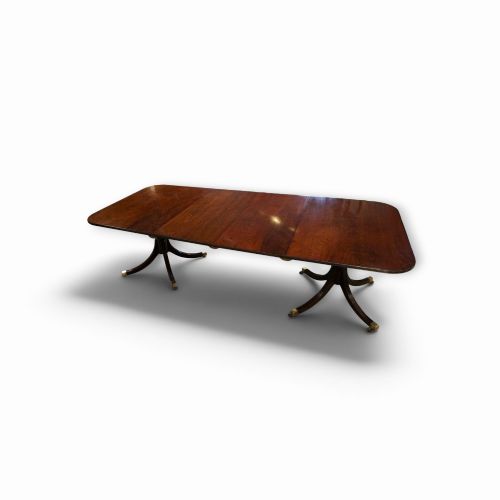
A pedestal table with leaf brings modular length to dining rooms and formal spaces through clever pillar supports and removable sections.
How they were made
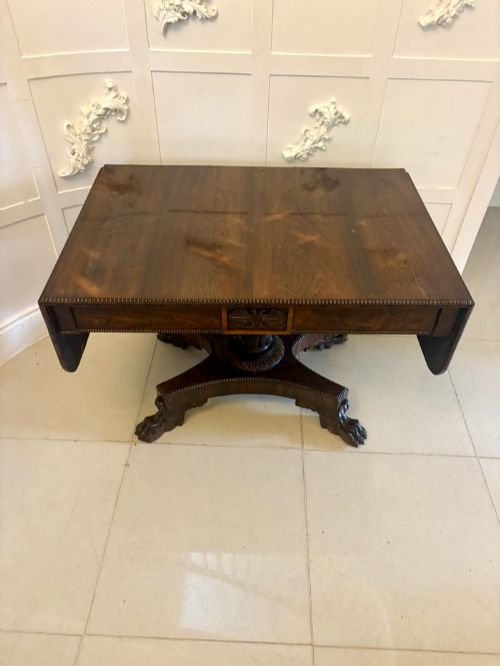
Cabinetmakers relied on dense timbers like mahogany, burr walnut, rosewood, and figured elm, often accented with satinwood inlay and brass mounts. Structural stability on single or multiple pillars required heavy timber turning and solid block construction.
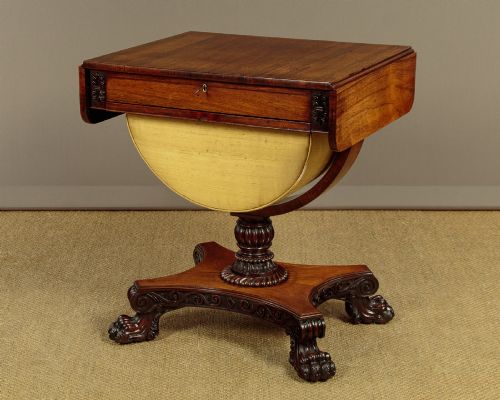
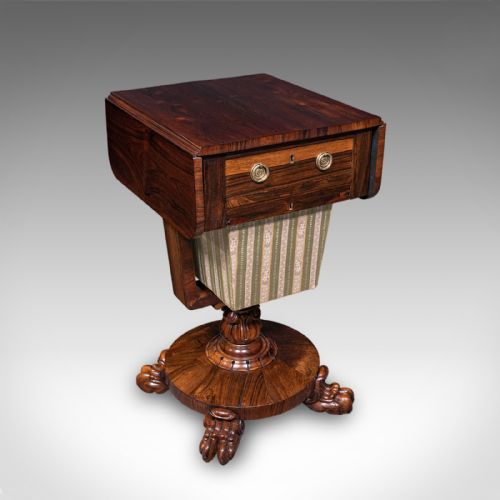
Extending dining formats incorporated internal runner systems and drop-in leaves that aligned with brass clips or peg joints. Smaller tables utilised drop-flaps, fold-over mechanisms, and pivoting tops supported by carved columns or quadruped bases.
What varies in quality
Quality rests in the selection of figured timber veneers, the crispness of hand-carved pillar supports, and the smoothness of the extending mechanism. Superior examples maintain exact alignment across every removable leaf and show tight, stable joinery in the pedestal bases.
Lesser pieces exhibit mismatched grain patterns across added leaves or loose pillar fittings that compromise stability under weight. The presence of original brass castors and unwarped tops separates standard workshop output from exceptional cabinet work.
The listings span multiple centuries, uniting Georgian dining tables with Victorian card tables and later twentieth-century revival pieces.
The Pedestal Table with Leaf Glossary
- Pedestal table
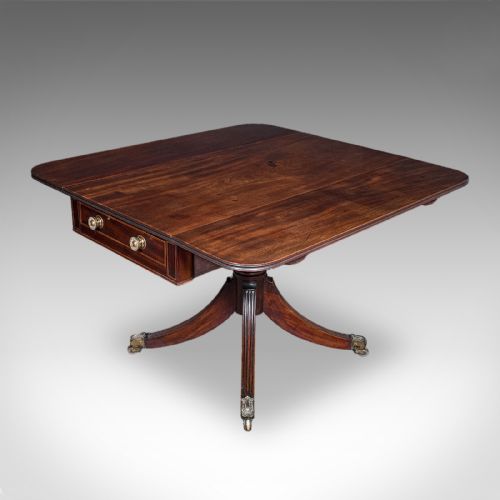
- A freestanding table supported by a central pillar or multiple pillars resting on branched feet rather than four corner legs. This design allows for greater seating clearance around the perimeter.
- Extra leaf
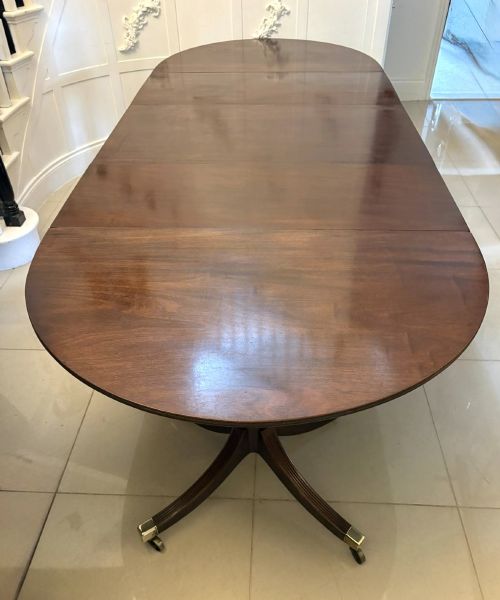
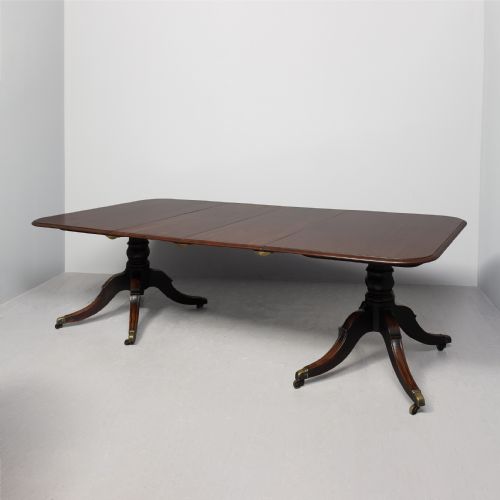
- A removable timber panel inserted into the centre of an extending table to increase its overall length. These sections often match the grain and colour of the main tabletops.
- Pembroke table
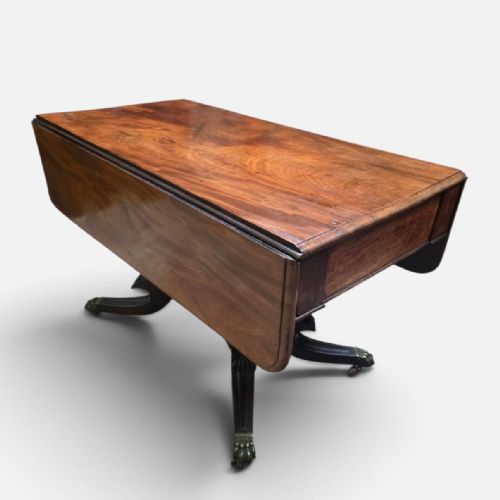
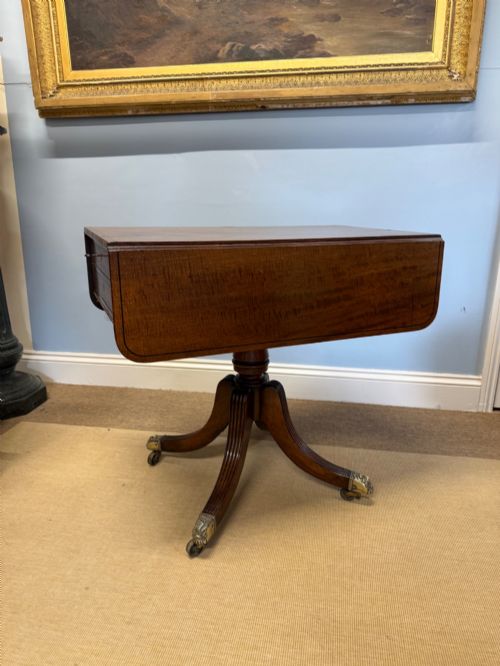
- A small rectangular table with hinged drop-leaves on opposing sides and a frieze drawer. It gained popularity in the eighteenth century as a versatile piece for writing or sewing.
- Sofa table
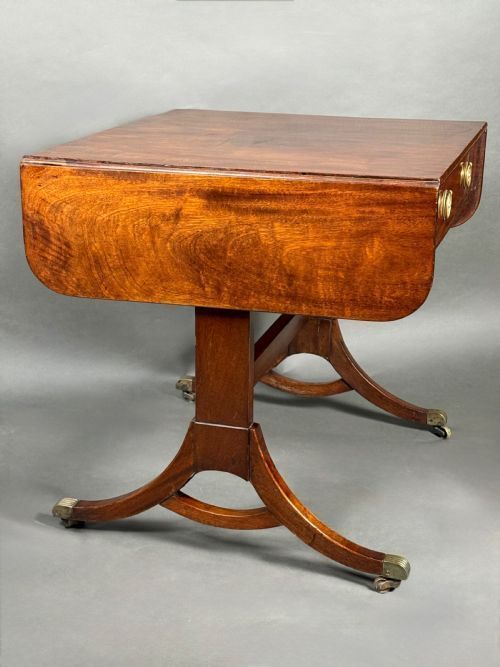
- A low rectangular table traditionally placed in front of a sofa, featuring drop-flaps on the long sides and small drawers beneath the top. They frequently utilise dual pedestals connected by a central stretcher.
- D-end table
- A dining table section featuring one semi-circular end shaped like the letter D. These often stand at the ends of an extending multi-pillar dining table set.
Pedestal Table with Leaf: Frequently Asked Questions
How do I extend a pedestal dining table?
You separate the table halves along the centre runner tracks to reveal the internal gap. The removable leaf drops securely into place before the mechanism locks tight.
Alignment pins ensure the surface stays level across the join lines. You then secure the structure so the added leaves bear weight evenly.
Where should I place a sofa table?
A sofa table fits naturally behind a freestanding sofa or against an empty wall in a hallway. Its narrow profile makes it useful in tighter spaces without blocking walkways.
The drop-leaves allow you to expand the surface area when hosting guests. Smaller drawers also provide discreet storage for household items.
What is the difference between twin and triple pillar tables?
Twin pillar tables feature two heavy pedestals supporting the main top and one or two leaves. They suit medium dining rooms and seat moderate groups comfortably.
Triple and four-pillar tables incorporate additional central columns to support extended lengths for large dining halls. These monumental formats handle multiple leaves without sagging in the middle.