

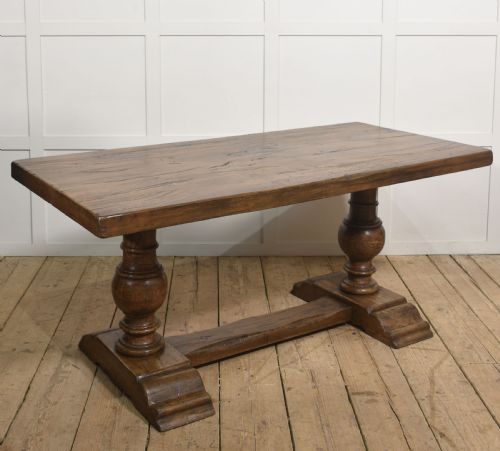


Pedestal Oak Dining Table
A pedestal oak dining table grounds a room with solid grain and sturdy presence, and you are looking at examples built to last generations.
Pedestal Oak Dining Table
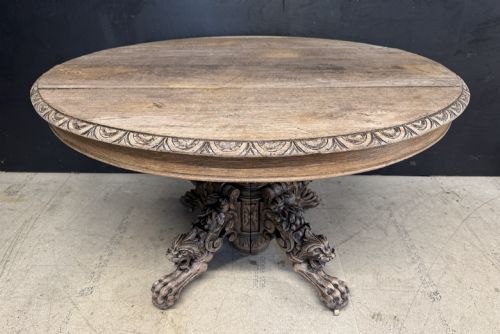
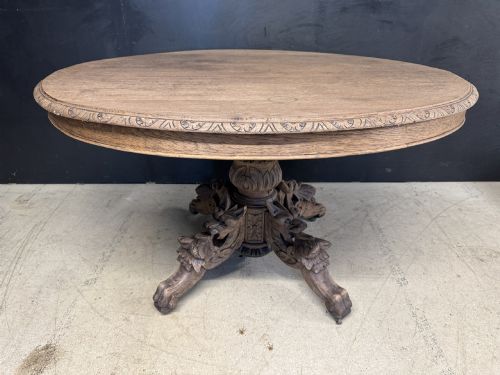
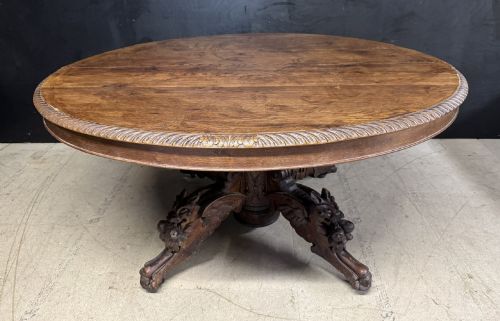
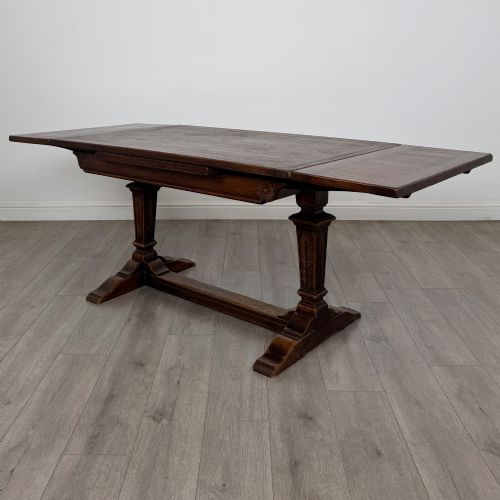
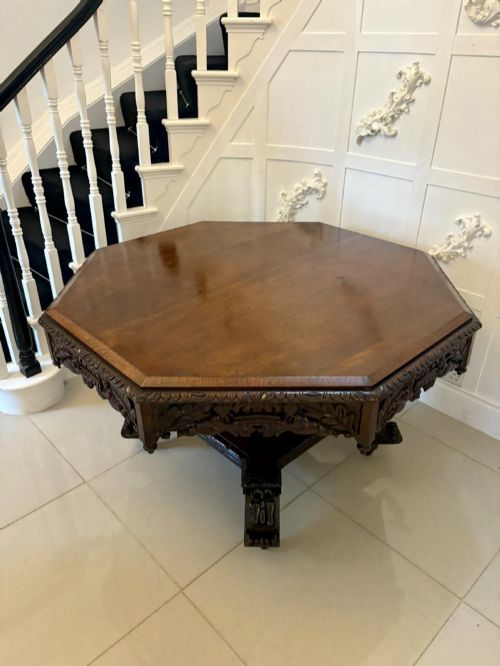
A pedestal oak dining table brings together heavy timber and central support formats designed for practical dining and large gatherings. You will frequently encounter circular breakfast tables, robust refectory pieces, and extension formats originating from the nineteenth and twentieth centuries.
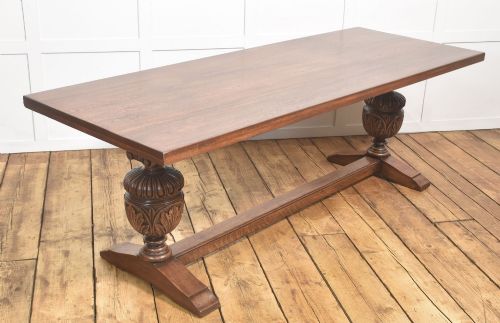
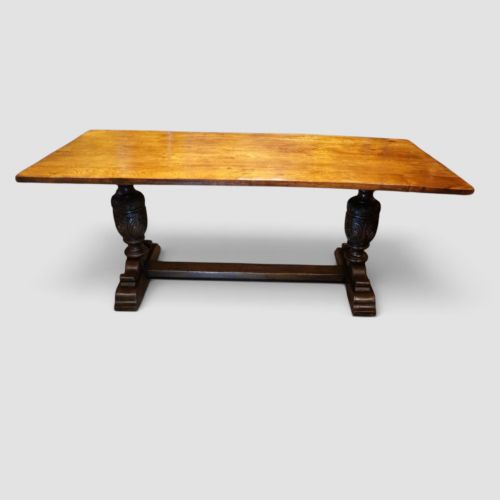
The selection ranges from Victorian circular designs on cruciform bases to Jacobean revival refectory tables and Edwardian draw leaf variants. These pieces serve as functional dining surfaces while displaying diverse historical revivals and regional European styles.
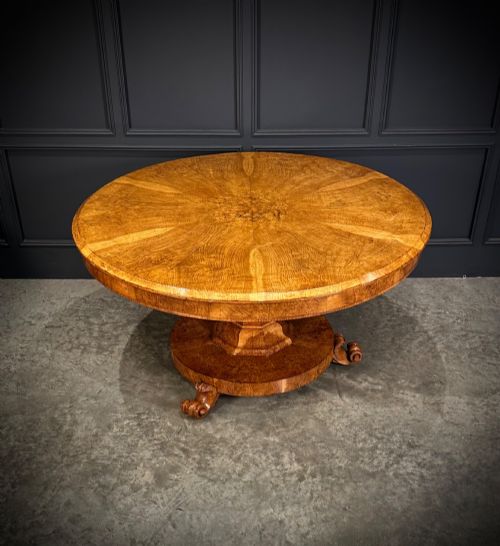
While traditional refectory and draw leaf forms dominate the listings, round centre and breakfast tables utilise central pillars or pedestals to maximise legroom. These formats reflect both formal dining traditions and everyday domestic utility across different eras.
Materials and Construction
Makers utilised solid oak, pollard oak, and burr oak to construct durable tabletops and robust framing. These dense timbers often feature decorative figuring, enhanced by marquetry, parquetry, or brass and iron hardware.
Support structures rely on heavy cast iron mechanisms, central timber pedestals, cruciform bases, and trestle frameworks. Carved geometric details and panelled elements appear across various revival styles from the nineteenth and twentieth centuries.
Listings feature oak alongside materials like pollard oak, burr oak, brass, cast iron, and iron inlay.
Judging the Standard
Superior examples demonstrate careful selection of figured timbers like pollard and burr oak, where grain patterns create visual depth across the surface. Lesser pieces rely on plain, unfigured boards with minimal attention to matching timber characteristics.
The sophistication of the carving and the stability of the central pedestal or base dictate the overall calibre. Finely executed geometric carving and robust, well-engineered joints separate high workshop output from simpler utilitarian items.
Heal’s
The Pedestal Oak Dining Table Glossary
- Pollard oak
- Timber taken from trees that have been pollarded, producing tightly clustered knots and rich figuring. This decorative grain is prized for tabletop surfaces.
- Refectory table
- A long, narrow dining table traditionally used in monastic refectories and later adopted for domestic dining. These tables typically feature sturdy stretcher bases.
- Draw leaf table
- A table equipped with underleaves that slide out from beneath the main top to extend the surface area. This mechanism provides flexible seating capacity.
- Parquetry
- Geometric wood mosaic work used for decorative floors and tabletops. Pieces often incorporate contrasting timbers like ebony alongside oak.
- Cruciform base
- A cross-shaped support structure set beneath a central column or tabletop. This design offers robust stability for large circular tops.
Pedestal Oak Dining Table: Frequently Asked Questions
What is a pedestal oak dining table?
A pedestal oak dining table is a dining surface supported by a central pillar, column, or cruciform base rather than four corner legs. This construction style allows for easier seating arrangement around the perimeter.
Such tables appear in circular, oval, and occasional formats, utilising solid oak, pollard oak, and burr oak. They span various historical periods from the Victorian era into the twentieth century.
How do I choose the right size?
Consider both the available floor space in your dining room and the daily seating requirements of your household. Circular pedestal tables offer flexible seating without corner legs obstructing chairs.
Longer refectory and draw leaf variants accommodate larger numbers of guests for formal meals. Measure your room carefully to ensure adequate clearance around the edges of the table.
How do I identify the period?
Dating relies on examining the construction techniques, timber selection, and decorative motifs present on the piece. Victorian and Edwardian examples often feature specific revival styles like Jacobean or Gothic influences.
Hardware, underframing, and joinery methods provide further clues regarding the era of manufacture. Consulting the listed period details helps confirm the age of the table.